RedKalion
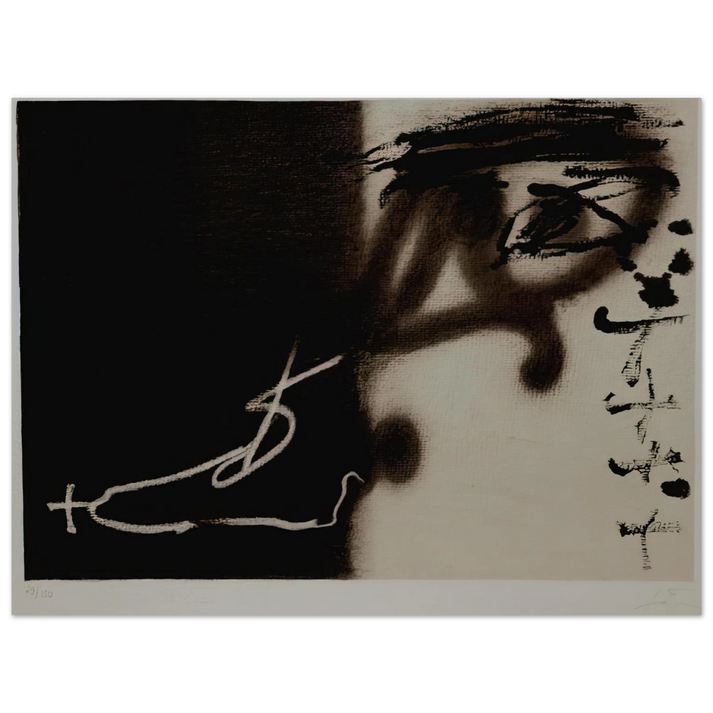
Antoni Tapies - DIVIS 1983 75x100 cm / 30x40inches Fine Art Poster
Antoni Tapies - DIVIS 1983 75x100 cm / 30x40inches Fine Art Poster
Couldn't load pickup availability
Elevate Your Collection with Antoni Tàpies' DIVIS (1983)
Experience the profound material presence of Antoni Tàpies, one of the most influential figures of 20th-century European art. His 1983 masterpiece, DIVIS, represents the artist at a peak of maturity, blending the raw intensity of Catalan Informalism with a deeply meditative, spiritual philosophy. This 75x100 cm (30x40 inches) fine art print captures the gestural power and cryptic symbolism that define Tàpies' unique visual language.
The Material Language of a Master
In DIVIS (1983), Tàpies employs a vocabulary of signs—crosses, incisions, and stark contrasts—that challenge the boundary between painting and sculpture. As a leader of the Dau al Set group and a pioneer of matter painting, his work transformed everyday textures into sites of philosophical inquiry. This museum-quality reproduction preserves the subtle nuances of his original composition, allowing the viewer to engage with the tactile soul of the work.
Exquisite Museum-Quality Craftsmanship
At RedKalion, we honor Tàpies’ legacy by utilizing the highest standards of archival printing. Each reproduction is crafted on our Master's Edition archival paper, specifically selected for its luxurious, matte, and uncoated finish. The natural white (off-white) tone provides the perfect canvas to replicate the earthy, organic palette favored by Tàpies.
- Weight & Durability: 250 gsm (110 lb) paper for a premium feel and lasting structure.
- Archival Longevity: Acid-free (pH above 7) to ensure the piece remains vibrant and resists yellowing for generations.
- Sustainable Excellence: Printed on FSC-certified paper, aligning artistic beauty with environmental responsibility.
- Precision Detail: A thickness of 0.29 mm (11.4 mils) ensures a robust, gallery-grade presence on your wall.
By choosing this Antoni Tàpies fine art poster, you are not merely purchasing a print; you are investing in a piece of art history curated by RedKalion, where museum standards meet modern interiors.

Discover Unlimited Art Possibilities
At RedKalion, you can find virtually any artwork from any artist, available in a wide range of sizes to perfectly match your space.
If you didn’t find what you’re looking for, contact us at support@redkalion.com . We will source any artwork and produce it in any size and format you need, including art prints, posters, canvas, framed pieces, framed canvas, and more.
For dedicated art enthusiasts, we also offer handcrafted replicas of any artwork, carefully painted by highly skilled artists using traditional techniques.
For custom requests, contact us at support@redkalion.com .
What makes this Antoni Tàpies DIVIS 1983 print museum-quality?
Our reproductions use Master's Edition 250 gsm archival paper with a matte, natural white finish. This museum-grade material ensures that the intricate textures and deep tones of the 1983 original are captured with extraordinary clarity and archival durability.
Is the paper used for this fine art poster sustainable?
Yes, RedKalion is committed to sustainability. This print uses FSC-certified paper, ensuring that the materials are sourced from responsibly managed forests that provide environmental, social, and economic benefits.
How will my DIVIS 1983 reproduction be shipped?
We utilize a sophisticated print-on-demand fulfillment process with no minimum order requirements. Each print is carefully handled and shipped in protective packaging to ensure it arrives at your door in pristine, gallery-ready condition.
Will the colors and texture of the Tàpies print fade over time?
No. We use acid-free paper with a pH balance above 7. This archival standard prevents yellowing and degradation, ensuring your Antoni Tàpies fine art print retains its visual integrity for decades.
What are the physical dimensions of this print?
The print measures 75x100 cm, which translates to 30x40 inches. This large-format size is ideal for making a sophisticated statement in any modern living space or office gallery.
What does the title 'DIVIS' signify in Tàpies' work?
The title refers to divisions or boundaries. In Tàpies’ vocabulary, these lines often represent the threshold between the physical and spiritual worlds, or the political divisions of his native Catalonia during the late 20th century.
What was Tàpies' artistic philosophy during the 1980s?
In the 1980s, Tàpies focused on 'spiritual materialism,' using raw materials and universal symbols to encourage viewers to look past the surface of reality and contemplate the profound mysteries of existence.