RedKalion
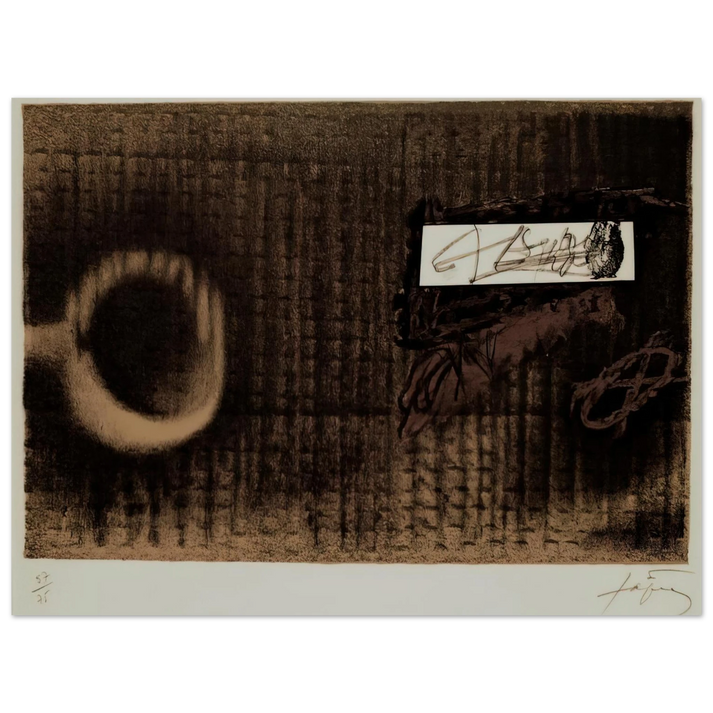
Antoni Tapies - ETIQUETTE 1979 75x100 cm / 30x40inches Fine Art Poster
Antoni Tapies - ETIQUETTE 1979 75x100 cm / 30x40inches Fine Art Poster
Couldn't load pickup availability
Antoni Tàpies - ETIQUETTE (1979): A Masterpiece of Catalan Informalism
Experience the profound tactile language of Antoni Tàpies with this museum-quality reproduction of ETIQUETTE (1979). As a central figure in post-war European art, Tàpies transformed the canvas into a wall of meditation, blending earth tones with cryptic markings. This 1979 work captures the artist at his creative zenith, utilizing a graphic sensibility that challenges the boundaries between painting and object.
Our fine art print is meticulously crafted on Master's Edition archival paper, chosen specifically to honor Tàpies' signature 'Matter Painting' aesthetic. The natural white (off-white) base provides a sophisticated, non-reflective backdrop that allows the subtle textures and muted palette of the original work to resonate with authentic depth. With a substantial weight of 250 gsm (110 lb) and a luxurious matte, uncoated finish, this reproduction offers a tactile presence that rivals the original lithograph.
RedKalion is dedicated to the preservation of artistic legacy. This print is acid-free (pH above 7), ensuring that the visual integrity of the work remains vibrant and resists yellowing for generations. Printed on FSC-certified paper, this piece represents a commitment to both environmental stewardship and archival excellence. Elevate your space with a work that bridges the gap between raw materiality and poetic silence.
- Artist: Antoni Tàpies (1923–2012)
- Title: ETIQUETTE (1979)
- Format: 75x100 cm / 30x40 inches
- Paper: 250 gsm / 110 lb Master's Edition
- Longevity: Archival-grade, acid-free construction
Discover Unlimited Art Possibilities
At RedKalion, you can find virtually any artwork from any artist, available in a wide range of sizes to perfectly match your space.
If you didn’t find what you’re looking for, contact us at support@redkalion.com . We will source any artwork and produce it in any size and format you need, including art prints, posters, canvas, framed pieces, framed canvas, and more.
For dedicated art enthusiasts, we also offer handcrafted replicas of any artwork, carefully painted by highly skilled artists using traditional techniques.
For custom requests, contact us at support@redkalion.com .
What makes the paper quality of this Tàpies print unique?
We use Master's Edition archival paper, which is 250 gsm (110 lb) with a 0.29 mm thickness. Its matte, uncoated finish and natural white tone provide a premium museum-quality feel that perfectly complements fine art reproductions.
How is the color accuracy maintained in this reproduction?
Our printing process utilizes high-definition archival inks on acid-free paper. This ensures the earth tones and subtle markings characteristic of Antoni Tàpies are rendered with precise fidelity and historical accuracy.
Is this fine art print environmentally sustainable?
Yes, all prints are produced on FSC-certified paper. This ensures that the materials used are sourced from responsibly managed forests that provide environmental, social, and economic benefits.
How will the 'ETIQUETTE' print be shipped?
Every order is printed on demand to ensure quality control. There are no minimum order requirements, and we ship in protective packaging to ensure your museum-quality print arrives in pristine condition.
Will the print yellow or degrade over time?
No. The paper is acid-free with a pH value above 7, which prevents the paper from yellowing or becoming brittle over time, ensuring your investment lasts for decades.
What is the significance of the year 1979 in Tàpies' career?
By 1979, Tàpies was internationally recognized as a master of Informalism. This period reflects a refined use of calligraphic marks and 'poor' materials, moving toward a more contemplative and spiritual aesthetic.
What does the symbol 'ETIQUETTE' represent in this composition?
In this context, 'Etiquette' refers to the artist's exploration of signs and labels. Tàpies often used everyday concepts to subvert their meaning, creating a visual dialogue between the material world and the human psyche.