RedKalion
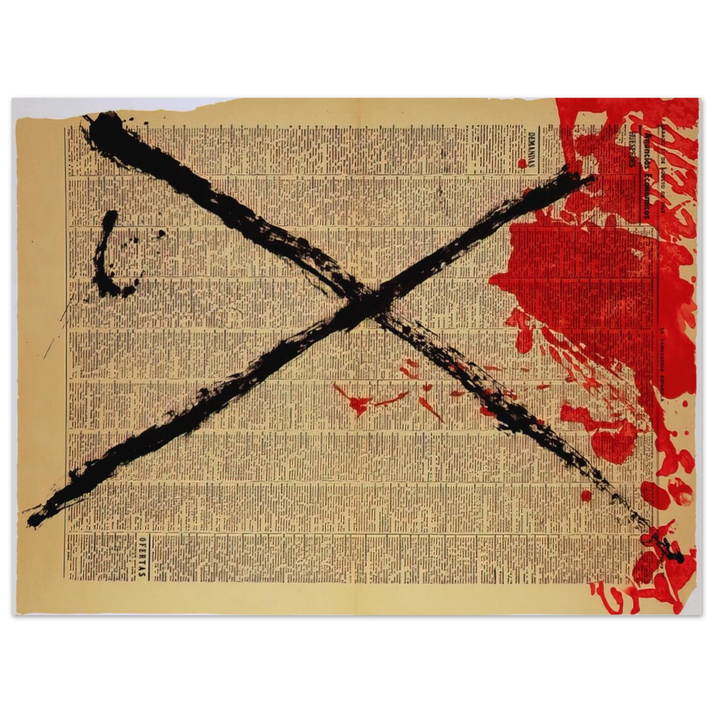
Antoni Tapies - JOURNAL 1968 75x100 cm / 30x40inches Fine Art Poster
Antoni Tapies - JOURNAL 1968 75x100 cm / 30x40inches Fine Art Poster
Couldn't load pickup availability
Embrace the Materiality of Antoni Tàpies' JOURNAL (1968)
Antoni Tàpies, the visionary of Catalan Informalism, redefined the canvas as a physical site of struggle and meditation. His 1968 masterpiece, JOURNAL, is a quintessential example of his 'matière' style, where symbols, textures, and heavy gestures converge. This museum-quality fine art print allows you to bring the raw, intellectual energy of one of the 20th century's most influential artists into your own collection.
In JOURNAL, Tàpies explores the semiotics of the everyday, using a muted palette and visceral mark-making to evoke the passage of time and the weight of history. This was a pivotal era for the artist, as his work became increasingly political and philosophical, treating the surface of the painting like a weathered wall that bears the scars of human existence.
Archival Excellence for the Discerning Collector
At RedKalion, we believe that an artwork's physical medium must match its historical importance. This reproduction is crafted to the highest industry standards to ensure its beauty endures for generations:
- Master's Edition Paper: A heavy-weight, museum-quality archival paper that provides a substantial, luxurious feel.
- Unrivaled Texture: A matte, uncoated, natural white finish that eliminates glare and enhances the depth of Tàpies' complex textures.
- Lasting Integrity: Our acid-free paper (pH above 7) prevents yellowing and degradation, maintaining the artwork's original tonal balance.
- Premium Specifications: Printed at a thickness of 0.29 mm (11.4 mils) and a weight of 250 gsm (110 lb) for a sturdy, professional-grade finish.
- Eco-Conscious Curation: We utilize FSC-certified paper, supporting responsible forest management while delivering world-class art.
Elevate your space with a piece that transcends mere decoration. This 75x100 cm (30x40 inches) archival print is a testament to the enduring power of Tàpies' vision, curated by RedKalion to satisfy the most exacting aesthetic standards.

Discover Unlimited Art Possibilities
At RedKalion, you can find virtually any artwork from any artist, available in a wide range of sizes to perfectly match your space.
If you didn’t find what you’re looking for, contact us at support@redkalion.com . We will source any artwork and produce it in any size and format you need, including art prints, posters, canvas, framed pieces, framed canvas, and more.
For dedicated art enthusiasts, we also offer handcrafted replicas of any artwork, carefully painted by highly skilled artists using traditional techniques.
For custom requests, contact us at support@redkalion.com .
What are the specific paper attributes of this Antoni Tàpies print?
This print uses Master's Edition archival paper. It is a 250 gsm (110 lb) natural white, matte, and uncoated paper, offering a premium museum-quality texture and thickness of 0.29 mm.
How does RedKalion ensure the longevity of the artwork?
We use acid-free paper with a pH level above 7. This archival-grade material prevents yellowing and ensures the print remains vibrant and structurally sound for decades.
What is the shipping and fulfillment process?
Our prints are produced on demand with no minimum order requirements. Each piece is meticulously packaged and shipped to ensure it arrives in pristine condition at your doorstep.
Is the paper used for this fine art poster sustainable?
Yes, we prioritize sustainability by using FSC-certified paper, ensuring that the materials for your museum-quality reproduction are sourced from responsibly managed forests.
What are the exact dimensions of this JOURNAL 1968 print?
This specific edition of Antoni Tàpies' JOURNAL 1968 measures 75x100 cm, which is approximately 30x40 inches, ideal for a focal point in a modern interior.
What is the significance of the year 1968 in Tàpies' career?
1968 was a year of global social upheaval. In Tàpies' work, this period reflected a deepening of his 'matter paintings,' using symbols to comment on the human condition and Catalan identity.
What artistic movement does this work represent?
Antoni Tàpies was a leader of Informalism (Art Informel), a movement focused on abstraction, spontaneity, and the physical properties of non-traditional artistic materials.