RedKalion
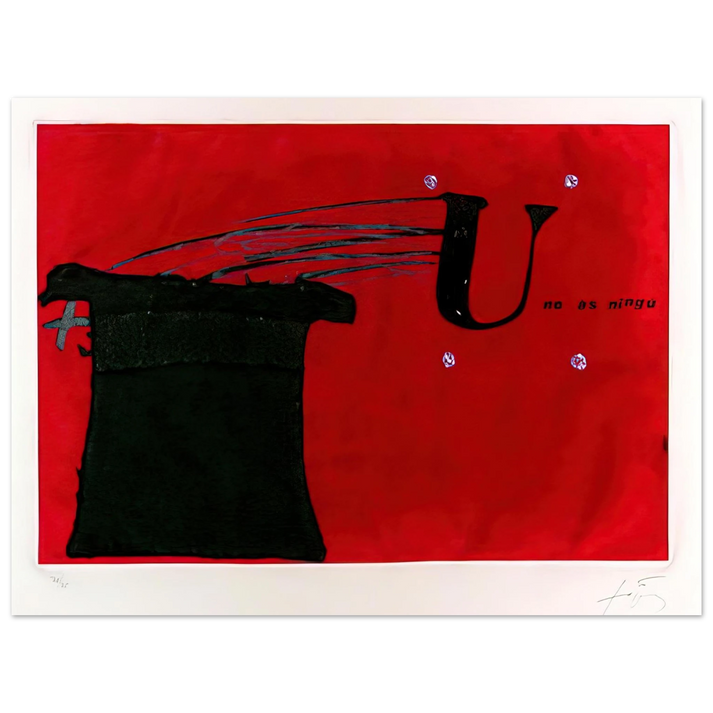
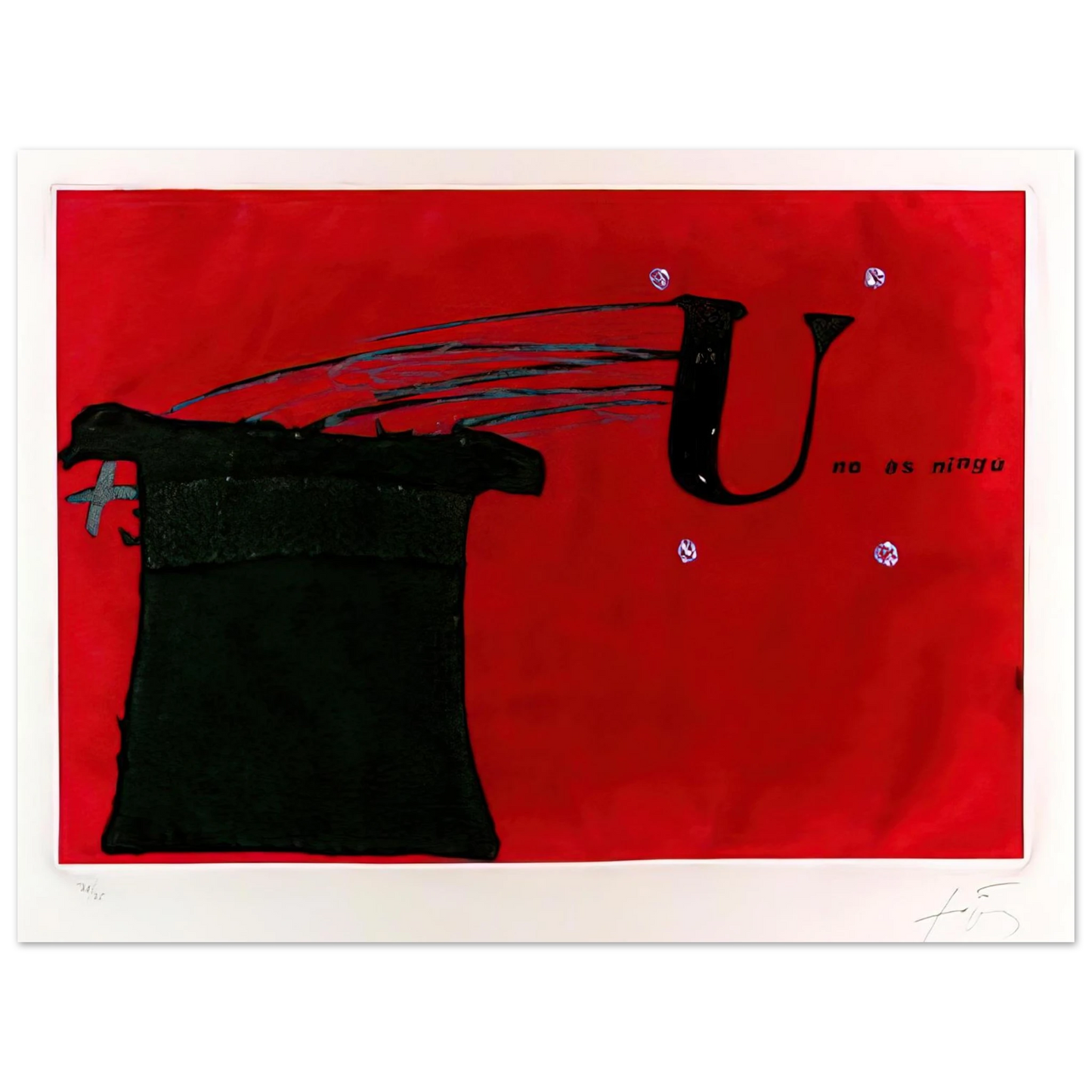
Antoni Tapies - U NO S NING 1979 75x100 cm / 30x40inches Fine Art Poster
Antoni Tapies - U NO S NING 1979 75x100 cm / 30x40inches Fine Art Poster
Couldn't load pickup availability
The Material Poetry of Antoni Tàpies: U NO S NING (1979)
Experience the profound existential depth of Catalan master Antoni Tàpies with this museum-quality reproduction of U NO S NING (1979). This piece, whose title translates to "One is no one," represents a pivotal moment in Tàpies' career, where he explored the intersection of language, void, and the raw materiality of the canvas. This 75x100 cm (30x40 inches) fine art print captures the haunting beauty of his gestural marks and philosophical inquiry, making it a sophisticated addition to any contemporary collection.
Authentic Artistry & Historical Context
Tàpies was a pioneer of the Informalist movement, specifically known for his 'Matter Painting' (Pintura matèrica). He treated the surface of his works like ancient walls—surfaces that have endured time, weather, and human history. In U NO S NING, the interplay of calligraphic scribbles and stark space evokes the influence of Zen philosophy and the political weight of post-Franco Spain. By choosing this fine art print, you are bringing a piece of European avant-garde history into your living space.
RedKalion Archival Quality Standards
At RedKalion, we curate our prints to meet the exacting standards of galleries and museums. This reproduction is crafted on our Master's Edition archival paper, chosen for its ability to replicate the tactile complexity of Tàpies' original medium. This is not a standard poster; it is an enduring investment in aesthetic quality.
- Premium Weight: 250 gsm (110 lb) for a substantial, professional feel.
- Luxurious Finish: Matte, uncoated, natural white paper that eliminates glare and enhances texture.
- Archival Longevity: Acid-free (pH above 7) construction ensures the paper will not yellow or degrade over time.
- Museum-Grade Thickness: 0.29 mm (11.4 mils) for structural integrity and durability.
- Sustainable Excellence: Printed on FSC-certified paper, supporting responsible forest management.
Elevate your environment with a masterpiece that transcends decoration. This on-demand archival print is meticulously produced to ensure that the subtle nuances of Tàpies' 1979 vision are preserved for generations to come.
Discover Unlimited Art Possibilities
At RedKalion, you can find virtually any artwork from any artist, available in a wide range of sizes to perfectly match your space.
If you didn’t find what you’re looking for, contact us at support@redkalion.com . We will source any artwork and produce it in any size and format you need, including art prints, posters, canvas, framed pieces, framed canvas, and more.
For dedicated art enthusiasts, we also offer handcrafted replicas of any artwork, carefully painted by highly skilled artists using traditional techniques.
For custom requests, contact us at support@redkalion.com .
What are the physical specifications of the paper?
The artwork is printed on 250 gsm (110 lb) Master's Edition archival paper. It features a matte, uncoated, natural white finish with a thickness of 0.29 mm, providing a premium, non-reflective surface ideal for high-end art displays.
How does the archival quality prevent yellowing?
Our paper is acid-free with a pH level above 7. This chemical balance prevents the paper from reacting with environmental pollutants, ensuring the print remains vibrant and the paper stays white for decades without yellowing.
Is the shipping process sustainable and efficient?
Yes. We use FSC-certified paper and print on demand to reduce waste. There are no minimum order requirements, and each piece is shipped in secure, protective packaging to ensure it arrives in pristine condition.
Does this print include a frame?
This product is a standalone fine art print. Its standard 75x100 cm (30x40 inches) dimensions make it compatible with a wide range of professional framing options to suit your personal interior design.
Can I expect color accuracy compared to the original lithograph?
We utilize advanced printing technology to capture the specific tonal range of Tàpies' 1979 palette. The matte, natural white paper enhances the depth of the blacks and the subtle textures characteristic of his Informalist style.
What is the historical significance of 'U NO S NING'?
The title 'U NO S NING' (One is no one) reflects Tàpies' interest in Eastern philosophy and the dissolution of the ego. It was part of a collaborative spirit with poet Joan Brossa, exploring the vulnerability of identity.
What was Antoni Tàpies' 'Matter Painting' technique?
Tàpies used a technique called 'Matter Painting' where he incorporated non-traditional materials like sand, marble dust, and string into his works to create a wall-like texture, emphasizing the physical presence of the art object.