RedKalion
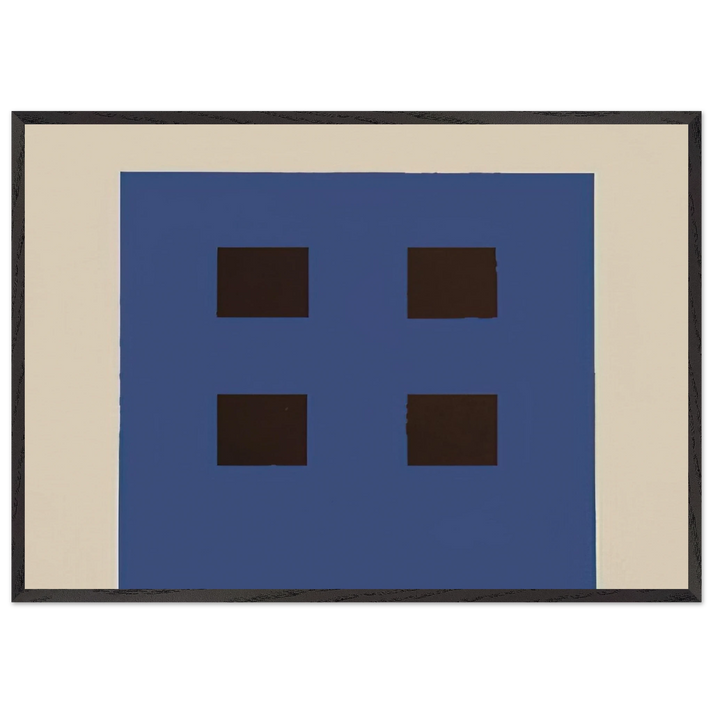
Apartment House - 1981 - Peter Halley 70x100 cm / 28x40 inches Framed Art Print – Black Wooden Frame
Apartment House - 1981 - Peter Halley 70x100 cm / 28x40 inches Framed Art Print – Black Wooden Frame
Couldn't load pickup availability
Elevate Your Space with Peter Halley’s 'Apartment House' (1981)
Experience the profound geometric abstraction of Peter Halley with this museum-quality reproduction of Apartment House (1981). As a central figure of the Neo-Geo movement, Halley redefined the landscape of modern art by transforming the language of minimalism into a critique of social systems. This fine art print captures the stark, compelling presence of his iconic 'cells' and 'conduits,' reflecting the architectural constraints and interconnectedness of contemporary urban life.
The Artistic Legacy of Neo-Geo
In 1981, Halley began his exploration into the geometry of social space. Unlike the purely aesthetic focus of earlier minimalists, Halley utilized rectangles and lines to represent prisons, cells, and the pipes that link them. Apartment House is a seminal example of this philosophy, illustrating how our living environments act as both shelter and confinement. Our reproduction honors Halley's precise vision, ensuring that the bold blocks of color and architectural lines remain as striking as the original canvas.
Museum-Grade Craftsmanship by RedKalion
At RedKalion, we believe a masterpiece deserves an equally masterful presentation. This framed art print is produced using premium materials designed to endure for generations:
- Archival Museum-Quality Paper: Printed on 250 gsm (110 lb) natural white, uncoated matte paper that prevents glare and preserves color depth.
- Robust Framing: Encased in a responsibly sourced black wooden frame (oak or ash), measuring 20mm (0.79") for a more substantial, premium profile than standard gallery frames.
- Crystal Clear Protection: Each print is shielded by shatterproof plexiglass, ensuring safety and longevity in any environment.
- Sustainably Sourced: All materials are FSC-certified or equivalent, reflecting our commitment to the planet and the arts.
Arriving ready-to-hang with an included hanging kit, this 70x100 cm (28x40 inches) statement piece brings the intellectual rigor of 1980s New York abstraction directly into your collection.

Discover Unlimited Art Possibilities
At RedKalion, you can find virtually any artwork from any artist, available in a wide range of sizes to perfectly match your space.
If you didn’t find what you’re looking for, contact us at support@redkalion.com . We will source any artwork and produce it in any size and format you need, including art prints, posters, canvas, framed pieces, framed canvas, and more.
For dedicated art enthusiasts, we also offer handcrafted replicas of any artwork, carefully painted by highly skilled artists using traditional techniques.
For custom requests, contact us at support@redkalion.com .
What paper quality is used for the Apartment House print?
We use 250 gsm (110 lb) natural white, archival museum-quality paper. This heavy-weight, uncoated matte paper ensures your Peter Halley print remains vibrant and resists yellowing over time.
Is the frame included and ready to hang?
Yes, this fine art print comes in a 20mm thick black wooden frame with a hanging kit included, making it ready to hang immediately upon arrival.
What material is the frame and glazing made of?
The frame is crafted from responsibly sourced oak or ash wood. For protection, we use high-quality shatterproof plexiglass to keep your artwork safe and pristine.
Are the materials used for this print sustainable?
Absolutely. RedKalion uses FSC-certified paper and frame materials (or local equivalents) to ensure our premium reproductions support sustainable forestry practices.
How long will this archival print last?
Thanks to the archival-grade, acid-free paper and protective framing, this museum-quality reproduction is designed to last for decades without significant fading or degradation.
What is the historical significance of Peter Halley’s 'Apartment House'?
Created in 1981, this piece marks the birth of Halley's 'Neo-Geo' style, using geometric 'cells' to represent the social and psychological structures of modern urban architecture.
What does the 'conduit' represent in Halley's work?
In Halley’s visual language, conduits represent the hidden networks—like plumbing or digital wires—that connect our isolated cells, reflecting the underlying systems of modern society.