RedKalion
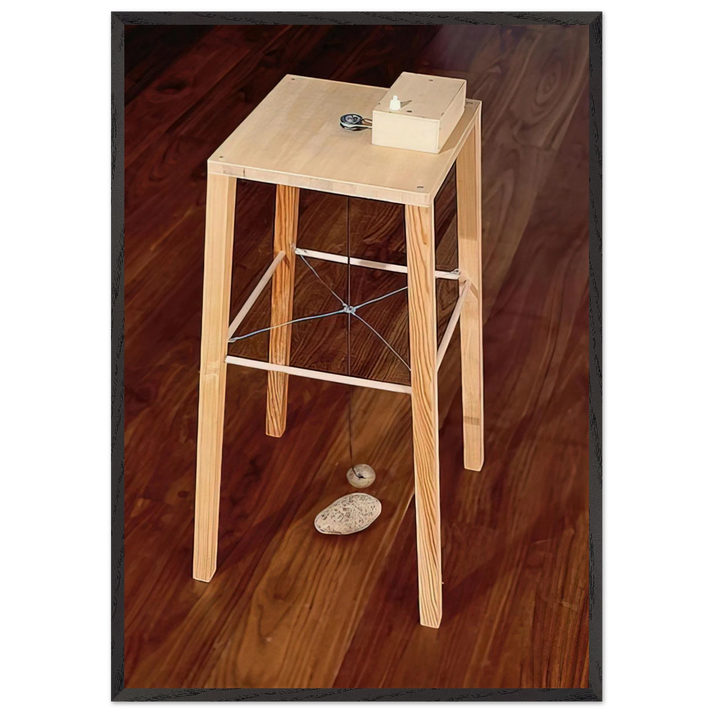
APPARATUS WHEREBY ONE POTATO CAN ORBIT ANOTHER 1969 - Sigmar Polke 70x100 cm / 28x40 inches Framed Art Print – Black Wooden Frame
APPARATUS WHEREBY ONE POTATO CAN ORBIT ANOTHER 1969 - Sigmar Polke 70x100 cm / 28x40 inches Framed Art Print – Black Wooden Frame
Couldn't load pickup availability
Elevate Your Space with Sigmar Polke’s Avant-Garde Irony
Experience a cornerstone of 20th-century conceptual art with Sigmar Polke’s 1969 masterpiece, "Apparatus Whereby One Potato Can Orbit Another" (Apparat, mit dem eine Kartoffel eine andere umkreisen kann). This work represents a defining moment in Capitalist Realism, a movement Polke co-founded to critique both Socialist Realism and the consumer-driven aesthetics of American Pop Art. In this intriguing piece, Polke employs a pseudo-scientific diagrammatic style to elevate the humble potato to the status of a celestial body, blending deadpan humor with a profound critique of systemic logic.
Museum-Quality Execution for the Discerning Collector
At RedKalion, we honor Polke’s subversive legacy through a museum-quality reproduction that captures every nuance of the original's technical precision. This 70x100 cm (28x40 inches) fine art print is rendered on 250 gsm (110 lb) natural white, archival-grade paper. The matte, uncoated finish ensures a sophisticated, glare-free viewing experience that highlights the intricate linework of this conceptual apparatus.
Premium Framing and Sustainable Craftsmanship
To provide a gallery-ready presentation, this print is housed in a premium black wooden frame crafted from responsibly sourced oak and ash. Measuring 20mm (0.79") in thickness and width, this frame provides a more substantial and luxurious profile than standard commercial alternatives. The artwork is protected by shatterproof plexiglass, ensuring its longevity while maintaining the clarity of the image. Each piece arrives ready-to-hang, complete with a professional hanging kit, allowing you to integrate this archival masterpiece into your collection immediately.
- Artist: Sigmar Polke
- Title: Apparatus Whereby One Potato Can Orbit Another (1969)
- Paper: FSC-certified 250 gsm archival museum-quality paper
- Frame: 20mm thick black oak/ash wood
- Dimensions: 70x100 cm / 28x40 inches
- Mounting: Includes hanging kit, ready to hang

Discover Unlimited Art Possibilities
At RedKalion, you can find virtually any artwork from any artist, available in a wide range of sizes to perfectly match your space.
If you didn’t find what you’re looking for, contact us at support@redkalion.com . We will source any artwork and produce it in any size and format you need, including art prints, posters, canvas, framed pieces, framed canvas, and more.
For dedicated art enthusiasts, we also offer handcrafted replicas of any artwork, carefully painted by highly skilled artists using traditional techniques.
For custom requests, contact us at support@redkalion.com .
What materials are used for this Sigmar Polke fine art print?
We use archival museum-quality paper with a weight of 250 gsm (110 lb). The paper is natural white, matte, and uncoated, ensuring long-lasting durability and a premium aesthetic for this Sigmar Polke reproduction.
Is the black wooden frame sustainably sourced?
Yes, the frame is crafted from responsibly sourced oak and ash wood. It features a 20mm profile, which is wider and more robust than standard frames, providing a high-end gallery feel.
How is the artwork protected during shipping and display?
The print is protected by high-quality, shatterproof plexiglass. This ensures your artwork arrives in perfect condition and remains shielded from dust and physical damage while on display.
Does the print come ready to hang on my wall?
Absolutely. Every framed print includes a professional hanging kit and is pre-assembled, so your new Sigmar Polke artwork is ready to hang directly upon arrival.
What is the archival longevity of RedKalion prints?
Our prints use FSC-certified archival paper and museum-grade inks designed to resist fading for decades, ensuring your investment in fine art remains vibrant for generations.
What was the significance of the potato in Polke's 1969 work?
For Polke, the potato served as a symbol of German middle-class life and mundane reality. By placing it in a complex scientific "apparatus," he parodied the era's obsession with technological progress and structural logic.
What movement does this artwork belong to?
This piece is a seminal example of Capitalist Realism, a movement Polke developed with Gerhard Richter to satirize both the consumer culture of the West and the state-sanctioned art of the East.