RedKalion
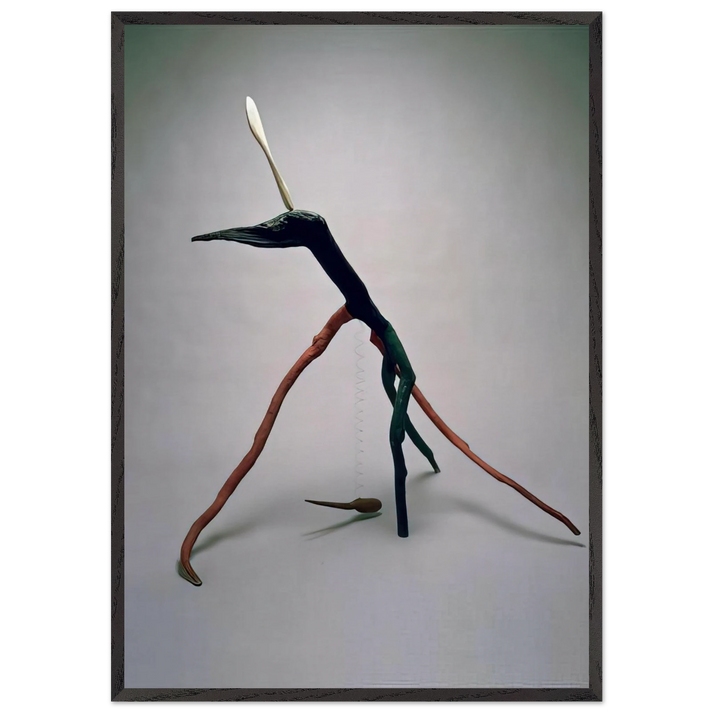
APPLE MONSTER 1938 - Alexander Calder 70x100 cm / 28x40 inches Framed Art Print – Black Wooden Frame
APPLE MONSTER 1938 - Alexander Calder 70x100 cm / 28x40 inches Framed Art Print – Black Wooden Frame
Couldn't load pickup availability
A Surrealist Masterpiece: Apple Monster (1938) by Alexander Calder
Infuse your collection with the whimsical intelligence of Alexander Calder. The 'Apple Monster' (1938) represents a pivotal moment in Calder’s career, where his mastery of kinetic sculpture began to bleed into his graphic works. This fine art print captures the organic, biomorphic forms that defined the Surrealist movement, offering a sophisticated balance of tension and playfulness.
At RedKalion, we believe a museum-quality reproduction should honor the integrity of the original. This piece is meticulously printed on 250 gsm (110 lb) archival museum-quality paper. The natural white, uncoated matte finish ensures the colors remain vibrant and deep, eliminating glare and preserving the tactile richness of the ink for generations.
Complementing this archival-grade masterpiece is a premium black frame crafted from responsibly sourced oak and ash wood. Measuring 20mm (0.79") in both thickness and width, this frame provides a more robust and premium profile than standard gallery frames. To ensure your investment remains pristine, each print is protected by shatterproof plexiglass, providing crystal-clear visibility with superior durability.
- Paper: FSC-certified, 0.29 mm (11.4 mils) thickness for a heavy, premium feel.
- Frame: Sustainably sourced black wood with a contemporary 20mm profile.
- Installation: Delivered ready-to-hang with a high-quality hanging kit included.
- Longevity: Acid-free materials prevent yellowing, ensuring the print remains a focal point of your home for decades.
Elevate your interior design with an archival masterpiece that captures the essence of mid-century modern innovation. RedKalion is dedicated to providing art enthusiasts with museum-standard curated pieces that endure.

Discover Unlimited Art Possibilities
At RedKalion, you can find virtually any artwork from any artist, available in a wide range of sizes to perfectly match your space.
If you didn’t find what you’re looking for, contact us at support@redkalion.com . We will source any artwork and produce it in any size and format you need, including art prints, posters, canvas, framed pieces, framed canvas, and more.
For dedicated art enthusiasts, we also offer handcrafted replicas of any artwork, carefully painted by highly skilled artists using traditional techniques.
For custom requests, contact us at support@redkalion.com .
What is the quality of the paper used for this Calder print?
We use 250 gsm (110 lb) museum-quality paper. It is a natural white, uncoated, and matte archival paper that ensures long-lasting vibrancy and prevents yellowing over time.
How is the frame constructed?
Our frames are made from responsibly sourced oak and ash wood. They are 20mm thick and wide, providing a sturdy and elegant museum-style profile compared to thinner alternatives.
Is the print ready to hang upon arrival?
Yes. Every framed print arrives ready-to-hang with a pre-installed hanging kit. You can display your Alexander Calder reproduction immediately upon delivery.
How does RedKalion ensure the artwork is protected?
Each print is shielded by shatterproof plexiglass. This provides the clarity of glass while offering superior protection against impacts and UV degradation during shipping and display.
What are the shipping standards for framed prints?
We prioritize sustainability and safety. All prints use FSC-certified materials and are securely packaged in robust, eco-friendly containers to ensure they arrive in perfect condition.
What inspired Alexander Calder's Apple Monster?
Inspired by the Surrealist movement and biomorphic abstraction, Calder used playful, organic shapes to explore the relationship between balance and movement, even within two-dimensional works.
Why is 1938 a significant year for Calder’s work?
In 1938, Calder was perfecting his 'mobiles' and 'stabiles.' This year marked a high point in his ability to translate kinetic energy into static graphic compositions.