

RedKalion
APPLE TREE I - Gustav Klimt Brushed Aluminum Print - 70x100 cm / 28x40 inches | Gustav Klimt Aluminum Print | Gustav Klimt Prints
APPLE TREE I - Gustav Klimt Brushed Aluminum Print - 70x100 cm / 28x40 inches | Gustav Klimt Aluminum Print | Gustav Klimt Prints
Couldn't load pickup availability
Elevate Your Space with Gustav Klimt’s Apple Tree I
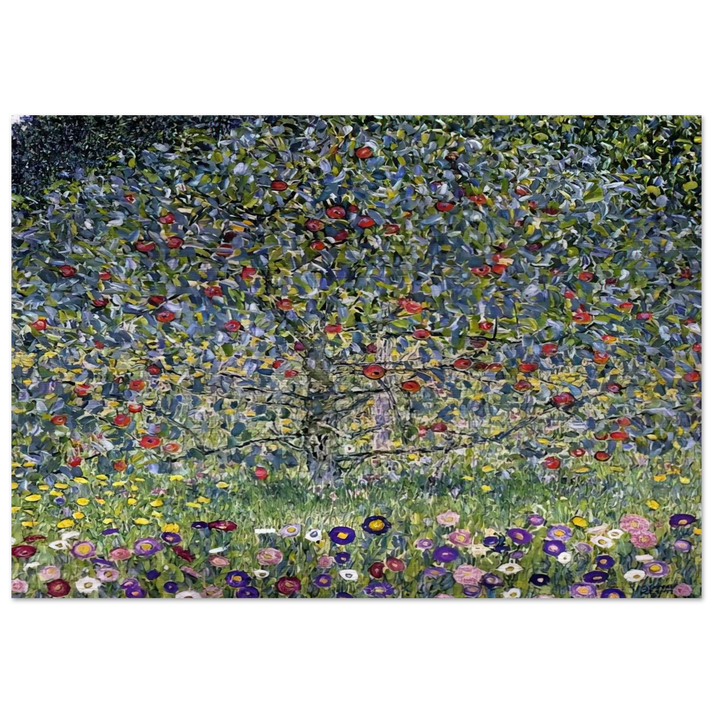
Experience the lush, decorative splendor of the Vienna Secession with this museum-quality reproduction of Gustav Klimt’s Apple Tree I. Originally painted around 1912, this masterpiece showcases Klimt’s transition from his iconic Golden Phase into a more organic, mosaic-like exploration of nature. The dense foliage and vibrant bursts of color are rendered with a rhythmic precision that echoes the influence of Post-Impressionist masters, yet remains uniquely Klimtian in its ornamental complexity.
The RedKalion Archival Standard
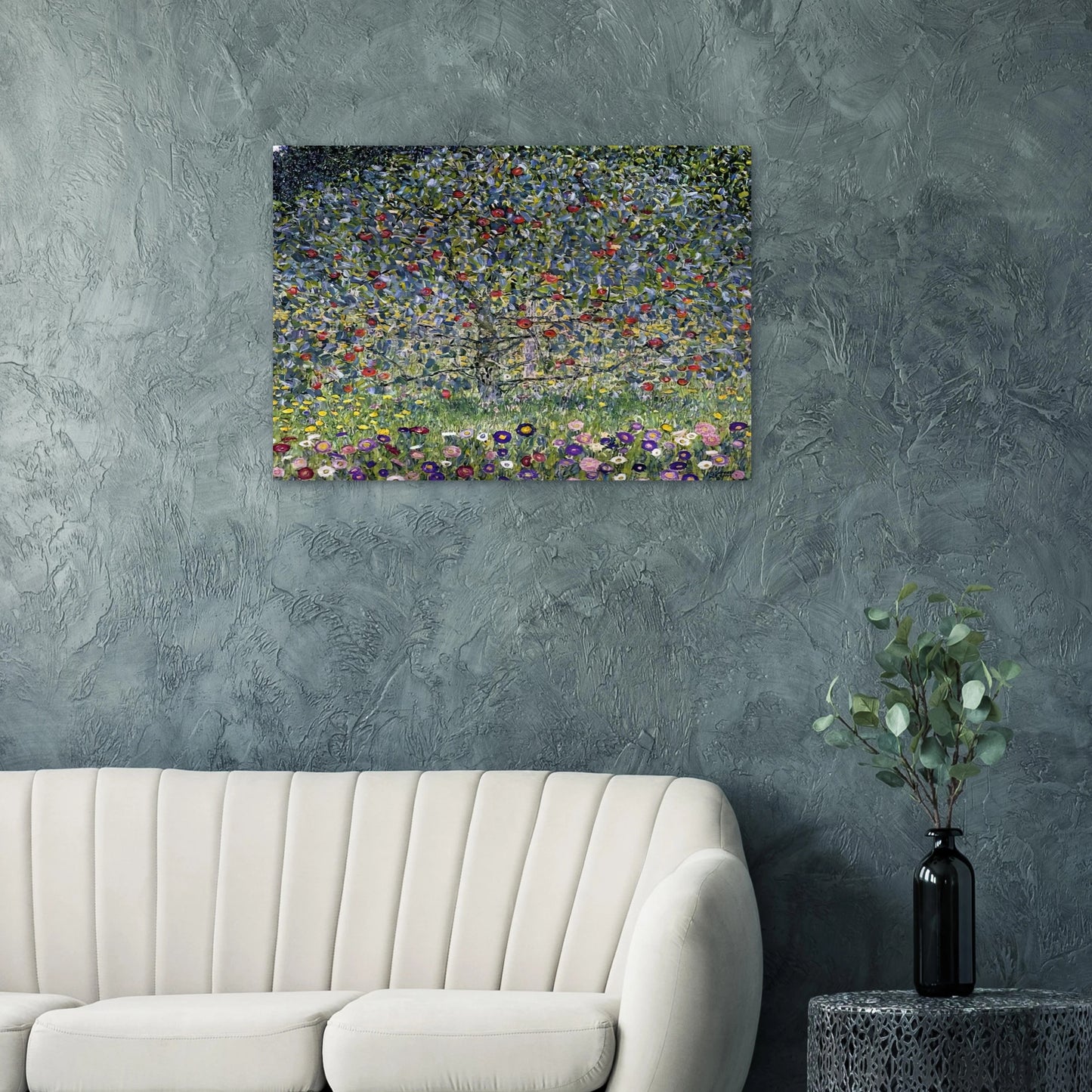
At RedKalion, we curate fine art prints that bridge the gap between historical significance and modern interior design. This Gustav Klimt Aluminum Print is not merely a reproduction; it is a sophisticated piece of decor designed to endure. Printed on premium Brushed Silver Aluminum DIBOND®, the artwork takes on a dynamic, contemporary life. The 3mm (0.12") thick rigid base provides exceptional durability while the horizontal grain of the brushed finish adds a tactile depth to the composition.
Innovative Printing Technique
Using state-of-the-art direct printing technology, we achieve a striking matte finish that eliminates glare, making it ideal for spaces with high natural light. A unique feature of this Gustav Klimt reproduction is the metallic silver effect: all unprinted white areas of the original painting allow the brushed aluminum to shine through, creating a shimmering, ethereal quality that perfectly complements Klimt’s luminous style. This interplay between the ink and the metallic grain offers a visual experience that paper prints simply cannot replicate.
- Material: 3mm Brushed Silver Aluminum DIBOND® for a rigid, premium feel.
- Finish: Matte and glare-free with a sophisticated horizontal grain.
- Visual Impact: Metallic silver highlights in white areas for a luminous, dynamic look.
- Ready to Hang: A professional hanging kit is included with every order.


Discover Unlimited Art Possibilities
At RedKalion, you can find virtually any artwork from any artist, available in a wide range of sizes to perfectly match your space.
If you didn’t find what you’re looking for, contact us at support@redkalion.com . We will source any artwork and produce it in any size and format you need, including art prints, posters, canvas, framed pieces, framed canvas, and more.
For dedicated art enthusiasts, we also offer handcrafted replicas of any artwork, carefully painted by highly skilled artists using traditional techniques.
For custom requests, contact us at support@redkalion.com .
What is the print quality of this Gustav Klimt reproduction?
RedKalion uses high-resolution direct printing on AluDibond to ensure vivid colors and sharp details, capturing the mosaic-like textures of Klimt’s Apple Tree I with museum-quality precision.
What material is used for the Apple Tree I print?
The artwork is printed on 3mm (0.12") thick brushed silver Aluminum DIBOND®, featuring a horizontal grain and a metallic finish for a durable, high-end look.
Is the mounting hardware included with the print?
Yes, every Gustav Klimt Aluminum Print includes a professional hanging kit, ensuring your artwork is ready to be displayed immediately upon arrival.
How is the artwork protected during shipping?
We use robust, protective packaging specifically designed for large-format fine art prints to ensure your order arrives in pristine, gallery-ready condition.
What is the archival longevity of an aluminum print?
Aluminum DIBOND® is highly resistant to fading and environmental factors, providing an archival-grade display that will maintain its vibrancy for decades without the need for glass protection.
When did Gustav Klimt paint Apple Tree I?
Gustav Klimt painted Apple Tree I around 1912. It represents his fascination with the rhythmic patterns of nature and the decorative potential of landscape art.
What style does Apple Tree I represent?
Apple Tree I is a prime example of the Vienna Secession style, blending Symbolism with decorative, mosaic-like patterns influenced by Pointillism and the textures of Byzantine art.