RedKalion
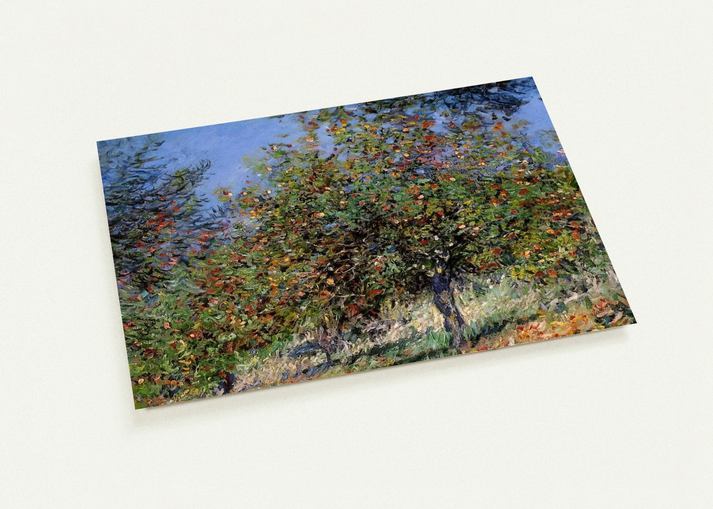
Apple Trees on the Chantemesle Hill By claude monet Pack of 10 Post Cards | claude monet Post Cards | A6 (10.5 x 14.8 cm) - 4.1 x 5.8 inches
Apple Trees on the Chantemesle Hill By claude monet Pack of 10 Post Cards | claude monet Post Cards | A6 (10.5 x 14.8 cm) - 4.1 x 5.8 inches
Couldn't load pickup availability
Elevate Your Correspondence with Claude Monet’s Impressionist Serenity
Invite the luminous atmosphere of the French countryside into your daily life with our exclusive pack of 10 fine art postcards featuring Claude Monet’s "Apple Trees on the Chantemesle Hill." Painted during Monet’s pivotal years in Vétheuil, this work captures the fleeting beauty of the orchard-covered slopes overlooking the Seine. Each card serves as a museum-quality reproduction, allowing you to share a piece of art history with friends or curate a sophisticated miniature gallery within your own home.
Masterful Artistry Meets Archival Precision
At RedKalion, we honor Monet’s legacy by utilizing state-of-the-art 12-color fine art printing technology. Unlike standard 4-color inkjet processes, our method captures the subtle nuances of Monet’s palette—from the soft, dappled greens of the apple foliage to the airy, atmospheric blues of the horizon. Every stroke and textural detail is rendered with stunning depth and accuracy.
Premium Material Specifications
Designed for those who appreciate the tactile quality of high-end stationery, these postcards are crafted to endure:
- Paper Quality: 200 gsm (80 lb) professional-grade paper with a thickness of 0.26 mm (10.3 mils) for a premium, sturdy feel.
- Sophisticated Finish: A smooth matte coating ensures a glare-free display and a clean surface for writing.
- Eco-Conscious Curation: Printed on FSC-certified paper, ensuring your appreciation for beauty aligns with environmental responsibility.
- Format: Standard A6 size (10.5 x 14.8 cm / 4.1 x 5.8 inches), perfect for framing or mailing.
By choosing RedKalion, you are investing in an archival-grade reproduction that celebrates the intersection of historical mastery and modern print excellence. Transform a simple message into an enduring keepsake.

Discover Unlimited Art Possibilities
At RedKalion, you can find virtually any artwork from any artist, available in a wide range of sizes to perfectly match your space.
If you didn’t find what you’re looking for, contact us at support@redkalion.com . We will source any artwork and produce it in any size and format you need, including art prints, posters, canvas, framed pieces, framed canvas, and more.
For dedicated art enthusiasts, we also offer handcrafted replicas of any artwork, carefully painted by highly skilled artists using traditional techniques.
For custom requests, contact us at support@redkalion.com .
What printing technology is used for these Claude Monet postcards?
We use advanced 12-color fine art printing technology. This ensures far greater color vibrancy and tonal depth than standard 4-color printing, accurately reflecting Monet's original Impressionist palette.
What is the weight and feel of the postcard paper?
These cards are printed on 200 gsm (80 lb) paper with a thickness of 0.26 mm. They feature a smooth matte finish, providing a premium, sturdy feel and a glare-free aesthetic.
Are the materials used for these art prints sustainable?
Yes. All postcards are printed on FSC-certified (Forest Stewardship Council) paper, ensuring the materials are sourced from responsibly managed forests that provide environmental and social benefits.
Is there a minimum order requirement for these postcards?
No. Our postcards are printed on demand with no minimum order requirements, allowing you to acquire museum-quality reproductions as needed without excess waste.
Will the colors fade over time?
Our archival-grade inks and FSC-certified matte paper are designed for longevity. The 12-color process provides exceptional lightfastness, ensuring the artwork remains vivid for years to come.
Where was "Apple Trees on the Chantemesle Hill" originally painted?
Monet painted this scene near Vétheuil, France. It depicts the lush hillsides of Chantemesle, located across the Seine, where he famously explored the effects of light on natural landscapes.
What art movement does this piece represent?
This work is a quintessential example of French Impressionism, characterized by short, broken brushstrokes and an emphasis on the accurate depiction of light in its changing qualities.