

RedKalion
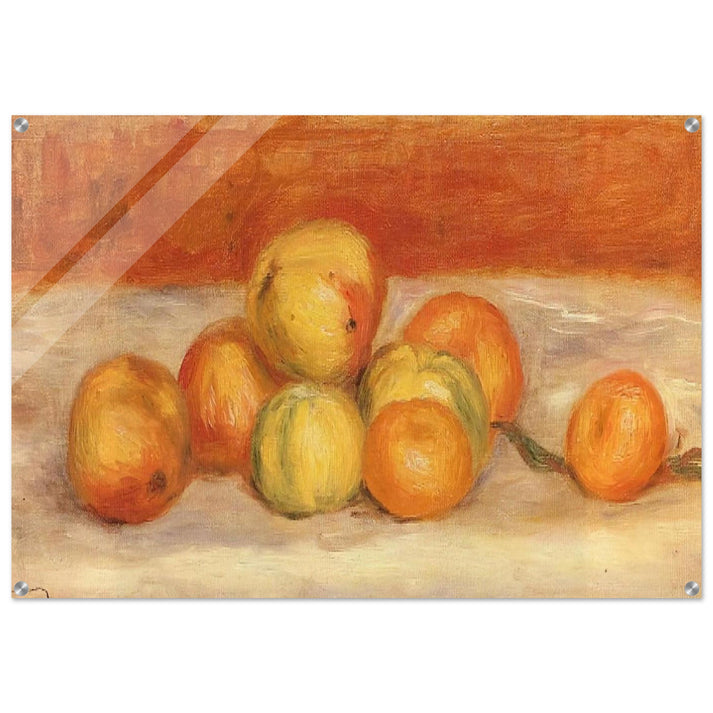
Apples and Manderines - Pierre-Auguste Renoir Acrylic Print - 70x100 cm / 28x40″ inches | Pierre-Auguste Renoir Wall Art | Pierre-Auguste Renoir Prints
Apples and Manderines - Pierre-Auguste Renoir Acrylic Print - 70x100 cm / 28x40″ inches | Pierre-Auguste Renoir Wall Art | Pierre-Auguste Renoir Prints
Couldn't load pickup availability
Experience the Vibrant Still Life of Pierre-Auguste Renoir
RedKalion is proud to present a museum-quality reproduction of Apples and Mandarines, a captivating still life by the legendary Impressionist master, Pierre-Auguste Renoir. This fine art print captures the essence of Renoir’s later period, where his obsession with color, light, and tactile volume transformed simple domestic subjects into timeless masterpieces of French art.
The Artistic Mastery of Renoir
In Apples and Mandarines, Renoir moves away from the fleeting moments of modern Parisian life to explore the permanence of form. His signature soft brushwork and warm palette breathe life into the fruit, creating a sense of weight and juice-filled vitality. By choosing this Pierre-Auguste Renoir wall art, you are bringing a piece of art history into your home that celebrates the beauty of the everyday through the lens of a genius who famously claimed he painted with 'joy'.
Museum-Quality Construction by RedKalion
Our commitment to excellence ensures that this Pierre-Auguste Renoir print remains a focal point in your collection for decades. We utilize advanced printing techniques on high-grade materials to preserve the integrity of the original colors.
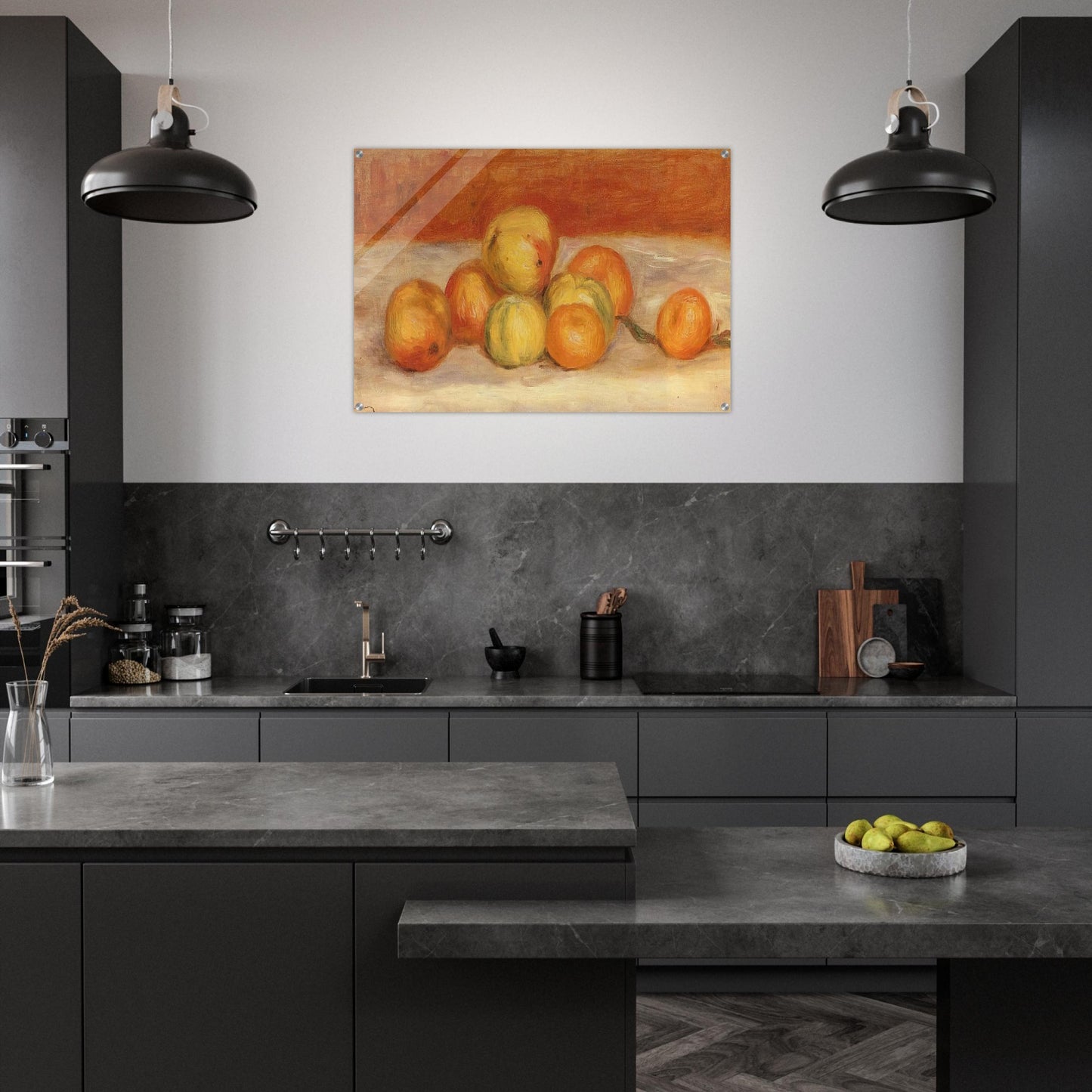
- Premium Acrylic: Crafted from 4mm (0.15") acrylic for a sleek, vibrant, and depth-enhancing finish.
- Modern Aesthetics: Features precision straight-cut corners for a contemporary, gallery-ready look.
- Integrated Hanging System: Each piece includes a complete hanging kit with screws and pre-drilled holes at each corner (14mm from edge, 8mm diameter) for a secure, professional installation.
- Archival Durability: Designed to resist fading and environmental wear, ensuring your investment endures.
Elevate your interior design with an archival masterpiece that balances Impressionist tradition with modern high-end production. This is more than a print; it is a testament to artistic heritage, curated by RedKalion.


Discover Unlimited Art Possibilities
At RedKalion, you can find virtually any artwork from any artist, available in a wide range of sizes to perfectly match your space.
If you didn’t find what you’re looking for, contact us at support@redkalion.com . We will source any artwork and produce it in any size and format you need, including art prints, posters, canvas, framed pieces, framed canvas, and more.
For dedicated art enthusiasts, we also offer handcrafted replicas of any artwork, carefully painted by highly skilled artists using traditional techniques.
For custom requests, contact us at support@redkalion.com .
What materials are used for the Apples and Mandarines print?
We use premium 4mm (0.15") acrylic, which provides a sleek, glass-like finish and enhances the vibrancy of Renoir’s color palette for a museum-quality look.
Is the hanging hardware included with the acrylic print?
Yes, every print includes a professional hanging kit with screws. Each corner features pre-drilled holes for secure mounting, positioned 14mm from the edges.
How does RedKalion ensure the archival quality of the print?
We use high-definition printing on archival-grade acrylic that is resistant to UV damage and moisture, ensuring your Pierre-Auguste Renoir wall art remains vibrant for years.
What are the corner specifications of the acrylic panel?
The print is designed with straight-cut corners to provide a clean, modern aesthetic that complements both traditional and contemporary interior spaces.
How is the print packaged for shipping?
Each acrylic print is meticulously secured in protective packaging to ensure it arrives at your door in pristine condition, ready for immediate installation.
What was Renoir's artistic intent with Apples and Mandarines?
In this late-period work, Renoir focused on the interplay of light and rounded forms, using the still life genre to experiment with rich, saturated tones and soft textures.
Why is Renoir’s still life work considered significant in art history?
Renoir’s still lifes, such as Apples and Mandarines, represent a transition toward a more structured, classical approach to Impressionism, emphasizing the tactile beauty of natural objects.