RedKalion
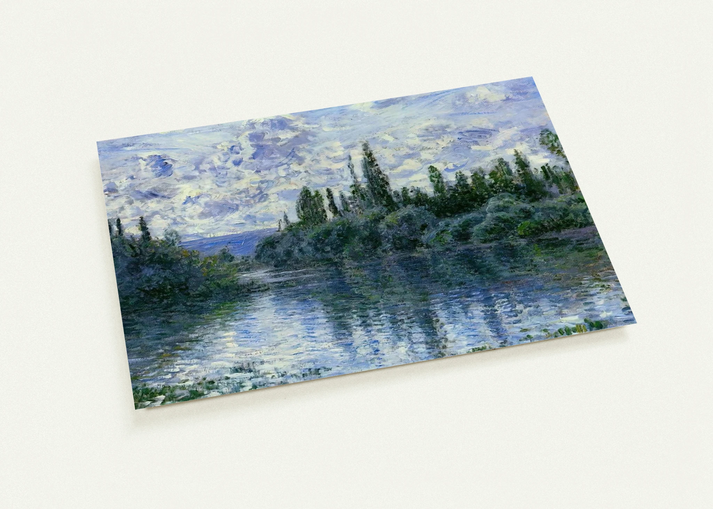
Arm of the Seine near Vetheuil By claude monet Pack of 10 Post Cards | claude monet Post Cards | A6 (10.5 x 14.8 cm) - 4.1 x 5.8 inches
Arm of the Seine near Vetheuil By claude monet Pack of 10 Post Cards | claude monet Post Cards | A6 (10.5 x 14.8 cm) - 4.1 x 5.8 inches
Couldn't load pickup availability
Immerse Yourself in the Atmosphere of the Seine: Claude Monet’s Impressionist Mastery
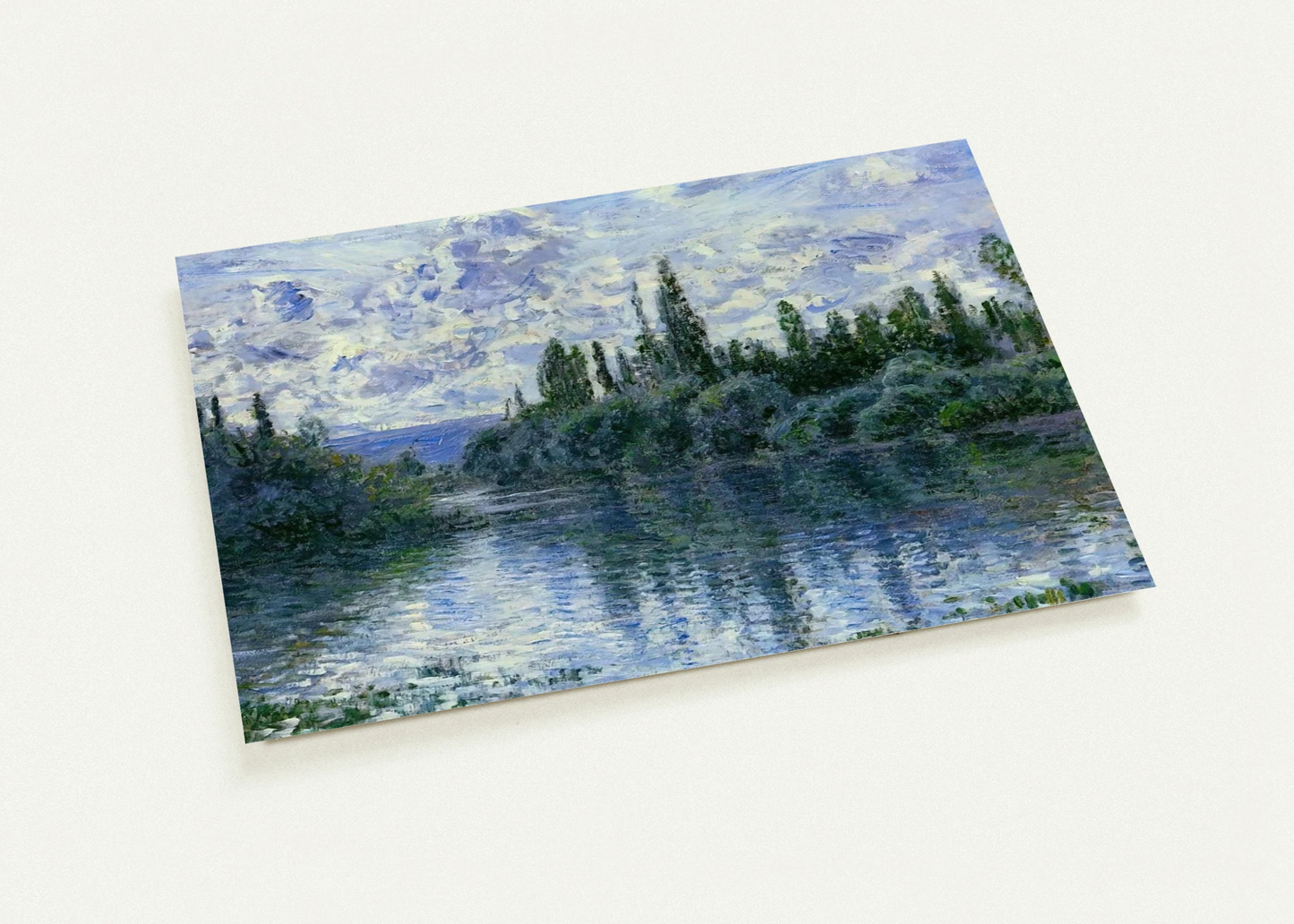
Experience the tranquil beauty of Claude Monet’s Arm of the Seine near Vétheuil through this exquisite pack of 10 fine art postcards. Painted during a pivotal period in Monet’s career, this work captures the shimmering reflections and atmospheric depth of the French countryside. Each postcard serves as a miniature museum-quality reproduction, allowing you to share the essence of Impressionism with friends or curate a sophisticated gallery wall in your own home.
Unrivaled Print Quality and Material Excellence
At RedKalion, we bridge the gap between historical art and modern precision. Unlike standard mass-produced stationery, these postcards are crafted using 12-color fine art printing technology. This advanced process ensures vivid, accurate color reproduction and stunning depth that far surpasses conventional 4-color inkjet methods. The result is a print that captures the nuanced brushwork and light-dappled palette for which Monet is renowned.
- Paper Weight: Substantial 200 gsm (80 lb) for a premium, durable feel.
- Paper Finishing: A sophisticated smooth matte finish that eliminates glare, allowing the art to be viewed clearly from any angle.
- Dimensions: A6 size (10.5 x 14.8 cm / 4.1 x 5.8 inches), perfect for standard mailing or framing.
- Sustainability: Printed on demand using FSC-certified paper, reflecting our commitment to environmental responsibility.
Whether used for heartfelt correspondence or as a decorative accent, these Claude Monet postcards embody the archival elegance and curatorial standards of RedKalion. Elevate your space and your sentiments with a masterpiece that endures.
Discover Unlimited Art Possibilities
At RedKalion, you can find virtually any artwork from any artist, available in a wide range of sizes to perfectly match your space.
If you didn’t find what you’re looking for, contact us at support@redkalion.com . We will source any artwork and produce it in any size and format you need, including art prints, posters, canvas, framed pieces, framed canvas, and more.
For dedicated art enthusiasts, we also offer handcrafted replicas of any artwork, carefully painted by highly skilled artists using traditional techniques.
For custom requests, contact us at support@redkalion.com .
What makes RedKalion printing quality superior for fine art reproductions?
We utilize 12-color fine art printing technology, which provides a significantly wider color gamut and greater depth than standard 4-color printing. This ensures that the subtle gradients and vibrant tones of Monet’s original work are captured with museum-grade accuracy.
What type of paper are these Monet postcards printed on?
Each card is printed on 200 gsm (80 lb) FSC-certified paper with a thickness of 0.26 mm. The smooth matte finish ensures a clean, glare-free display, making the artwork the focal point without distracting reflections.
Are these postcards environmentally friendly?
Yes. We use FSC-certified paper, ensuring the materials are sourced from responsibly managed forests. Additionally, our print-on-demand model reduces waste by only producing what is ordered.
What is the size and quantity of this set?
This set includes a pack of 10 flat postcards. Each card measures A6 size (10.5 x 14.8 cm or 4.1 x 5.8 inches), which is the standard international size for correspondence and small art frames.
Will the colors of these art cards fade over time?
Our archival-grade inks and high-quality matte paper are designed for longevity. When kept out of direct sunlight, these prints maintain their color vibrancy for decades, serving as a lasting tribute to Monet’s legacy.
What is the historical significance of Monet’s Vétheuil series?
The Vétheuil period (late 1870s to early 1880s) was a time of transition for Monet. These works focus on the interplay of light on water, marking a shift toward the more abstract, atmospheric style of his later years.
How does Monet capture the water's surface in this piece?
Monet employs short, rhythmic brushstrokes and broken color to simulate the movement of the Seine. By layering different hues, he creates a sense of shimmering light that feels dynamic and fleeting, a hallmark of high Impressionism.