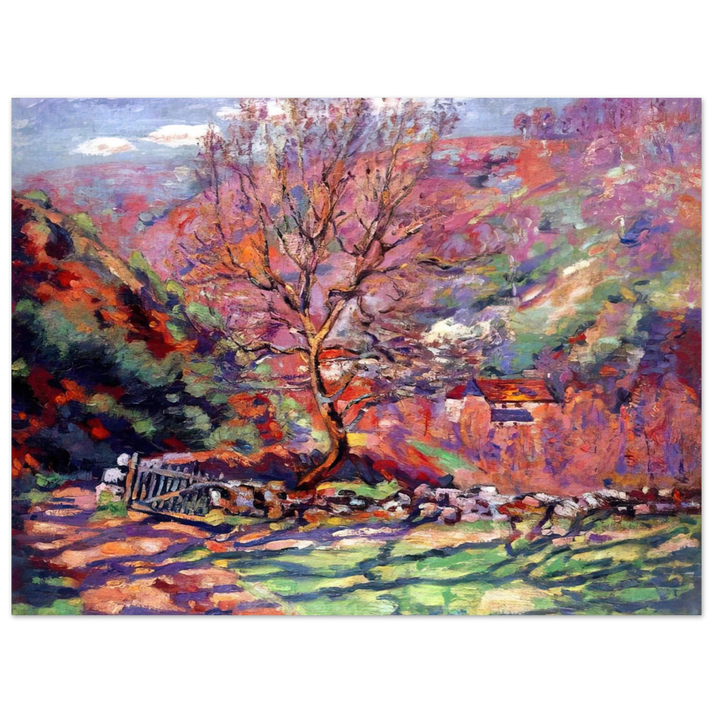
RedKalion
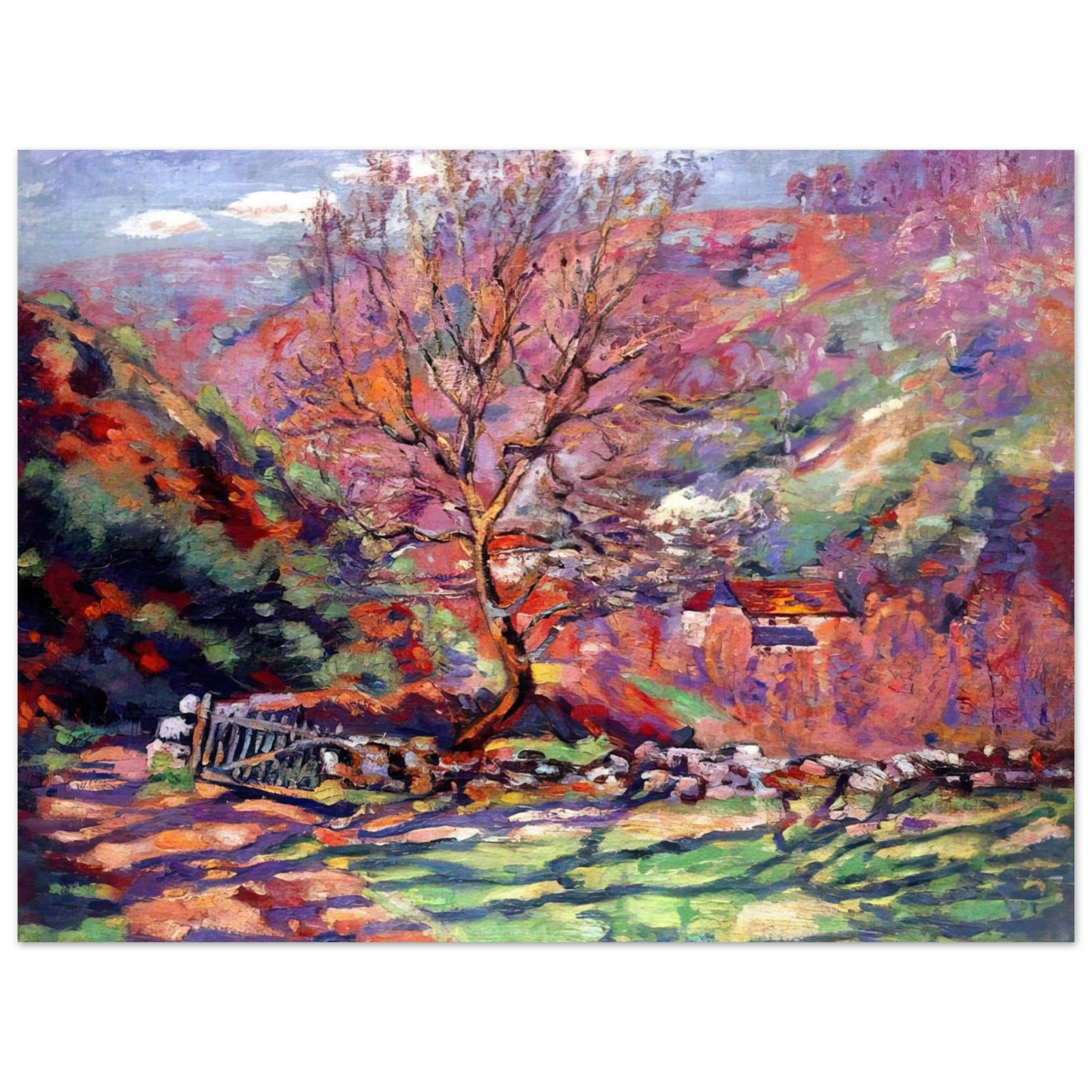
Armand Guillaumin - Crozant, solitude - 1915 75x100 cm / 30x40inches Fine Art Poster
Armand Guillaumin - Crozant, solitude - 1915 75x100 cm / 30x40inches Fine Art Poster
Couldn't load pickup availability
Experience the Vibrant Stillness of Armand Guillaumin's Crozant, Solitude (1915)
Step into the rugged beauty of the Creuse Valley with Armand Guillaumin’s late masterpiece, Crozant, solitude. Painted in 1915, this work captures the raw, emotive power of the French landscape through the eyes of a founding Impressionist who evolved into a pioneer of Fauvist color. Guillaumin’s brushwork in this period is characterized by intense purples, ochres, and deep blues, reflecting the quiet isolation and timeless grandeur of the Crozant region.
At RedKalion, we honor Guillaumin’s legacy by offering this museum-quality reproduction, meticulously crafted to preserve the chromatic intensity and textural depth of the original oil painting. This is not a standard poster; it is a fine art print designed for the discerning collector who demands archival excellence and historical accuracy.
Exceptional Materiality and Craftsmanship
Our commitment to quality is evident in the physical specifications of each print, ensuring your artwork remains a focal point for decades:
- Master's Edition Paper: We utilize premium 250 gsm (110 lb) archival paper, providing a substantial weight and a luxurious, gallery-grade feel.
- Elegant Matte Finish: The uncoated, natural white (off-white) surface eliminates glare, allowing the viewer to appreciate the subtle nuances of Guillaumin’s palette in any lighting.
- Archival Longevity: With a thickness of 0.29 mm (11.4 mils) and an acid-free composition (pH above 7), this print is engineered to resist yellowing and degradation.
- Sustainable Sourcing: Our prints are produced on FSC-certified paper, ensuring that your art acquisition supports responsible environmental practices.
Elevate your space with a piece that bridges the gap between Impressionist tradition and modern color theory. This 75x100 cm (30x40 inches) masterpiece from RedKalion serves as a definitive statement of taste, delivered with the precision of world-class, on-demand fulfillment.
Discover Unlimited Art Possibilities
At RedKalion, you can find virtually any artwork from any artist, available in a wide range of sizes to perfectly match your space.
If you didn’t find what you’re looking for, contact us at support@redkalion.com . We will source any artwork and produce it in any size and format you need, including art prints, posters, canvas, framed pieces, framed canvas, and more.
For dedicated art enthusiasts, we also offer handcrafted replicas of any artwork, carefully painted by highly skilled artists using traditional techniques.
For custom requests, contact us at support@redkalion.com .
What makes the 'Crozant, solitude' print museum-quality?
Our museum-quality reproduction uses archival pigments on 250 gsm Master's Edition paper, ensuring high color accuracy and a luxurious texture that mirrors the depth of Guillaumin's original 1915 landscape.
What are the technical specifications of the paper used?
We use FSC-certified, 250 gsm (110 lb) paper with a thickness of 0.29 mm. It features a natural white, matte, and uncoated finish for a sophisticated, non-reflective appearance.
How is the longevity of the print ensured over time?
The paper is acid-free with a pH balance above 7. This archival-grade construction prevents yellowing and preserves the vibrant Fauvist colors of the artwork for generations.
What is RedKalion's approach to fulfillment and shipping?
We print and ship on demand with no minimum order requirements. Each piece is handled with care to ensure your fine art print arrives in pristine condition, ready for framing.
Does this fine art poster come with a frame?
This product is a premium 75x100 cm print only, allowing you the flexibility to choose a frame that best complements your personal interior design and the artwork's aesthetic.
What is the significance of the Crozant landscape in Guillaumin's work?
Crozant was a central motif for Guillaumin; he was a leader of the 'School of Crozant,' drawn to the region's unique light and rugged topography which fueled his transition toward bold Fauvism.
How does Guillaumin’s 1915 style differ from earlier Impressionism?
By 1915, Guillaumin moved beyond pure Impressionism, embracing more subjective, expressive colors and structural forms that anticipated modern art movements, while maintaining his signature focus on light.