RedKalion
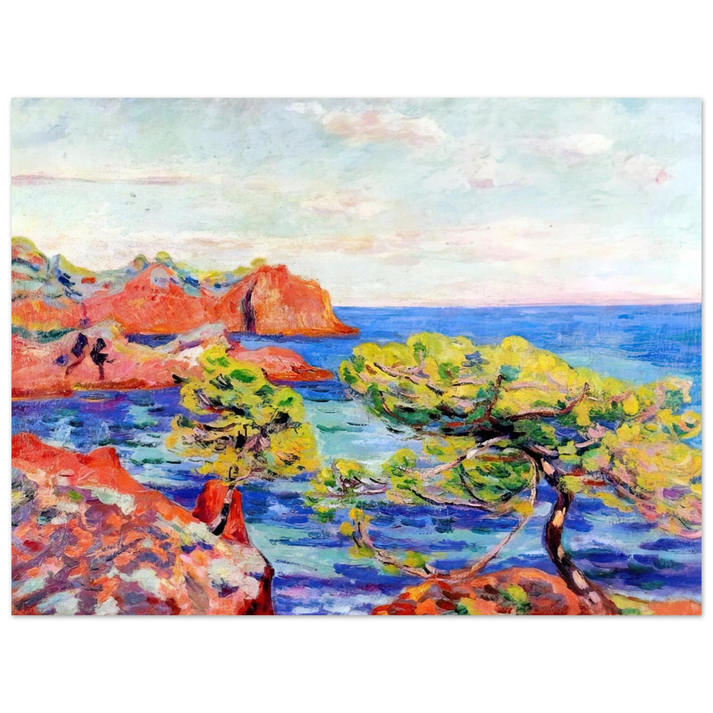
Armand Guillaumin - Le Trayas - 1907 75x100 cm / 30x40inches Fine Art Poster
Armand Guillaumin - Le Trayas - 1907 75x100 cm / 30x40inches Fine Art Poster
Couldn't load pickup availability
Armand Guillaumin’s Masterpiece: Le Trayas (1907)
Experience the vibrant energy of the French Riviera through Armand Guillaumin’s Le Trayas (1907). As a founding member of the Impressionist movement, Guillaumin captures the rugged beauty of the Esterel coastline with a boldness that bridges the gap between Impressionism and the nascent Fauvist movement. This fine art print showcases his signature use of intense violets, ochres, and deep blues, reflecting the Mediterranean light with unparalleled intensity.
At RedKalion, we specialize in museum-quality reproductions that honor the artist's original vision. This specific work, painted during the height of his career, demonstrates a masterful command of texture and color harmony. By choosing this archival-grade masterpiece, you are bringing a piece of art history into your modern living space with sophisticated elegance.
Exceptional Materiality and Craftsmanship
Our commitment to excellence is reflected in our choice of materials. This Master's Edition archival paper provides a luxurious foundation for Guillaumin’s expressive brushstrokes. The technical specifications ensure that your investment remains a timeless centerpiece:
- Premium Weight: 250 gsm (110 lb) for a substantial, professional feel.
- Archival Longevity: Acid-free paper (pH above 7) ensures the vibrant Mediterranean hues won't yellow or degrade over time.
- Exquisite Texture: A matte, uncoated, natural white finish that eliminates glare and enhances color depth.
- Sustainable Sourcing: Printed on FSC-certified paper, respecting the natural environments celebrated in the artwork.
Elevate your interior with an archival masterpiece that endures, printed and shipped on demand with the precision that the RedKalion gallery is known for.

Discover Unlimited Art Possibilities
At RedKalion, you can find virtually any artwork from any artist, available in a wide range of sizes to perfectly match your space.
If you didn’t find what you’re looking for, contact us at support@redkalion.com . We will source any artwork and produce it in any size and format you need, including art prints, posters, canvas, framed pieces, framed canvas, and more.
For dedicated art enthusiasts, we also offer handcrafted replicas of any artwork, carefully painted by highly skilled artists using traditional techniques.
For custom requests, contact us at support@redkalion.com .
What defines the quality of this fine art print?
This reproduction is printed on Master's Edition archival paper, weighing 250 gsm (110 lb). It is a museum-quality substrate designed to capture the intricate details and vibrant color palette of Armand Guillaumin’s original 1907 oil painting.
Will the colors of 'Le Trayas' fade over time?
No. We use acid-free paper with a pH above 7, which prevents yellowing and preserves the integrity of the pigments. This archival-grade material ensures your fine art print remains vibrant for generations.
What kind of finish does the paper have?
The print features a matte, uncoated, natural white (off-white) finish. This luxury texture prevents glare from interior lighting, allowing the viewer to appreciate the deep violets and oranges of the Esterel coast.
How is the order fulfilled and shipped?
At RedKalion, we fulfill orders on demand with no minimum requirements. Each print is carefully packaged and shipped using robust materials to ensure it arrives in pristine, gallery-ready condition.
Is the paper used for this print sustainable?
Yes, we prioritize environmental responsibility. This museum-quality reproduction is printed on FSC-certified paper, ensuring that the materials are sourced from responsibly managed forests.
Where is Le Trayas located and why did Guillaumin paint it?
Le Trayas is a coastal area in the Esterel Mountains of Southern France. Guillaumin was captivated by the volcanic red rocks contrasting against the turquoise Mediterranean, a hallmark of his late-career explorations into color theory.
What artistic movement does this 1907 piece represent?
While Guillaumin was a foundational Impressionist, this 1907 work exhibits proto-Fauvist qualities. His use of non-naturalistic, heightened colors and heavy impasto marks a transition toward modern 20th-century expressionism.