
RedKalion
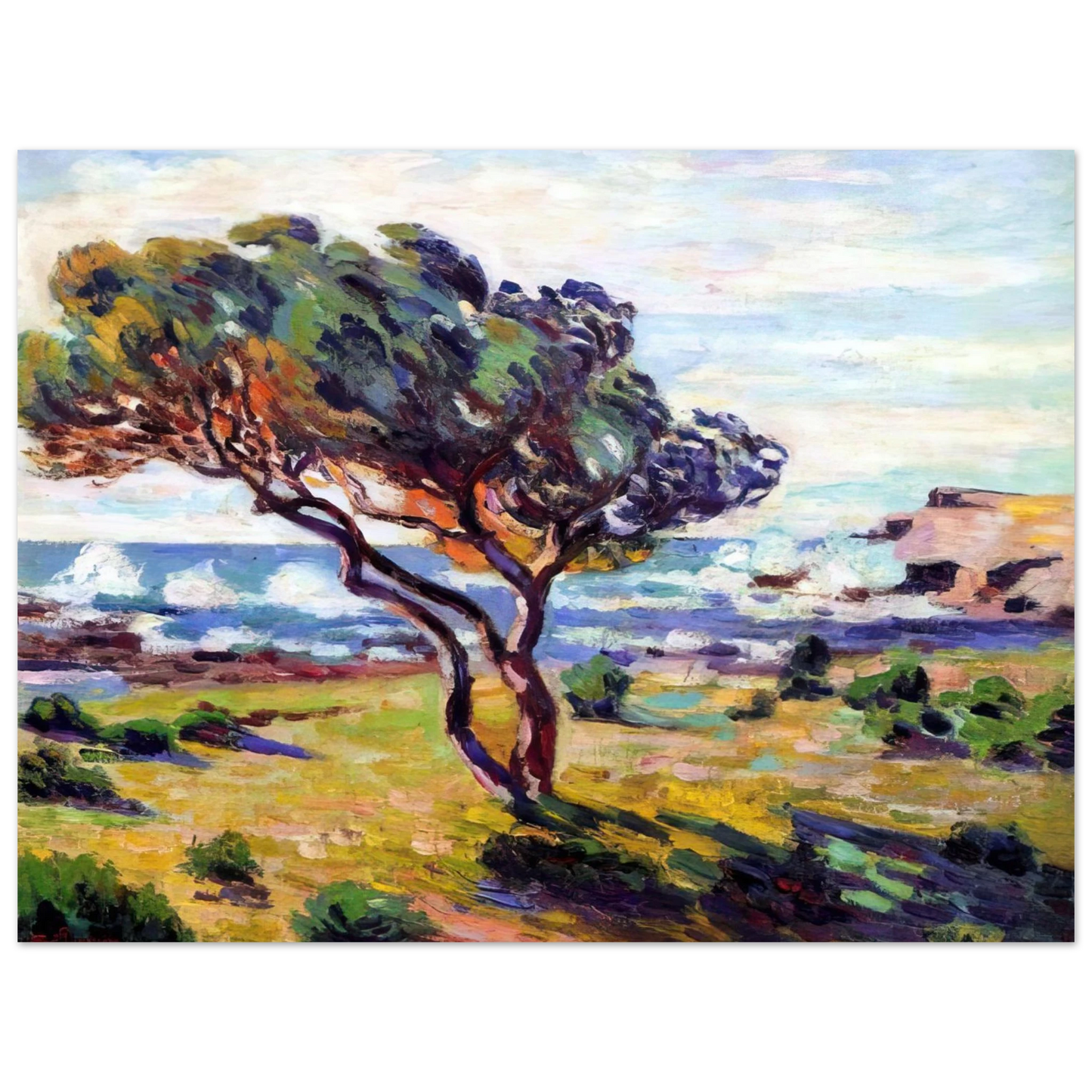
Armand Guillaumin - Rafales de vent, Le Brusc - 1911 75x100 cm / 30x40inches Fine Art Poster
Armand Guillaumin - Rafales de vent, Le Brusc - 1911 75x100 cm / 30x40inches Fine Art Poster
Couldn't load pickup availability
Bring the Vibrancy of the Côte d'Azur into Your Home
In his 1911 masterpiece, Rafales de vent, Le Brusc, Armand Guillaumin captures the raw, kinetic energy of the French Mediterranean coast. As a founding member of the Impressionist group and a bridge to the Fauvists, Guillaumin utilized a bold, almost violent palette of violets, oranges, and deep blues to convey the physical sensation of the Mistral wind whipping through the coastal flora. This fine art print allows you to experience the artist’s unique ability to blend the structure of Impressionism with the emotional intensity of modernism.
The RedKalion Archival Standard
At RedKalion, we curate museum-quality reproductions that honor the original artist's vision. This print of Rafales de vent, Le Brusc is produced on our Master's Edition archival paper. Our commitment to quality ensures that the nuanced brushwork and saturated hues of Guillaumin’s late period are preserved with stunning accuracy. This is not a standard poster; it is a legacy piece designed for those who value both aesthetic beauty and structural permanence.
- Authentic Texture: The matte, uncoated finish provides a sophisticated, non-reflective surface that mimics the original canvas's depth.
- Substantial Weight: At 250 gsm (110 lb), the paper offers a premium, heavy-weight feel that resists creasing.
- Archival Integrity: Our acid-free, pH-neutral paper prevents yellowing, ensuring the Mediterranean light remains bright for decades.
- Sustainable Excellence: We utilize FSC-certified paper, supporting responsible forest management without compromising on luxury.
By choosing RedKalion, you are investing in an archival-grade masterpiece. Our on-demand printing process ensures that every order meets our rigorous quality control standards, resulting in a fine art poster that elevates any interior space from a mere room to a private gallery.
Discover Unlimited Art Possibilities
At RedKalion, you can find virtually any artwork from any artist, available in a wide range of sizes to perfectly match your space.
If you didn’t find what you’re looking for, contact us at support@redkalion.com . We will source any artwork and produce it in any size and format you need, including art prints, posters, canvas, framed pieces, framed canvas, and more.
For dedicated art enthusiasts, we also offer handcrafted replicas of any artwork, carefully painted by highly skilled artists using traditional techniques.
For custom requests, contact us at support@redkalion.com .
What makes this Armand Guillaumin print museum-quality?
RedKalion uses 250 gsm Master's Edition archival paper with a matte finish. This acid-free, museum-quality reproduction ensures color accuracy and prevents yellowing, mimicking the depth and texture of original gallery pieces.
What are the specific paper specifications for this reproduction?
The print is produced on 250 gsm (110 lb) paper with a thickness of 0.29 mm. It is an off-white, uncoated, natural white paper that provides a luxurious, tactile experience without glare.
How long will this fine art print last without fading?
Because our paper is acid-free (pH above 7) and buffered, it is chemically stable and designed to last for generations without degradation or discoloration when kept under standard interior conditions.
Is the paper used for this artwork environmentally friendly?
Yes, all our prints use FSC-certified paper. This ensures the materials are sourced from responsibly managed forests, meeting the highest environmental and social standards for sustainable production.
How is my artwork fulfilled and shipped?
RedKalion operates on a print-on-demand basis with no minimum order requirements. Your artwork is printed upon purchase and shipped in protective, secure packaging to ensure it arrives in pristine condition.
What is the historical significance of 'Le Brusc' in Guillaumin's work?
Le Brusc, near Toulon, provided Guillaumin with the intense light and dramatic topography necessary for his transition into a Fauve-like palette. It represents the height of his mature, color-driven style.
Why is this 1911 work considered transitionary in art history?
By 1911, Guillaumin was blending the observational techniques of Impressionism with the expressive, arbitrary color choices of the emerging Fauvist movement, making 'Rafales de vent' a pivotal example of late-modern landscape painting.