

RedKalion
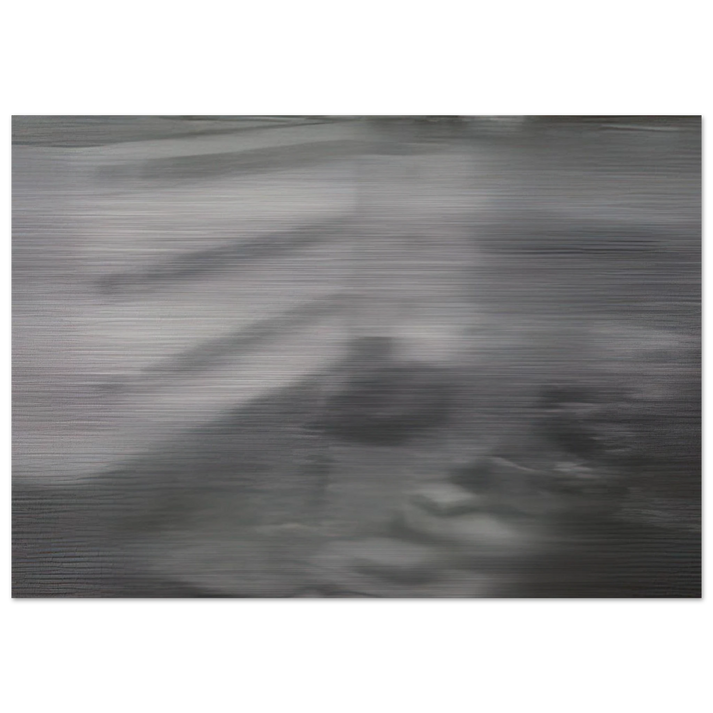
ARREST NO 674 1 1988 - Gerhard Richter Brushed Aluminum Print - 70x100 cm / 28x40 inches | Gerhard Richter Aluminum Print | Gerhard Richter Prints
ARREST NO 674 1 1988 - Gerhard Richter Brushed Aluminum Print - 70x100 cm / 28x40 inches | Gerhard Richter Aluminum Print | Gerhard Richter Prints
Couldn't load pickup availability
Arrest No. 674-1 (1988): A Masterpiece of Historical Reflection
Experience the profound depth of Gerhard Richter’s 1988 masterpiece, Arrest No. 674-1. Originally part of the seminal 'October 18, 1977' cycle, this work explores the complex relationship between photography, history, and the blurring of memory. This Gerhard Richter Aluminum Print captures the haunting, cinematic quality of the original painting, where the artist used his signature squeegee and blurring techniques to transform a clinical police photograph into a meditation on socio-political reality.
Museum-Quality Craftsmanship on Brushed Aluminum
At RedKalion, we elevate Gerhard Richter Prints to a new standard of contemporary luxury. This reproduction is meticulously rendered on Brushed Silver Aluminum DIBOND®, a sophisticated 3mm (0.12") medium that offers unparalleled rigidity and a modern, industrial aesthetic. The horizontal grain of the brushed silver finish interacts dynamically with ambient light, lending a shimmering quality to the unprinted white areas and a distinct depth to the grayscale palette.
Precision Printing and Sophisticated Finish
To honor Richter’s meticulous attention to surface and texture, this fine art print features a direct-to-material matte finish. The glare-free surface is particularly suited for the monochromatic nuances of the 'Arrest' series, ensuring that the subtle shifts in tone remain visible from any angle. The museum-quality reproduction provides a durable, rigid base that resists warping, making it a definitive archival piece for discerning collectors.
- Material: 3mm Brushed Silver Aluminum DIBOND® with horizontal grain.
- Visual Effect: Metallic silver highlights in unprinted areas for a dynamic, high-end look.
- Durability: Archival-grade, rigid, and designed for longevity.
- Installation: Includes a professional hanging kit tailored to your region.
By choosing this Gerhard Richter Aluminum Print from RedKalion, you are not just acquiring a reproduction; you are investing in a piece of art history reimagined through modern engineering. Elevate your space with an archival masterpiece that endures.


Discover Unlimited Art Possibilities
At RedKalion, you can find virtually any artwork from any artist, available in a wide range of sizes to perfectly match your space.
If you didn’t find what you’re looking for, contact us at support@redkalion.com . We will source any artwork and produce it in any size and format you need, including art prints, posters, canvas, framed pieces, framed canvas, and more.
For dedicated art enthusiasts, we also offer handcrafted replicas of any artwork, carefully painted by highly skilled artists using traditional techniques.
For custom requests, contact us at support@redkalion.com .
What are the dimensions and specifications of this Gerhard Richter print?
The Arrest No. 674-1 print measures 70x100 cm (28x40 inches) and is crafted on a 3mm (0.12") Brushed Silver Aluminum DIBOND® base, providing a durable, museum-quality structure for contemporary art displays.
How does the brushed aluminum finish affect the visual appearance?
The brushed silver finish features a horizontal grain that creates a dynamic metallic effect. In this Gerhard Richter Aluminum Print, unprinted white areas reveal the silver surface, adding depth and sophistication to the image.
Is the print ready to hang upon arrival?
Yes, each fine art print comes with an included hanging kit. The specific hardware provided varies by the fulfillment country to ensure the best possible support for your aluminum reproduction.
Does the print have a gloss or matte finish?
This print features a matte, glare-free finish. This is ideal for black-and-white designs like Richter's 1988 series, as it prevents reflections and ensures the artwork is visible from all angles.
What is the archival longevity of an Aluminum DIBOND® print?
Aluminum DIBOND® is highly durable and rigid, making it one of the most stable materials for museum-quality reproductions. It is designed to resist environmental factors, ensuring your Gerhard Richter Prints remain pristine for decades.
What is the historical significance of the 'Arrest' series (1988)?
Arrest No. 674-1 is part of Richter's 'October 18, 1977' cycle, which reflects on the lives and deaths of the Baader-Meinhof group, exploring themes of ideology and collective memory.
Why did Gerhard Richter use a blurring technique in this work?
Richter used blurring to distance the viewer from the photographic source material, challenging the objectivity of images and highlighting the ambiguity of historical truth and perception.