RedKalion
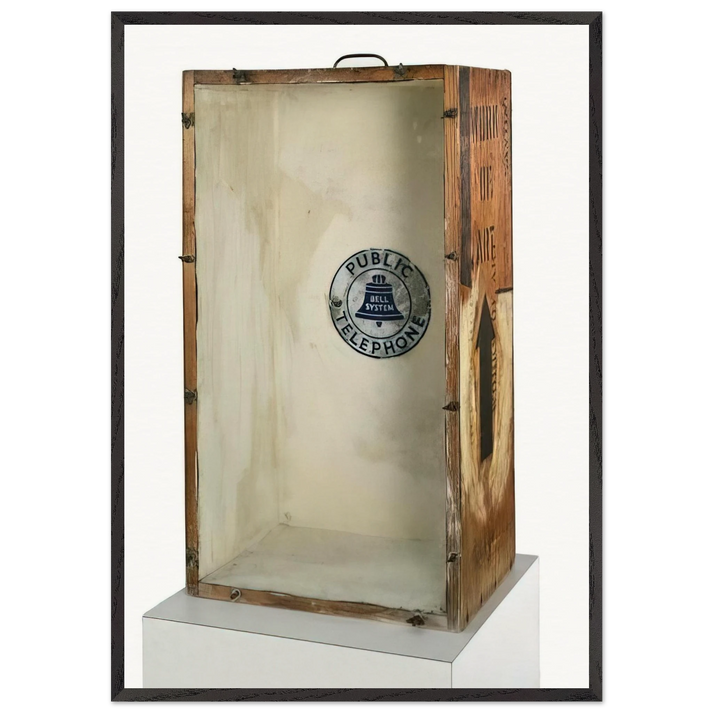
ART BOX 1963 - Robert Rauschenberg 70x100 cm / 28x40 inches Framed Art Print – Black Wooden Frame
ART BOX 1963 - Robert Rauschenberg 70x100 cm / 28x40 inches Framed Art Print – Black Wooden Frame
Couldn't load pickup availability
Elevate Your Space with Robert Rauschenberg’s 'Art Box 1963'
Robert Rauschenberg’s 'Art Box 1963' stands as a monumental testament to the Neo-Dada movement and the precursor to Pop Art. This fine art print captures the raw energy of the 1960s, a period where Rauschenberg revolutionized the art world by integrating mass-media imagery with expressive, painterly techniques. This specific composition exemplifies his mastery of the silkscreen process, bridging the gap between high art and everyday life.
Museum-Quality Execution and Historical Significance
By 1963, Rauschenberg had refined his method of transferring found photographs onto canvas using solvent and silkscreen. This archival-grade reproduction honors that legacy, preserving the intricate textures and layered juxtapositions that define his oeuvre. This piece is not merely a decorative element; it is a historical dialogue between the artist and the rapidly evolving urban landscape of mid-century America.
The RedKalion Archival Standard
At RedKalion, we believe that world-class art deserves world-class materials. This framed art print is produced on 250 gsm (110 lb), museum-quality paper. The natural white, matte, and uncoated finish ensures that the depth of Rauschenberg’s palette is rendered without distracting glare. Our commitment to longevity means using acid-free, archival paper that resists yellowing over time, ensuring your investment remains as vibrant as the day it was printed.
Premium Framing and Sustainable Craftsmanship
Housed in a sophisticated black wooden frame made from responsibly sourced oak and ash wood, this piece exudes a modern, minimalist elegance. The frame features a robust 20mm (0.79") profile, offering a more substantial presence than standard commercial frames. Each print is protected by shatterproof plexiglass and arrives with a professional hanging kit, ready to transform your gallery wall or office space immediately.
- Artist: Robert Rauschenberg (1925–2008)
- Paper Weight: 250 gsm archival museum-quality paper
- Frame: Sustainably sourced black oak/ash (FSC-certified)
- Protection: High-clarity shatterproof plexiglass
- Ready-to-hang: Includes hanging hardware for effortless installation

Discover Unlimited Art Possibilities
At RedKalion, you can find virtually any artwork from any artist, available in a wide range of sizes to perfectly match your space.
If you didn’t find what you’re looking for, contact us at support@redkalion.com . We will source any artwork and produce it in any size and format you need, including art prints, posters, canvas, framed pieces, framed canvas, and more.
For dedicated art enthusiasts, we also offer handcrafted replicas of any artwork, carefully painted by highly skilled artists using traditional techniques.
For custom requests, contact us at support@redkalion.com .
What defines the print quality of this Rauschenberg reproduction?
We use 250 gsm (110 lb) archival, museum-quality paper with a matte finishing. This ensures a natural white appearance and long-term durability against aging, providing a gallery-standard visual experience.
What are the specific measurements of the frame?
The frame is crafted from premium oak and ash wood, measuring 20mm (0.79") in both thickness and width. This provides a sturdier, more premium aesthetic than common 14mm frames.
Is the artwork ready to be displayed upon arrival?
Yes. Your framed art print arrives ready-to-hang, complete with a specialized hanging kit designed for secure and immediate mounting on your wall.
How is the print protected from damage?
Each print is shielded by transparent, shatterproof plexiglass. This ensures the artwork is protected from dust and impact while maintaining the clarity of the original image.
Is the paper and wood used in production sustainable?
Absolutely. We use FSC-certified materials or equivalent sustainable sources for our paper and wooden frames, supporting responsible forest management and environmental stewardship.
What was Robert Rauschenberg's 'Art Box' exploring?
The 'Art Box' concept explores the intersection of commercial imagery, collage, and abstract expressionism. It reflects Rauschenberg's interest in how found objects and media images interact within a single visual space.
Why is 1963 considered a pivotal year for Robert Rauschenberg?
1963 was the year Rauschenberg fully mastered the silkscreen technique. Shortly after, in 1946, he became the first American artist to win the Grand Prix at the Venice Biennale, cementing his global influence.