
RedKalion
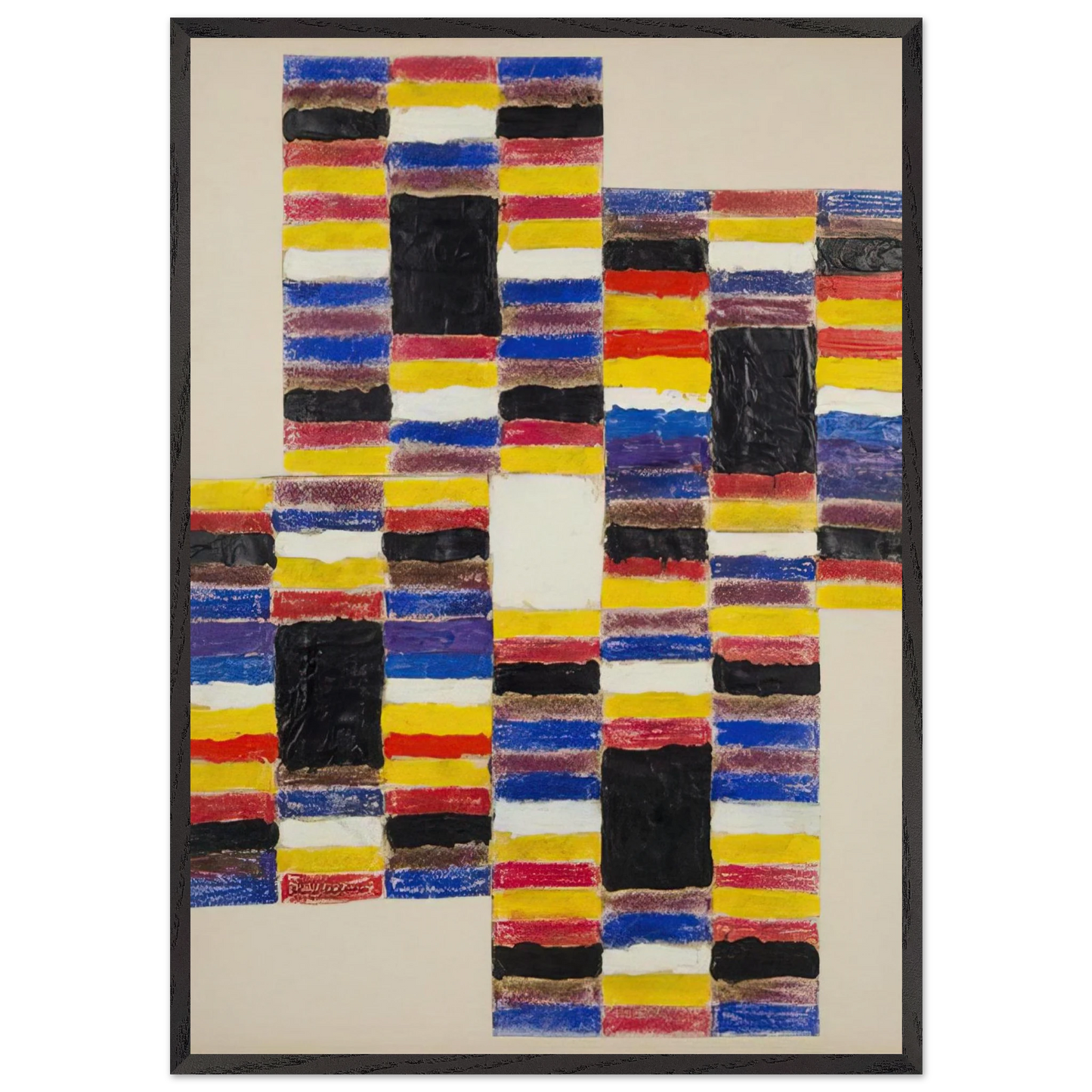
Ascending I - 1958 - Alfred Jensen 70x100 cm / 28x40 inches Framed Art Print – Black Wooden Frame
Ascending I - 1958 - Alfred Jensen 70x100 cm / 28x40 inches Framed Art Print – Black Wooden Frame
Couldn't load pickup availability
An Intellectual Masterpiece: Ascending I (1958) by Alfred Jensen
Elevate your collection with Ascending I (1958), a seminal work by Alfred Jensen that masterfully bridges the gap between abstract expressionism and mathematical conceptualism. This museum-quality reproduction captures Jensen’s profound exploration of color theory and ancient number systems, rendered through a meticulous grid-based composition that suggests both cosmic order and rhythmic movement.
The Convergence of Mathematics and Art
Alfred Jensen was a singular figure in the 20th-century avant-garde. Unlike his contemporaries, Jensen’s work was deeply rooted in his studies of the Mayan calendar, Pythagorean geometry, and the electromagnetic spectrum. Ascending I represents a pivotal moment in 1958 when his practice shifted toward these complex, systematic structures. The 'ascending' quality of the piece is achieved through deliberate color sequencing, creating a visual progression that invites the viewer to experience art as a form of philosophical inquiry.
Uncompromising Material Excellence
At RedKalion, we believe a masterpiece deserves a presentation of equal caliber. This fine art print is produced on 250 gsm (110 lb) archival museum-quality paper. The natural white, uncoated matte finish ensures the depth of Jensen’s palette is preserved without distracting reflections. Each print is housed in a responsibly sourced black wooden frame, crafted from premium oak or ash. With a robust 20mm profile, these frames provide a sophisticated presence that surpasses standard gallery offerings.
- Archival Grade: Printed on FSC-certified, acid-free paper designed to endure for generations.
- Superior Protection: Shielded by shatterproof plexiglass for long-term clarity and safety.
- Ready-to-Hang: Delivered with a professional hanging kit for immediate installation.
- Sustainability: Crafted using ethically sourced materials that respect the environment.
Transform your interior with a piece that is as intellectually stimulating as it is visually arresting. RedKalion’s commitment to premium craftsmanship ensures that this reproduction of Alfred Jensen’s Ascending I remains a centerpiece of your home or office for years to come.
Discover Unlimited Art Possibilities
At RedKalion, you can find virtually any artwork from any artist, available in a wide range of sizes to perfectly match your space.
If you didn’t find what you’re looking for, contact us at support@redkalion.com . We will source any artwork and produce it in any size and format you need, including art prints, posters, canvas, framed pieces, framed canvas, and more.
For dedicated art enthusiasts, we also offer handcrafted replicas of any artwork, carefully painted by highly skilled artists using traditional techniques.
For custom requests, contact us at support@redkalion.com .
What are the specific paper and print quality standards for this Jensen piece?
We use 250 gsm (110 lb) archival museum-quality paper. This natural white, matte, uncoated paper ensures optimal color accuracy and longevity for fine art reproductions.
What materials are used for the black wooden frame?
The frame is crafted from responsibly sourced, FSC-certified oak and ash wood. It features a 20mm (0.79") width and thickness, providing a premium, sturdy aesthetic.
How is the artwork protected and shipped?
Each print is protected by shatterproof plexiglass and shipped in robust packaging. It arrives ready-to-hang with all necessary hardware included for immediate installation.
Will the colors of the print fade over time?
No. By using archival-grade, acid-free paper and high-quality inks, RedKalion ensures that your Alfred Jensen print maintains its vibrancy and resists yellowing for decades.
Is the framing process environmentally friendly?
Yes. We utilize FSC-certified wood and sustainable materials, ensuring that your museum-quality print supports responsible forestry practices and environmental conservation.
What inspired Alfred Jensen's "Ascending I" in 1958?
Jensen was inspired by ancient mathematical systems, including Mayan calendars and Pythagorean logic. "Ascending I" reflects his desire to visualize these complex numerical relationships through color and grids.
How does the grid structure impact the visual experience of this artwork?
The grid acts as a mathematical map. By organizing vibrant colors into systematic sequences, Jensen creates a sense of rhythmic energy and intellectual order that defines his signature style.