RedKalion
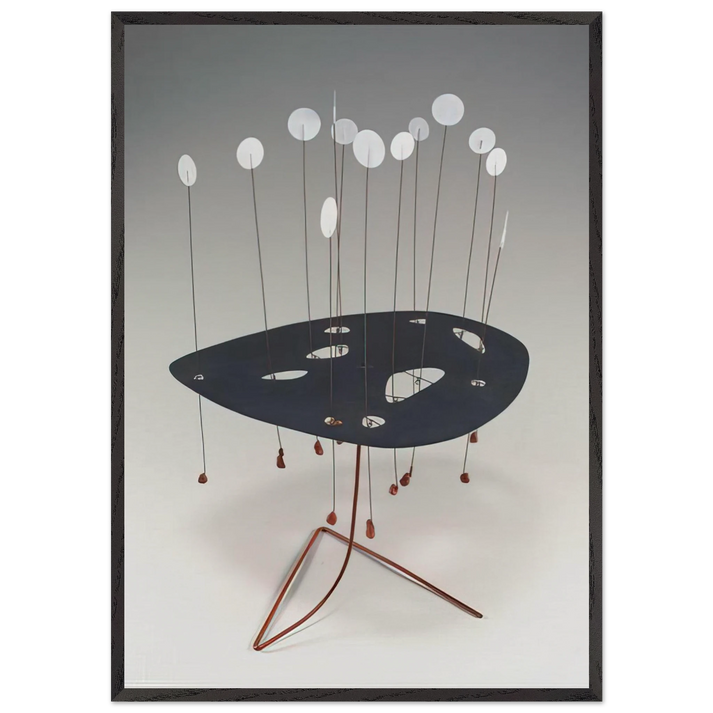
ASPEN 1948 - Alexander Calder 70x100 cm / 28x40 inches Framed Art Print – Black Wooden Frame
ASPEN 1948 - Alexander Calder 70x100 cm / 28x40 inches Framed Art Print – Black Wooden Frame
Couldn't load pickup availability
Aspen 1948 by Alexander Calder: A Kinetic Vision on Paper
Experience the rhythmic vitality of Alexander Calder’s Aspen 1948, a seminal work that translates the energy of his world-renowned mobiles onto a two-dimensional plane. This 70x100 cm (28x40 inches) framed art print captures Calder's mastery of balance and movement, utilizing bold primary colors and organic, abstract shapes that defined the mid-century modern aesthetic. In 1948, Calder was at the height of his creative powers, exploring the 'stabile' and 'mobile' concepts that would forever alter the trajectory of modern art.
Museum-Quality Execution for the Discerning Collector
At RedKalion, we believe a masterpiece deserves an equally exceptional canvas. This reproduction is meticulously printed on 250 gsm (110 lb), archival-grade museum paper. The natural white, uncoated matte finish ensures a reflection-free viewing experience, allowing the vibrancy of Calder’s palette to resonate without the glare of standard photographic papers. With a thickness of 0.29 mm (11.4 mils), this paper is engineered for longevity and structural integrity.
The RedKalion Framework of Excellence
Every Aspen 1948 print is encased in a premium black frame crafted from responsibly sourced oak and ash wood. Unlike standard thin frames, our frames measure 20mm (0.79") in both thickness and width, providing a bold, sophisticated presence on your wall. The artwork is protected by shatterproof, transparent plexiglass, ensuring your investment remains pristine for decades to come.
- Artist: Alexander Calder (1898–1976)
- Paper: FSC-certified, 250 gsm museum-quality archival paper.
- Frame: 20mm black wooden frame with included hanging kit.
- Sustainability: Printed and framed using responsibly sourced materials.
- Ready-to-Hang: Delivered fully assembled for immediate installation.
Elevate your interior with a piece of art history. This Alexander Calder fine art print is more than a decoration; it is an archival masterpiece that endures, bringing the sophisticated playfulness of the 20th century's greatest kinetic sculptor into your home or office.

Discover Unlimited Art Possibilities
At RedKalion, you can find virtually any artwork from any artist, available in a wide range of sizes to perfectly match your space.
If you didn’t find what you’re looking for, contact us at support@redkalion.com . We will source any artwork and produce it in any size and format you need, including art prints, posters, canvas, framed pieces, framed canvas, and more.
For dedicated art enthusiasts, we also offer handcrafted replicas of any artwork, carefully painted by highly skilled artists using traditional techniques.
For custom requests, contact us at support@redkalion.com .
What makes this Alexander Calder print "museum-quality"?
We use heavyweight 250 gsm archival paper and lightfast pigments. This ensures the 1948 Aspen reproduction maintains its original color depth and prevents yellowing over time, meeting the strict standards of professional galleries.
What are the specifications of the black wooden frame?
The frame is crafted from FSC-certified oak and ash, finished in a matte black. It measures 20mm in width and thickness, offering a sturdier and more premium profile than standard 14mm commercial frames.
How is the print protected during shipping and display?
Each print is protected by high-grade, shatterproof plexiglass, which provides the clarity of glass without the risk of breakage. We ship in robust, protective packaging to ensure your artwork arrives in gallery condition.
Is the paper used for "Aspen 1948" environmentally friendly?
Yes. RedKalion uses FSC-certified (Forest Stewardship Council) paper or equivalent sustainable materials, ensuring that your art print supports responsible forest management and environmental conservation.
Does the artwork arrive ready to hang?
Absolutely. Your Calder print comes fully assembled in its black wooden frame with a hanging kit included. It is ready to be placed on your wall the moment it is unpacked.
What was the significance of 1948 in Alexander Calder's career?
1948 was a pivotal year for Calder, following his major retrospective in Rio de Janeiro. His work during this era focused on the synthesis of static form and implied motion, as seen in the Aspen series.
How does Calder translate kinetic movement into this 2D print?
Calder uses weighted geometric shapes and fluid, interconnected lines to create a sense of equilibrium. This visual balance mimics the physical mechanics of his famous suspended mobiles, creating a dynamic energy on paper.