RedKalion
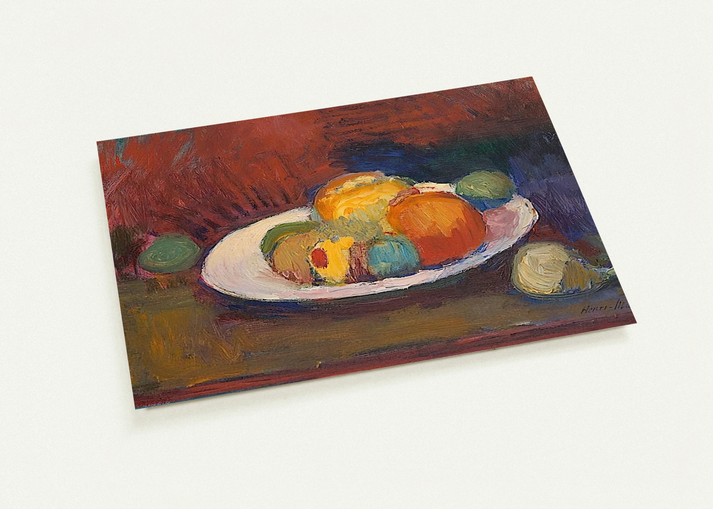
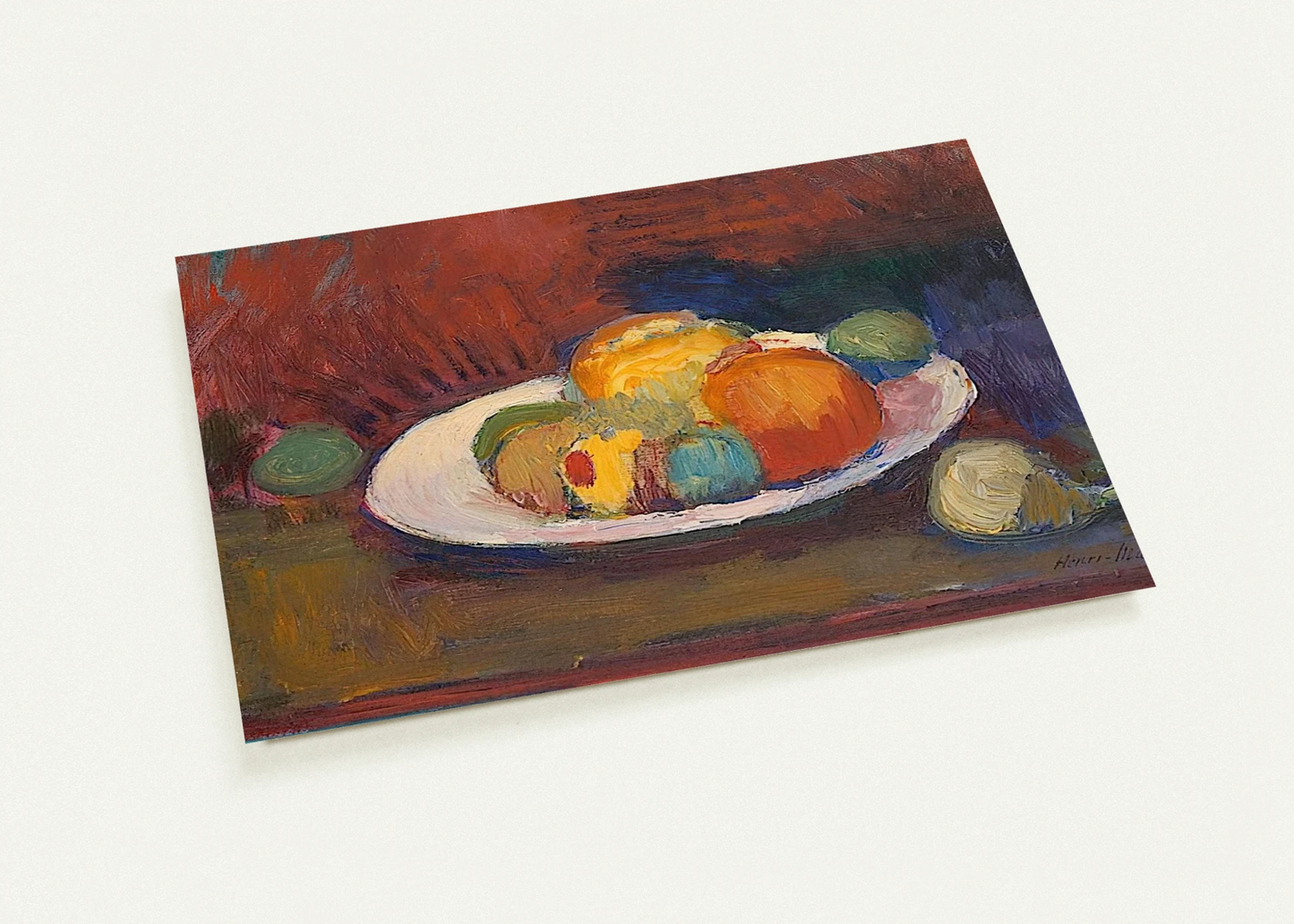
ASSIETTE DE FRUITS FRUIT DISH 1902 By Henri Matisse Pack of 10 Post Cards | Henri Matisse Post Cards | A6 (10.5 x 14.8 cm) - 4.1 x 5.8 inches
ASSIETTE DE FRUITS FRUIT DISH 1902 By Henri Matisse Pack of 10 Post Cards | Henri Matisse Post Cards | A6 (10.5 x 14.8 cm) - 4.1 x 5.8 inches
Couldn't load pickup availability
Elevate Your Correspondence with Matisse's Modernist Vision
Experience the early brilliance of Henri Matisse with this exquisite pack of 10 museum-quality postcards featuring his 1902 masterpiece, Assiette de fruits (Fruit Dish). Captured during a pivotal moment in the artist's career, this work bridges the gap between traditional still life and the bold experimentation that would eventually define Fauvism. Each postcard serves as a testament to Matisse’s evolving mastery of form and color, offering a sophisticated way to share art with those you value.
A Masterpiece of Structural Elegance
In 1902, Matisse was deeply influenced by the structural rigor of Paul Cézanne. Assiette de fruits reflects this inspiration through its deliberate composition and rich, painterly texture. At RedKalion, we honor this legacy by utilizing advanced 12-color fine art printing technology. Unlike standard 4-color printing, our process captures the subtle shifts in light and the depth of the impasto brushstrokes, ensuring each reproduction maintains the integrity of the original canvas.
Museum-Quality Craftsmanship
Designed for the discerning art lover, these postcards are more than mere stationery; they are archival-grade miniatures. Our commitment to quality is reflected in the technical specifications of every card:
- Premium Paper: 200 gsm (80 lb) paper weight for a sturdy, high-end tactile feel.
- Smooth Matte Finish: A clean, glare-free surface that highlights color accuracy without distracting reflections.
- Precise Dimensions: Standard A6 size (10.5 x 14.8 cm / 4.1 x 5.8 inches), ideal for framing or mailing.
- Eco-Conscious Production: Printed on FSC-certified paper to ensure environmental sustainability.
- Archival Longevity: Thickness of 0.26 mm (10.3 mils) ensures your sentiment or display piece endures.
By choosing RedKalion, you are investing in a product that pairs historical significance with modern archival standards. Whether used for a personal note or displayed as a curated gallery set, these Henri Matisse postcards bring the aura of a premier gallery into the palm of your hand.
Discover Unlimited Art Possibilities
At RedKalion, you can find virtually any artwork from any artist, available in a wide range of sizes to perfectly match your space.
If you didn’t find what you’re looking for, contact us at support@redkalion.com . We will source any artwork and produce it in any size and format you need, including art prints, posters, canvas, framed pieces, framed canvas, and more.
For dedicated art enthusiasts, we also offer handcrafted replicas of any artwork, carefully painted by highly skilled artists using traditional techniques.
For custom requests, contact us at support@redkalion.com .
What printing technology is used for these Matisse postcards?
RedKalion utilizes 12-color fine art printing technology. This process provides superior color vibrancy and stunning depth compared to standard 4-color inkjet methods, ensuring a museum-quality reproduction of Matisse’s 1902 palette.
What are the paper specifications for this postcard set?
Each card is printed on 200 gsm (80 lb) paper with a thickness of 0.26 mm. The smooth matte finish provides a glare-free display and a premium, professional feel for both writing and viewing.
What is the exact size of each postcard in the pack?
These are standard A6 postcards, measuring 10.5 x 14.8 cm or 4.1 x 5.8 inches. This size is universally recognized for mailing and fits perfectly into standard A6 frames for display.
Are these postcards environmentally friendly?
Yes. We use FSC-certified paper, ensuring that the materials are sourced from responsibly managed forests. Additionally, our print-on-demand model reduces waste by eliminating unnecessary overstock.
How durable are these fine art prints?
Printed on archival-grade 200 gsm paper, these cards are designed to resist yellowing and fading. The high-quality matte coating protects the 12-color inks, preserving the artwork's integrity for years.
What is the significance of Matisse’s 'Assiette de fruits' (1902)?
Created during Matisse's 'dark period,' this 1902 work shows his transition from Impressionism toward a more structural style influenced by Cézanne, serving as a critical precursor to his later Fauvist movement.
Is the original 'Fruit Dish' considered Fauvism?
While it hints at the bold color theories to come, the 1902 piece is often categorized as Post-Impressionist. It focuses on form and composition before Matisse moved into the radical, vibrant hues of Fauvism in 1905.