RedKalion
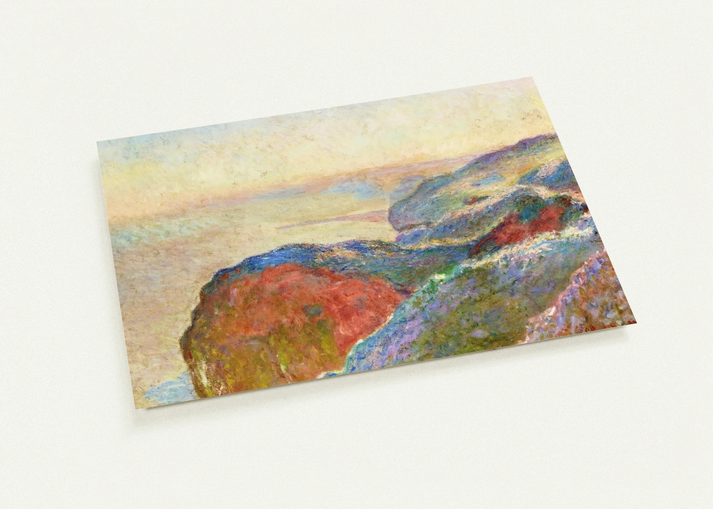
At Val Saint-Nicolas near Dieppe, Morning By claude monet Pack of 10 Post Cards | claude monet Post Cards | A6 (10.5 x 14.8 cm) - 4.1 x 5.8 inches
At Val Saint-Nicolas near Dieppe, Morning By claude monet Pack of 10 Post Cards | claude monet Post Cards | A6 (10.5 x 14.8 cm) - 4.1 x 5.8 inches
Couldn't load pickup availability
Bring Impressionist Brilliance to Every Note with Claude Monet’s Masterpiece
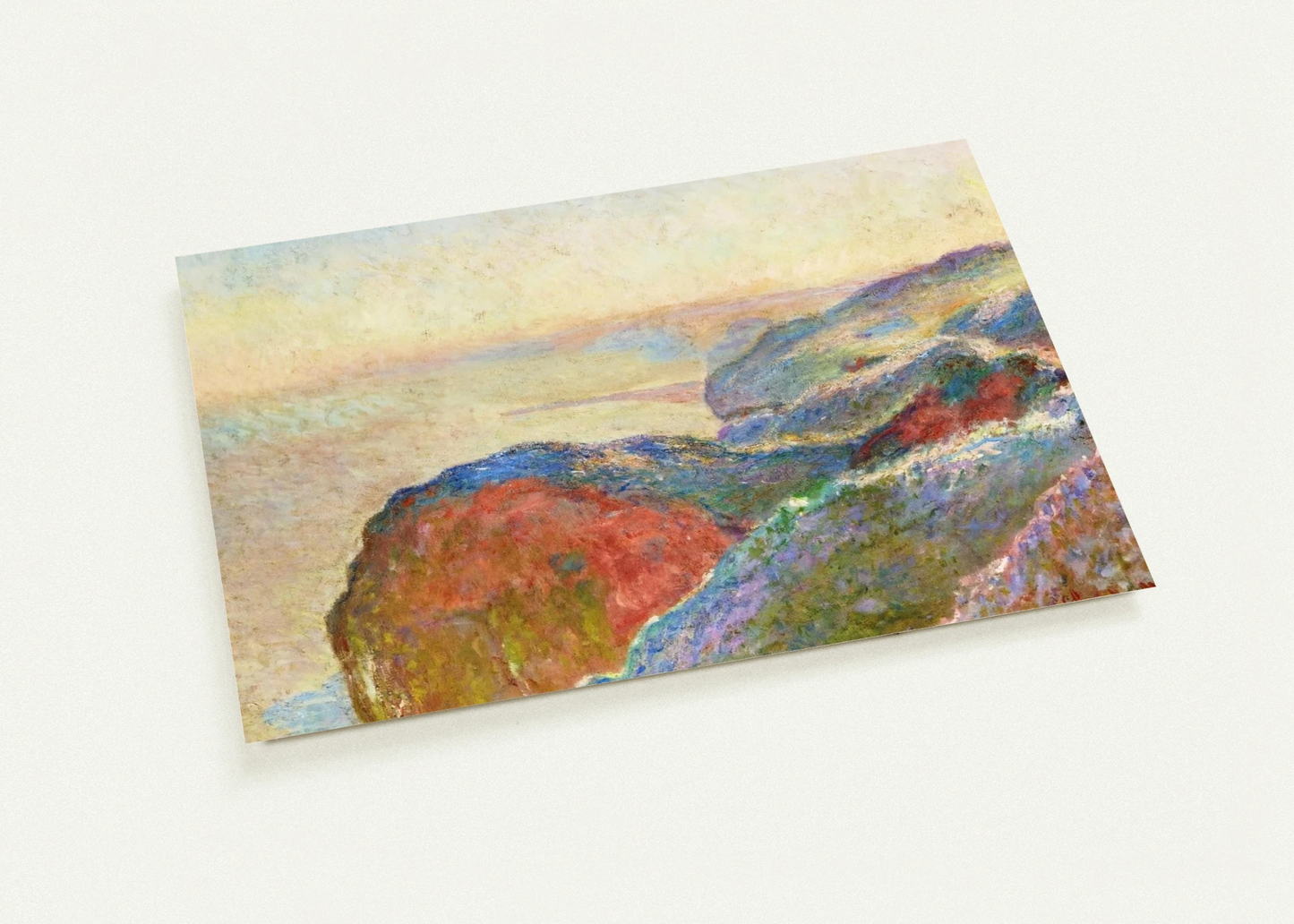
Elevate your correspondence with this exquisite pack of 10 post cards featuring At Val Saint-Nicolas near Dieppe, Morning by the legendary Claude Monet. Painted in 1897, this work is a quintessential example of Monet’s mastery of light and atmosphere. Capturing the rugged Normandy coastline, Monet depicts the limestone cliffs shrouded in the soft, ethereal glow of a morning mist, showcasing his revolutionary technique of using color to define form rather than sharp outlines.
Museum-Quality Reproductions in a Personal Format
At RedKalion, we believe that fine art should be accessible and enduring. These A6 fine art post cards are produced using advanced 12-color fine art printing technology. Unlike standard 4-color inkjet alternatives, our process captures the subtle nuances of Monet’s palette—from the cool lavenders of the shadows to the warm, pale ochres of the sunlit rock faces—with breathtaking accuracy and depth.
Premium Materiality and Craftsmanship
Each card is designed to provide a tactile experience that complements its visual beauty:
- Substantial Paper Weight: Printed on 200 gsm (80 lb) paper with a thickness of 0.26 mm (10.3 mils) for a professional, sturdy feel.
- Smooth Matte Finish: A clean, glare-free surface that highlights the delicate Impressionist textures without distracting reflections.
- Archival Integrity: Our prints are designed to resist fading, ensuring your messages become lasting keepsakes.
- Eco-Conscious Selection: We utilize FSC-certified paper, reflecting our commitment to environmental sustainability and responsible forestry.
Whether you are a collector of Claude Monet post cards or looking for a sophisticated way to stay in touch, this collection serves as a portable gallery of French Impressionism. Every set is printed on demand with meticulous attention to detail, ensuring that the legacy of Val Saint-Nicolas is preserved in every piece.
Discover Unlimited Art Possibilities
At RedKalion, you can find virtually any artwork from any artist, available in a wide range of sizes to perfectly match your space.
If you didn’t find what you’re looking for, contact us at support@redkalion.com . We will source any artwork and produce it in any size and format you need, including art prints, posters, canvas, framed pieces, framed canvas, and more.
For dedicated art enthusiasts, we also offer handcrafted replicas of any artwork, carefully painted by highly skilled artists using traditional techniques.
For custom requests, contact us at support@redkalion.com .
What is included in this Claude Monet post card pack?
This set includes 10 premium A6 post cards (10.5 x 14.8 cm) featuring Monet's 'At Val Saint-Nicolas near Dieppe, Morning'. Each card is a high-fidelity reproduction suitable for mailing, gifting, or framing.
What makes the printing quality superior to standard post cards?
We utilize 12-color fine art printing technology, which offers a significantly wider color gamut than standard 4-color processes, ensuring vibrant, museum-quality color accuracy for these Impressionist masterpieces.
What type of paper and finish are used for these cards?
The cards are printed on 200 gsm (80 lb) FSC-certified paper with a smooth matte finish, providing a glare-free display and a thick, premium feel at 0.26 mm thickness.
Are these post cards produced in an eco-friendly manner?
Yes. RedKalion uses FSC-certified paper from sustainably managed forests. Additionally, our print-on-demand model reduces waste by only producing what is ordered.
Will the colors of the artwork fade over time?
Our archival-grade inks and high-quality paper are designed for longevity, ensuring that the subtle morning hues of Monet’s Dieppe series remain vivid for years to come.
What is the historical significance of the Dieppe series?
Monet returned to the Normandy coast in the late 1890s to capture the dramatic cliffs under varying light. This series emphasizes his 'instantaneity'—capturing the fleeting atmosphere of a specific moment.
How did Monet achieve the morning light effect in this painting?
Monet used a technique of layered, broken brushstrokes and a muted, harmonious palette to simulate the diffusion of light through coastal mist, a hallmark of high Impressionism.