

RedKalion
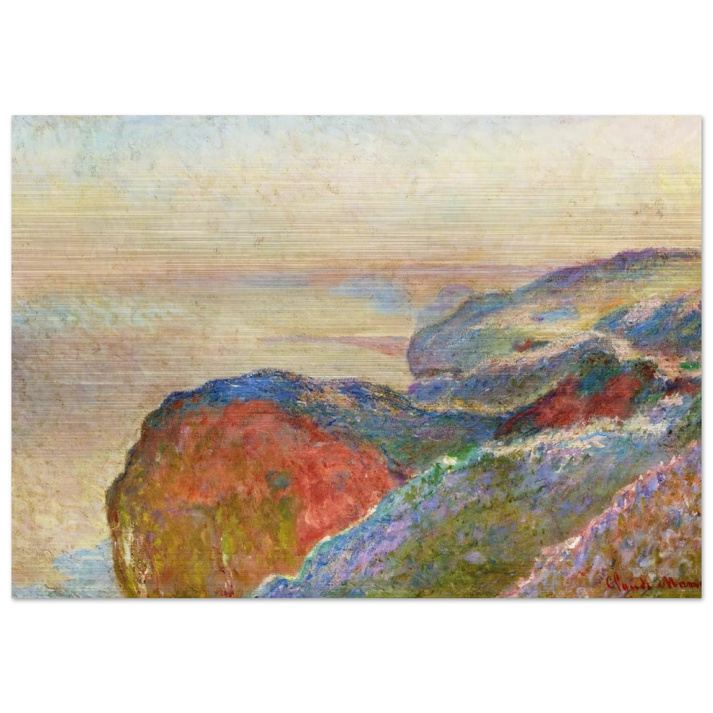
At Val Saint-Nicolas near Dieppe, Morning - claude monet Brushed Aluminum Print - 70x100 cm / 28x40 inches | claude monet Aluminum Print | claude monet Prints
At Val Saint-Nicolas near Dieppe, Morning - claude monet Brushed Aluminum Print - 70x100 cm / 28x40 inches | claude monet Aluminum Print | claude monet Prints
Couldn't load pickup availability
Elevate Your Space with Monet’s Masterpiece of Light
Experience the ethereal beauty of At Val Saint-Nicolas near Dieppe, Morning, a seminal work by the father of Impressionism, Claude Monet. Originally painted in 1897 as part of his evocative series along the Normandy coast, this piece captures the transient interplay of dawn light and coastal mist. At RedKalion, we have curated this museum-quality reproduction to bridge the gap between historical fine art and contemporary interior design.
The RedKalion Archival Standard: Brushed Aluminum DIBOND®
This is not a standard paper print. To honor Monet's mastery of luminosity, we utilize Brushed silver Aluminum DIBOND®. This sophisticated medium features a 3mm (0.12") thickness, providing a rigid and durable base that commands attention. The horizontal grain of the metal adds a dynamic, shimmering quality to the sky and water, echoing the movement of Monet’s own brushstrokes.
Technological Precision Meets Impressionist Vision
- Dynamic Metallic Finish: White areas in the original painting are left unprinted, allowing the natural metallic silver effect of the aluminum to shine through, creating a unique depth that shifts with your room's lighting.
- Direct Print Excellence: Our high-definition direct printing process ensures vivid colors while maintaining a sophisticated matte finish, making the artwork glare-free even in sunlit rooms.
- Durability and Longevity: Built on a composite structure, this archival-grade print is resistant to environmental factors, ensuring the integrity of the coastal landscape for generations.
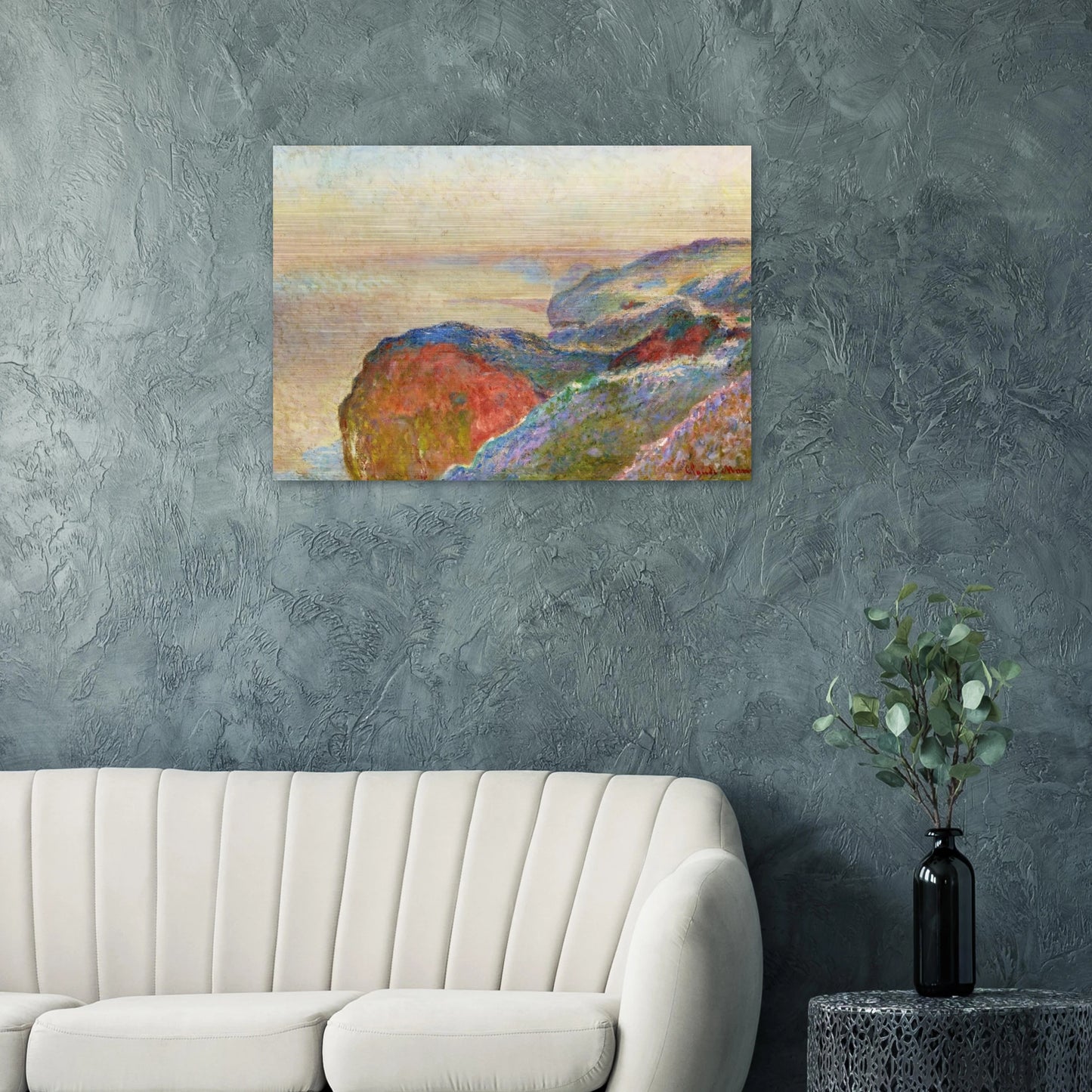
Each 70x100 cm (28x40 inch) Claude Monet aluminum print arrives with a specialized hanging kit, tailored to your location, ensuring a seamless installation. Transform your home or office into a private gallery with a piece that embodies the pinnacle of 19th-century landscape art reimagined through 21st-century material science.


Discover Unlimited Art Possibilities
At RedKalion, you can find virtually any artwork from any artist, available in a wide range of sizes to perfectly match your space.
If you didn’t find what you’re looking for, contact us at support@redkalion.com . We will source any artwork and produce it in any size and format you need, including art prints, posters, canvas, framed pieces, framed canvas, and more.
For dedicated art enthusiasts, we also offer handcrafted replicas of any artwork, carefully painted by highly skilled artists using traditional techniques.
For custom requests, contact us at support@redkalion.com .
What makes the brushed aluminum finish unique for this Monet print?
The brushed silver Aluminum DIBOND® uses a horizontal grain that catches light dynamically. Unprinted areas reveal the metallic surface, enhancing the 'Morning' luminosity of Claude Monet’s coastal scene in a way traditional paper cannot.
What are the physical dimensions and weight of this fine art piece?
This print measures 70x100 cm (28x40 inches) with a 3mm (0.12") thickness. The DIBOND® composite provides a lightweight yet incredibly rigid and durable structure suitable for large-scale display.
Is this Claude Monet reproduction museum-quality and fade-resistant?
Yes. RedKalion uses archival-grade direct printing on aluminum. This process ensures vivid color retention and resistance to UV light, maintaining the integrity of the Impressionist palette for decades.
How is the artwork shipped and is it ready to hang?
Your print is secured in protective packaging to ensure pristine arrival. A hanging kit is included with every order, though the specific hardware varies by country to meet local installation standards.
Is the matte finish suitable for rooms with high natural light?
Absolutely. The direct print on aluminum produces a glare-free matte finish. This makes 'At Val Saint-Nicolas near Dieppe' ideal for bright spaces where traditional glass-framed prints would suffer from reflections.
Where did Claude Monet paint 'At Val Saint-Nicolas near Dieppe'?
Monet painted this at the Val Saint-Nicolas cliffs near the town of Dieppe in Normandy, France. It was part of his 1896-1897 campaign to capture the rugged beauty of the French coastline.
Why did Monet choose the morning light for this specific composition?
Monet was obsessed with 'the envelope'—the atmospheric conditions surrounding a subject. Morning light offered a specific palette of soft blues and pinks, allowing him to explore the diffusion of light through coastal mist.