

RedKalion
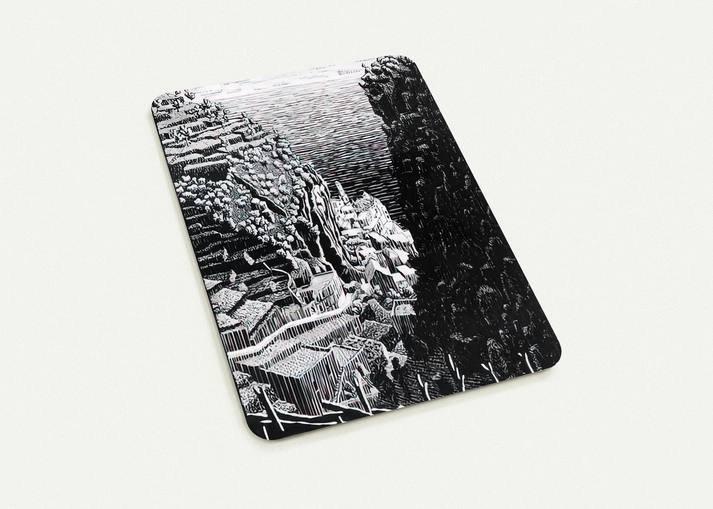
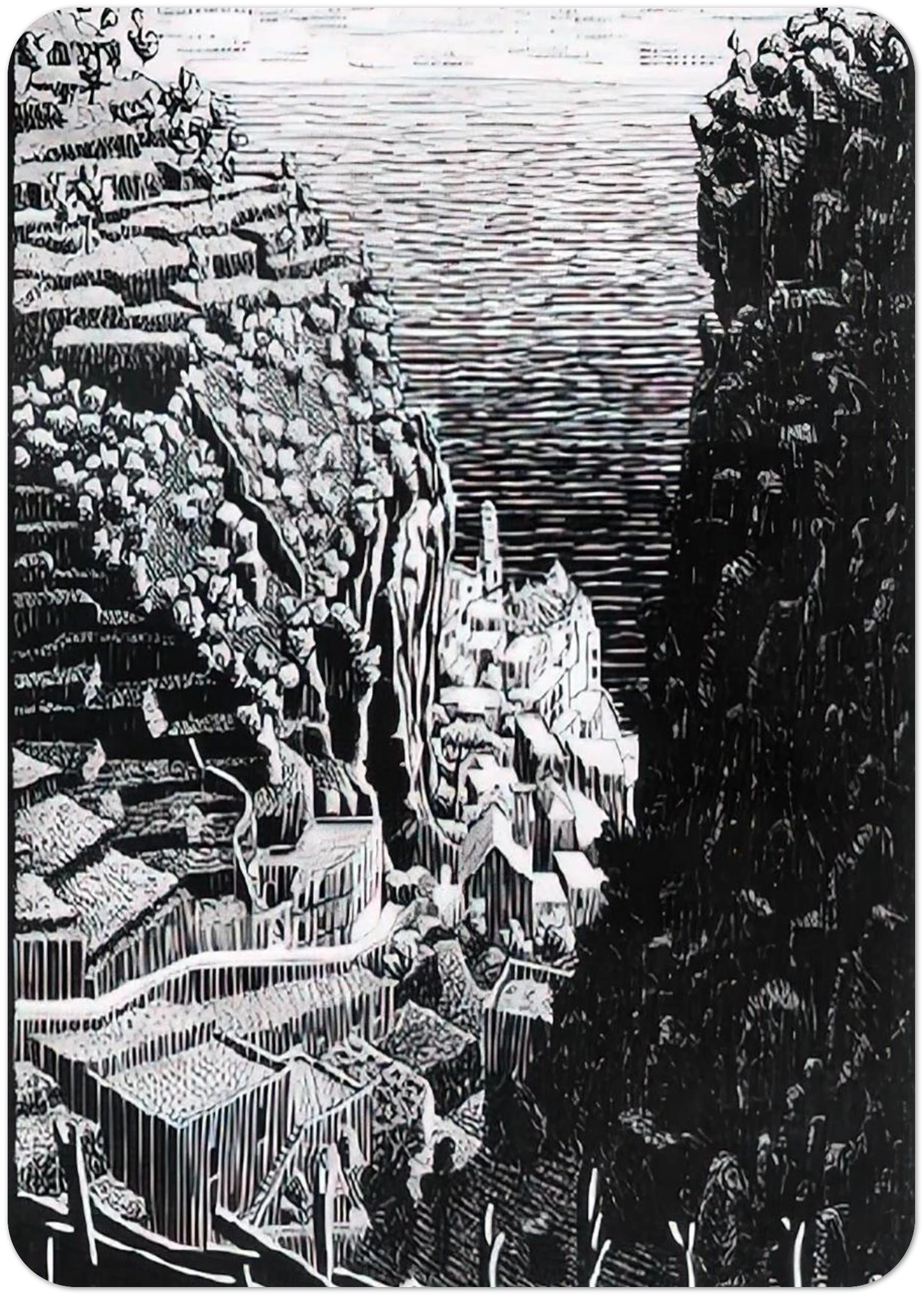
ATRANI COAST OF AMALFI 1 By MC Escher Pack of 10 Post Cards | MC Escher Post Cards | A6 (10.5 x 14.8 cm) - 4.1 x 5.8 inches
ATRANI COAST OF AMALFI 1 By MC Escher Pack of 10 Post Cards | MC Escher Post Cards | A6 (10.5 x 14.8 cm) - 4.1 x 5.8 inches
Couldn't load pickup availability
Elevate Your Correspondence with M.C. Escher’s Italian Vision
Experience the architectural mastery of M.C. Escher through this exclusive collection of fine art postcards featuring Atrani, Coast of Amalfi (1931). Before his world-renowned exploration of mathematical paradoxes, Escher was deeply inspired by the verticality and rhythmic geometry of the Italian landscape. This specific work captures the dramatic coastal town of Atrani, showcasing his early genius for perspective, light, and structured composition.
At RedKalion, we bridge the gap between historical masterpiece and contemporary display. These postcards are not merely stationery; they are museum-quality reproductions designed for those who appreciate the intersection of art history and sophisticated design. Whether sent as a thoughtful sentiment or curated as a miniature gallery wall, these prints embody the enduring allure of the Amalfi Coast.
Uncompromising Material Quality
To honor Escher’s intricate linework, each card is produced using our advanced 12-color fine art printing technology. Unlike standard 4-color processes, our method captures the subtle tonal shifts and deep contrasts of the original lithograph with stunning accuracy. Our commitment to excellence includes:
- Paper Finishing: A smooth matte finish that eliminates glare, allowing the artwork’s detail to remain the focal point.
- Premium Weight: Sturdy 200 gsm (80 lb) FSC-certified paper with a thickness of 0.26 mm (10.3 mils).
- Eco-Conscious Production: Printed on demand using environmentally responsible materials to reduce waste.
- Archival Integrity: Designed to resist fading, ensuring your collection remains a vibrant tribute to Escher's legacy.


Discover Unlimited Art Possibilities
At RedKalion, you can find virtually any artwork from any artist, available in a wide range of sizes to perfectly match your space.
If you didn’t find what you’re looking for, contact us at support@redkalion.com . We will source any artwork and produce it in any size and format you need, including art prints, posters, canvas, framed pieces, framed canvas, and more.
For dedicated art enthusiasts, we also offer handcrafted replicas of any artwork, carefully painted by highly skilled artists using traditional techniques.
For custom requests, contact us at support@redkalion.com .
What is the print quality of the Atrani Coast of Amalfi 1 postcards?
We use 12-color fine art printing technology, which provides significantly more depth and color accuracy than standard 4-color inkjet printers, ensuring every detail of Escher's work is preserved.
What paper is used for these M.C. Escher postcards?
Each card is printed on 200 gsm (80 lb) FSC-certified paper. It features a smooth matte finish and a thickness of 0.26 mm for a premium, durable feel.
Are these postcards environmentally friendly?
Yes. We use FSC-certified paper from responsibly managed forests and employ a print-on-demand model to minimize environmental impact and eliminate overproduction.
How are these fine art postcards shipped?
Our postcards are carefully packaged to ensure they arrive in pristine condition. As they are printed on demand, there is no minimum order requirement for our archival-grade reproductions.
Will the colors fade over time?
No. By using archival-grade inks and high-quality matte paper, these postcards are designed to maintain their vibrancy and resist fading for years to come.
What period of M.C. Escher's career does Atrani represent?
Atrani represents Escher’s 'Italian Period' (1923–1935). During this time, he focused on realistic landscapes and architecture, which laid the foundation for his later mathematical and surrealist works.
Why is the town of Atrani significant in Escher's work?
Atrani’s interlocking buildings and stairways fascinated Escher. It served as a primary inspiration for his later experiments with perspective and his famous 'Metamorphosis' series.