


RedKalion
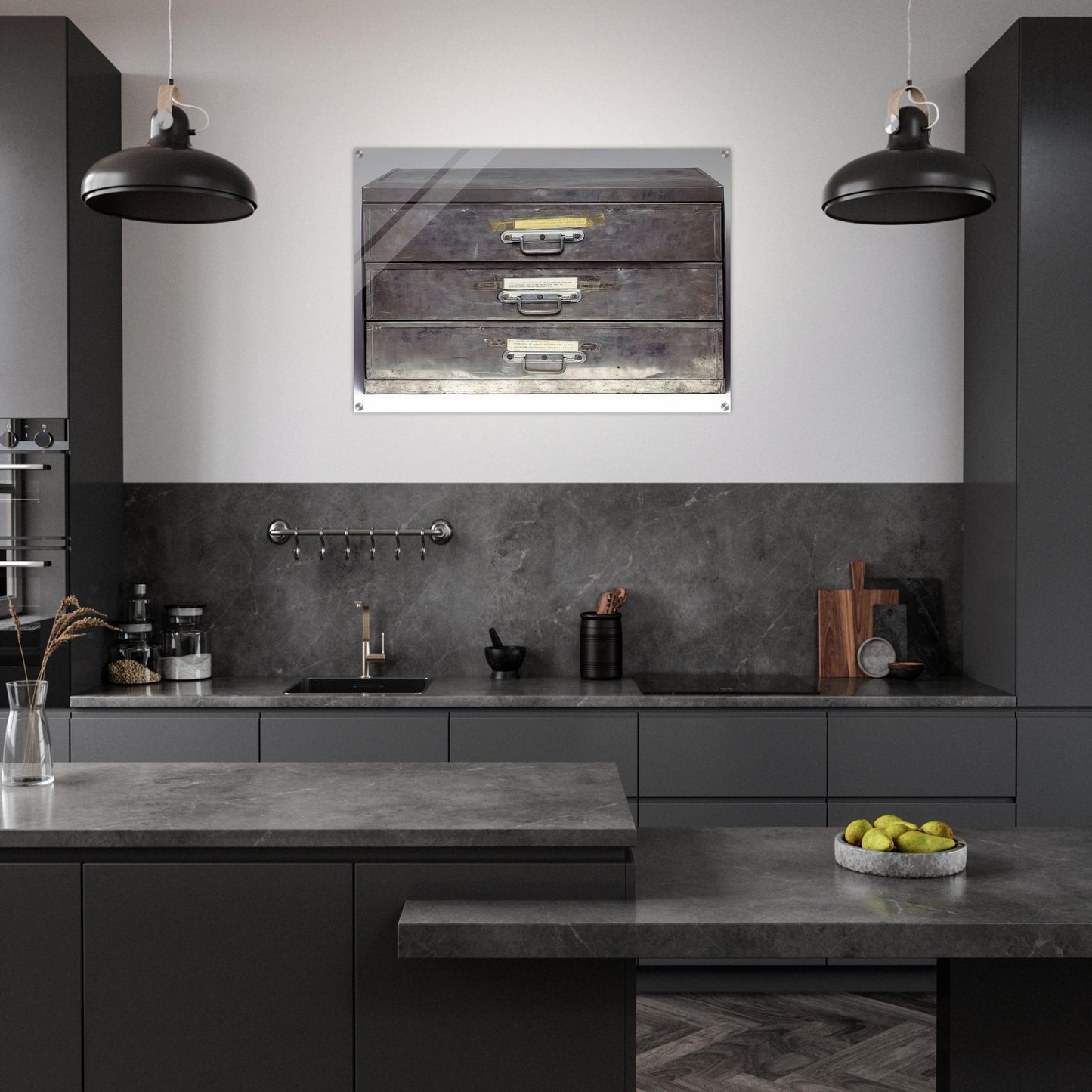
ATTEMPT AT RECREATION THREE DRAWERS 1971 - Christian Boltanski Acrylic Print - 70x100 cm / 28x40″ inches
ATTEMPT AT RECREATION THREE DRAWERS 1971 - Christian Boltanski Acrylic Print - 70x100 cm / 28x40″ inches
Couldn't load pickup availability
Elevate Your Space with Christian Boltanski’s 'Attempt at Recreation Three Drawers 1971'
Immerse your interior in the profound conceptual world of Christian Boltanski with this museum-quality reproduction of Attempt at Recreation Three Drawers 1971. As a central figure in contemporary French art, Boltanski spent his career exploring the intersections of memory, childhood, and loss. This specific piece, originating from his influential 'Reconstitution' period, serves as a poignant meditation on the human urge to archive the ephemeral experiences of our past.
This premium acrylic print captures the stark, evocative aesthetic of the original work with stunning clarity. Printed on 4mm (0.15") high-grade acrylic, the artwork benefits from a luminous depth that traditional paper prints cannot achieve. The sleek, straight-cut corners and modern finish ensure that this 70x100 cm (28x40″) masterpiece becomes a focal point of sophisticated reflection in any contemporary gallery or home setting.
Authentic Artistry Meets Modern Craftsmanship
At RedKalion, we curate archival-grade reproductions that honor the artist's original vision. Boltanski’s work often utilized mundane materials to evoke 'the little memory'—the personal histories that are frequently lost to time. By presenting this work on a durable, vibrant acrylic medium, we offer a dialogue between the fragility of the subject matter and the endurance of modern fine art materials. The transparent elements are rendered with a white background to ensure the tonal complexity of the 1971 composition is perfectly preserved.
- Material: Premium 4mm (0.15") thick acrylic for a vibrant, glass-like depth.
- Design: Modern straight-cut corners for a clean, architectural silhouette.
- Installation: Includes a specialized hanging kit with screws and pre-drilled holes for effortless mounting.
- Durability: Highly resistant to fading and environmental wear, ensuring an archival presence.


Discover Unlimited Art Possibilities
At RedKalion, you can find virtually any artwork from any artist, available in a wide range of sizes to perfectly match your space.
If you didn’t find what you’re looking for, contact us at support@redkalion.com . We will source any artwork and produce it in any size and format you need, including art prints, posters, canvas, framed pieces, framed canvas, and more.
For dedicated art enthusiasts, we also offer handcrafted replicas of any artwork, carefully painted by highly skilled artists using traditional techniques.
For custom requests, contact us at support@redkalion.com .
What makes this Christian Boltanski reproduction unique?
Our reproduction uses high-definition printing on 4mm acrylic, preserving the intricate details of Boltanski’s 1971 conceptual work. This medium enhances color depth and provides a sophisticated, museum-quality finish that honors the artist's legacy.
How is the acrylic print constructed?
The print is crafted from 4mm (0.15") thick acrylic with straight-cut corners. Transparent areas in the original design default to white during the printing process to ensure optimal vibrancy and visual impact for the 70x100 cm format.
What is included in the hanging kit?
Each print includes a professional hardware kit: four screws and pre-drilled holes at each corner. Holes are 14mm from the edge with an 8mm diameter, accompanied by 15mm screw heads for a secure, elegant mount.
How is the print protected during shipping?
We utilize specialized protective packaging designed for fragile fine art. Each acrylic piece is securely cushioned and boxed to ensure it arrives at your door in pristine, gallery-ready condition.
What is the archival longevity of this piece?
Built with durability in mind, our acrylic prints are resistant to UV light and moisture. This archival-grade construction ensures your investment remains vibrant and structurally sound for decades to come.
What is the meaning behind 'Attempt at Recreation Three Drawers'?
In this 1971 work, Boltanski attempted to reconstruct childhood memories using clay and found objects. It explores the impossibility of truly 'recreating' the past, highlighting the gap between memory and reality.
Why did Boltanski use mundane objects in 1971?
Boltanski used 'inventory' techniques to elevate ordinary life to the status of a monument. By archiving simple items, he challenged traditional art hierarchies and focused on the universal experience of human mortality.