RedKalion
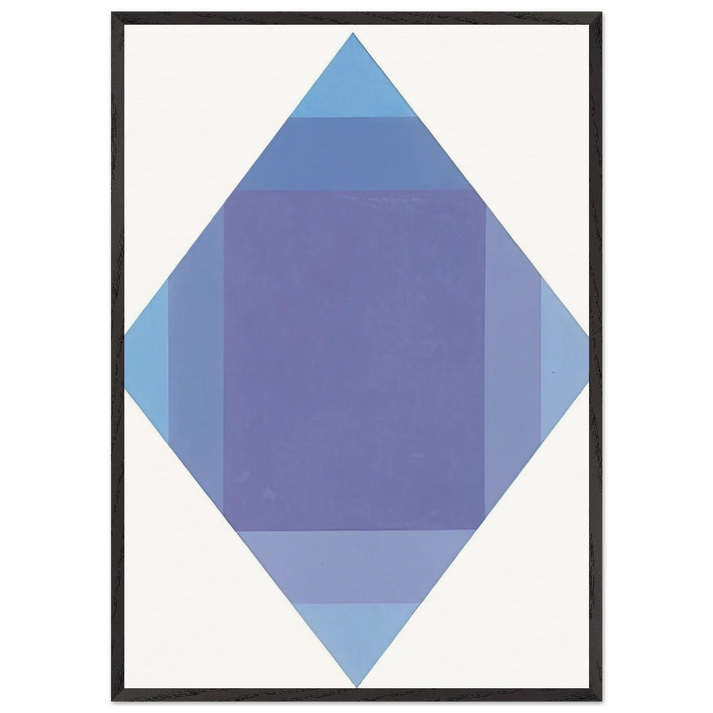
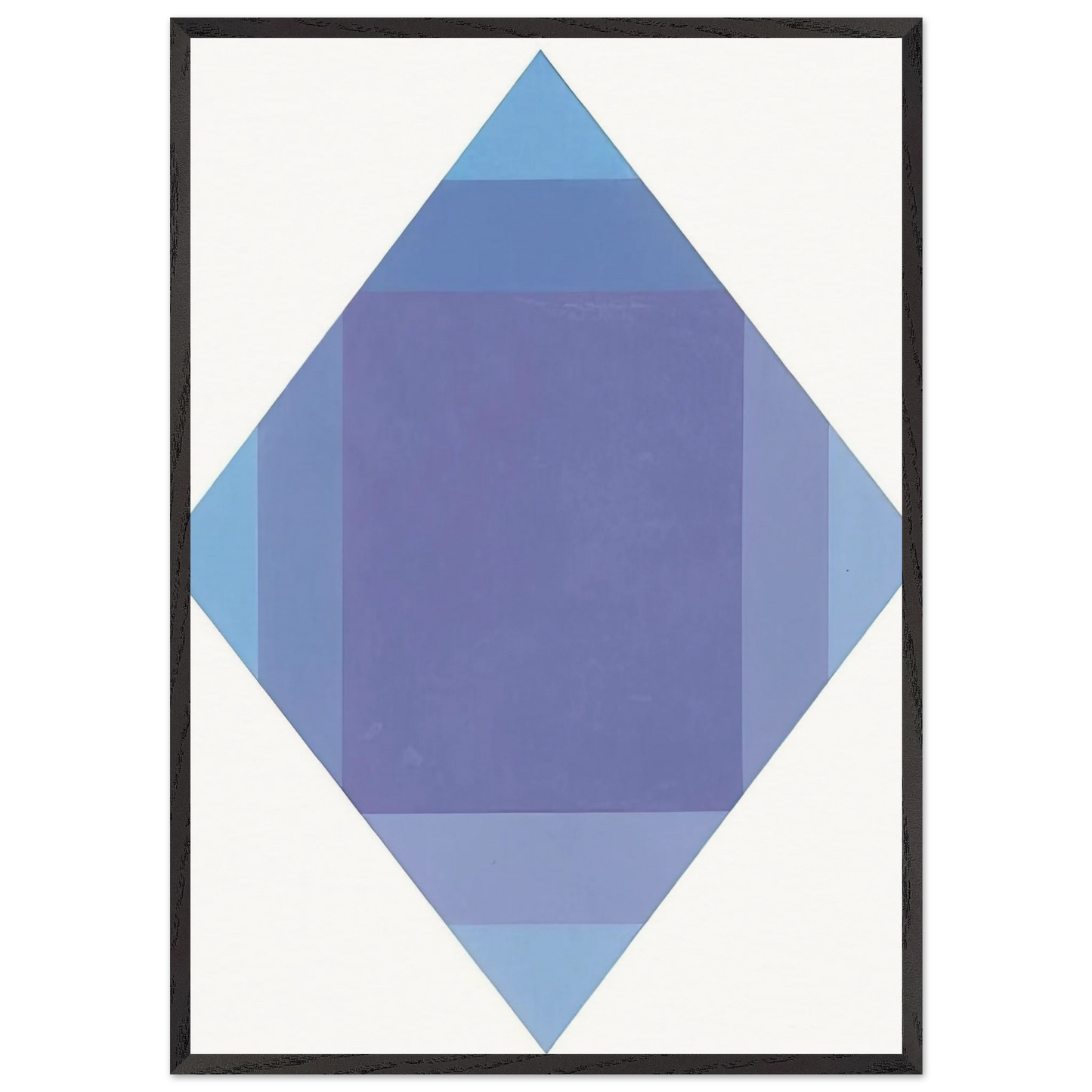
Auflosung von lila - 1972 - Max Bill 70x100 cm / 28x40 inches Framed Art Print – Black Wooden Frame
Auflosung von lila - 1972 - Max Bill 70x100 cm / 28x40 inches Framed Art Print – Black Wooden Frame
Couldn't load pickup availability
The Mathematical Elegance of Max Bill: Auflösung von Lila
Experience the profound intersection of logic and aesthetics with this museum-quality reproduction of Max Bill's 'Auflösung von Lila' (1972). As a polymath—architect, painter, and sculptor—Bill was a central figure in the Concrete Art movement. This piece exemplifies his 'mathematical way of thinking in art,' where the resolution of color and form follows a strict geometric progression, resulting in a visual harmony that is both intellectual and deeply meditative.
Archival Quality Meets Modern Sophistication
At RedKalion, we believe a masterpiece deserves an equally masterful presentation. This 70x100 cm (28x40 inches) framed art print is meticulously crafted on 250 gsm (110 lb) archival museum-quality paper. The natural white, matte, and uncoated finish ensures that the vibrant purples and precise lines of Bill’s 1972 vision are captured without distracting glare. Each print is encased in a premium black wooden frame, crafted from responsibly sourced oak and ash. Measuring 20mm (0.79") in width and thickness, our frames provide a sturdier, more substantial profile than standard gallery alternatives.
Sustainable Craftsmanship for Your Space
Your investment in fine art is protected by shatterproof plexiglass, ensuring the longevity of the print while maintaining crystal-clear visibility. We prioritize sustainability by using FSC-certified materials, aligning with Max Bill’s own Bauhaus-rooted principles of functional, responsible design. Each piece arrives ready-to-hang with an included kit, allowing you to instantly elevate your interior with a work of enduring historical significance.
- Artist: Max Bill (1972)
- Paper: 250 gsm archival grade, natural white
- Frame: 20mm thick black oak/ash wood
- Sustainability: FSC-certified materials
- Ready-to-hang: Hanging kit included
Discover Unlimited Art Possibilities
At RedKalion, you can find virtually any artwork from any artist, available in a wide range of sizes to perfectly match your space.
If you didn’t find what you’re looking for, contact us at support@redkalion.com . We will source any artwork and produce it in any size and format you need, including art prints, posters, canvas, framed pieces, framed canvas, and more.
For dedicated art enthusiasts, we also offer handcrafted replicas of any artwork, carefully painted by highly skilled artists using traditional techniques.
For custom requests, contact us at support@redkalion.com .
What is the paper quality of this Max Bill print?
We use 250 gsm (110 lb) museum-quality paper. It is a natural white, uncoated, and matte archival paper, ensuring your fine art print remains vibrant and resists yellowing over time.
How is the artwork framed?
The print is housed in a premium 20mm thick black frame made from solid oak and ash wood. This wider profile offers superior durability and a more luxurious aesthetic than standard thin frames.
Is the framing material sustainable?
Yes, all wood used in our frames is responsibly sourced and FSC-certified. This ensures your Max Bill reproduction supports sustainable forestry practices while maintaining elite gallery standards.
What does 'Auflösung von Lila' represent in Max Bill's work?
Created in 1972, 'Auflösung von Lila' (Resolution of Purple) explores Bill’s fascination with mathematical structures. It represents a systematic deconstruction of color and geometric form, central to the Concrete Art movement.
How is the print protected during shipping and display?
Each print is protected by high-quality, shatterproof plexiglass. This provides the clarity of glass with significantly higher durability, protecting your archival-grade print from dust and damage during transit and display.
Is the print ready to hang upon arrival?
Absolutely. Your framed Max Bill print arrives with a professional hanging kit included. It is designed to be ready to hang directly on your wall as soon as it is unboxed.
What is the historical significance of Max Bill's 1972 period?
By 1972, Max Bill had refined his theories on 'Concrete Art.' This period reflects his mastery of topology and color theory, bridging his Bauhaus education with mid-century modern mathematical precision.