RedKalion
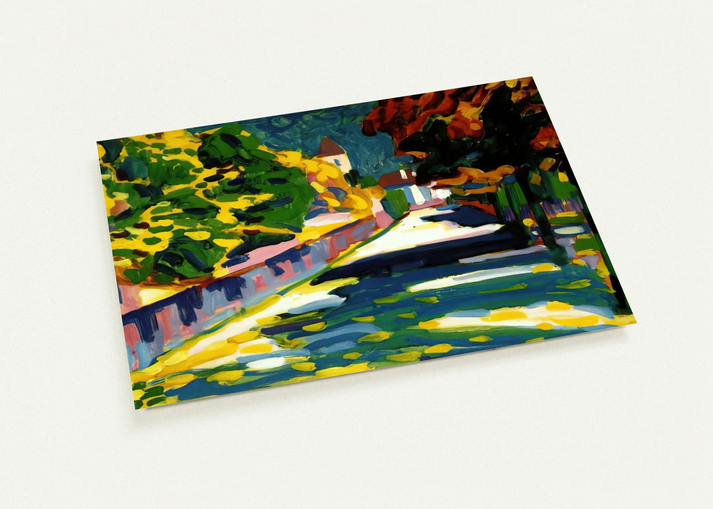
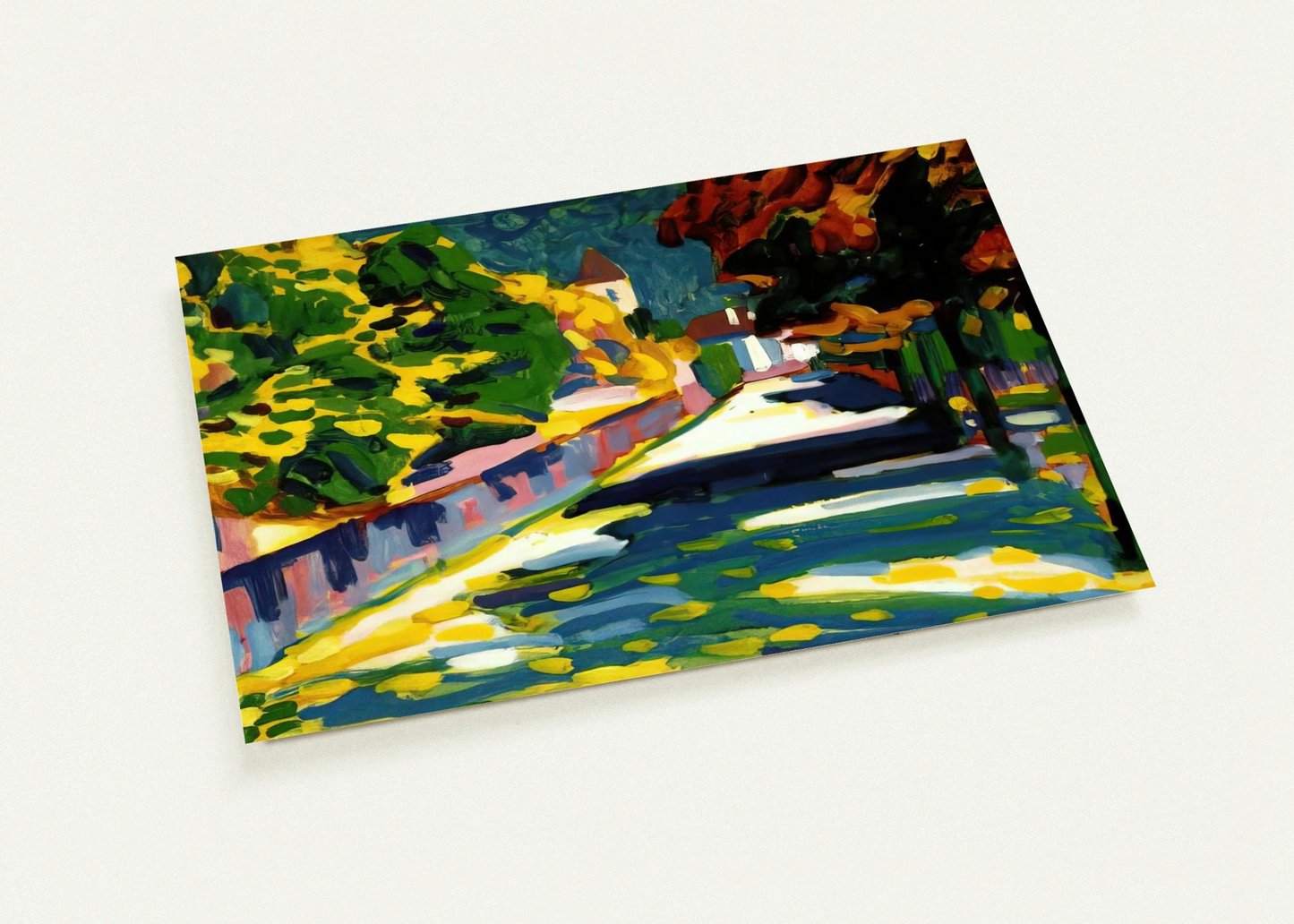
AUTUMN IN BAVARIA 1908 By Wassily Kandinsky Pack of 10 Post Cards | Wassily Kandinsky Post Cards | A6 (10.5 x 14.8 cm) - 4.1 x 5.8 inches
AUTUMN IN BAVARIA 1908 By Wassily Kandinsky Pack of 10 Post Cards | Wassily Kandinsky Post Cards | A6 (10.5 x 14.8 cm) - 4.1 x 5.8 inches
Couldn't load pickup availability
Elevate Your Correspondence with Wassily Kandinsky's Early Expressionism
Step into the vibrant landscapes of the early 20th century with our premium pack of 10 postcards featuring Autumn in Bavaria (1908). This seminal work by Wassily Kandinsky marks a pivotal moment in art history—his Murnau period. During this time, Kandinsky began to move away from literal representation, using the Bavarian countryside as a vessel for raw emotion and bold, non-naturalistic color. At RedKalion, we preserve this historical energy through sophisticated, museum-grade reproduction techniques.
Each postcard is more than a simple greeting; it is a tactile experience. Utilizing advanced 12-color fine art printing technology, we capture the depth of Kandinsky’s thick brushstrokes and the luminous contrast of his autumnal palette. Unlike standard 4-color printing, our process ensures every hue—from the deep ochres to the electric blues—is rendered with breathtaking accuracy and archival permanence.
Product Specifications & Archival Quality
- Sophisticated Finish: A smooth matte finish provides a glare-free surface that highlights the complexity of the brushwork.
- Premium Weight: Printed on 200 gsm (80 lb) paper with a thickness of 0.26 mm (10.3 mils) for a substantial, high-end feel.
- Museum Standards: We use only FSC-certified, environmentally conscious materials, ensuring your collection is as sustainable as it is beautiful.
- Versatile Display: These A6 postcards (10.5 x 14.8 cm) are perfect for heartfelt notes, elegant invitations, or as a curated set of small-scale wall art.
By choosing a RedKalion reproduction, you are investing in an archival masterpiece that endures. Experience the legacy of the pioneer of abstract art and share a piece of the Bavarian autumn with those who appreciate the finer details of art history.
Discover Unlimited Art Possibilities
At RedKalion, you can find virtually any artwork from any artist, available in a wide range of sizes to perfectly match your space.
If you didn’t find what you’re looking for, contact us at support@redkalion.com . We will source any artwork and produce it in any size and format you need, including art prints, posters, canvas, framed pieces, framed canvas, and more.
For dedicated art enthusiasts, we also offer handcrafted replicas of any artwork, carefully painted by highly skilled artists using traditional techniques.
For custom requests, contact us at support@redkalion.com .
What makes RedKalion's printing process superior to standard postcards?
We use 12-color fine art printing technology, which offers superior color vibrancy and depth compared to standard 4-color inkjet processes, ensuring your Kandinsky reproduction is museum-quality.
What is the weight and texture of the postcard paper?
Each card is printed on 200 gsm (80 lb) paper with a thickness of 0.26 mm. It features a smooth matte finish for a clean, glare-free aesthetic.
Are these materials environmentally sustainable?
Yes, all our postcards are printed on FSC-certified paper, ensuring the materials are sourced from responsibly managed forests that provide environmental and social benefits.
How is my order produced and shipped?
Every pack of 10 postcards is printed on demand to ensure the highest quality control and minimize waste, with no minimum order requirements.
What are the exact dimensions of the postcards?
The postcards are A6 size, measuring 10.5 x 14.8 cm (4.1 x 5.8 inches), making them ideal for standard framing or international mailing.
What artistic period does 'Autumn in Bavaria' represent?
Painted in 1908, this work represents Kandinsky's Murnau period, a transitional phase where he moved from Impressionism toward Expressionism and his eventual breakthrough into pure abstraction.
Why is the color palette in this Kandinsky piece significant?
Kandinsky used 'Autumn in Bavaria' to experiment with color as a spiritual and emotional force, a theory he later codified in his influential book, 'Concerning the Spiritual in Art'.