

RedKalion
Avery - 1968 - Doug Ohlson Acrylic Print - 70x100 cm / 28x40″ inches | Doug Ohlson Wall Art | Doug Ohlson Prints
Avery - 1968 - Doug Ohlson Acrylic Print - 70x100 cm / 28x40″ inches | Doug Ohlson Wall Art | Doug Ohlson Prints
Couldn't load pickup availability
The Luminous Minimalism of Doug Ohlson’s Avery (1968)
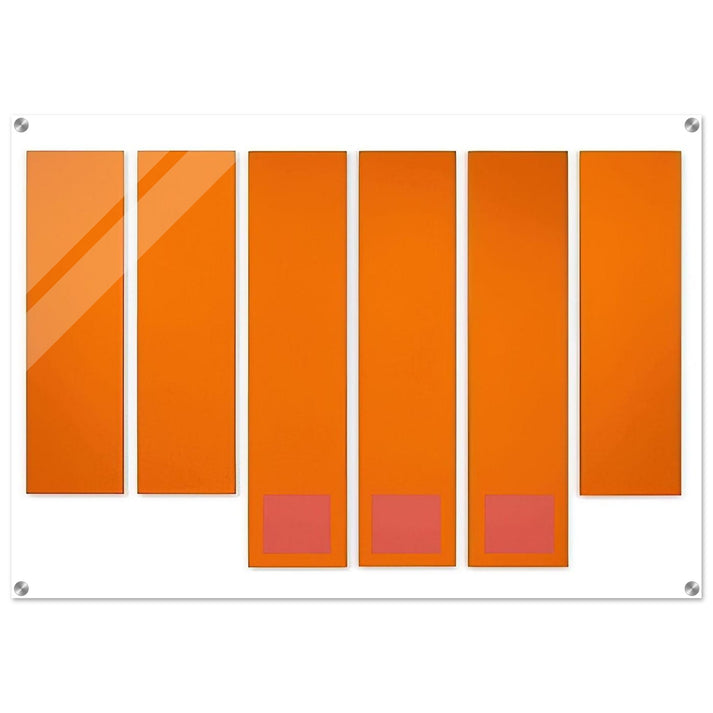
Experience the profound spatial depth and chromatic intensity of Doug Ohlson’s Avery (1968). A masterwork of mid-century American abstraction, this piece exemplifies Ohlson’s unique contribution to the Color Field movement. Rather than simple flat planes, Ohlson employed a sophisticated understanding of color relationships to create a sense of rhythm and architectural structure. This Doug Ohlson wall art reproduction captures the subtle nuances of his original palette, inviting the viewer into a contemplative state defined by geometric precision and atmospheric light.
Museum-Quality Execution on Premium Acrylic
RedKalion brings this historical masterpiece into the contemporary era using advanced printing technology and high-end materials. Our Doug Ohlson prints are rendered on 4mm (0.15") high-grade acrylic, which provides a depth and vibrance that traditional paper cannot match. The acrylic medium enhances the inherent luminosity of the 1968 composition, ensuring the colors remain as striking as they were in the artist's studio. With straight-cut corners and a sleek finish, this piece transitions seamlessly from gallery walls to modern residential or corporate interiors.
Refined Specifications for the Discerning Collector
- Premium Material: 4mm (0.15") thick acrylic for a durable, glass-like depth and vibrant color saturation.
- Modern Finish: Precision straight-cut corners and transparent backgrounds optimized to white for maximum visual impact.
- Integrated Hanging System: Includes professional hardware with four pre-drilled holes (14mm from the edge) and 15mm screw heads for a secure, sophisticated float.
- Archival Integrity: Engineered to resist UV degradation, preserving the delicate color balance of Ohlson's work for generations.
A Legacy of Abstract Excellence
Doug Ohlson was renowned for his ability to manipulate the viewer's perception of space through color. In Avery, the interaction of vertical elements creates a visual pulse that defines the environment it occupies. By choosing a RedKalion reproduction, you are acquiring a piece that honors the artist’s legacy through meticulous craftsmanship. Elevate your space with an archival masterpiece that endures, bridging the gap between historical significance and contemporary luxury.


Discover Unlimited Art Possibilities
At RedKalion, you can find virtually any artwork from any artist, available in a wide range of sizes to perfectly match your space.
If you didn’t find what you’re looking for, contact us at support@redkalion.com . We will source any artwork and produce it in any size and format you need, including art prints, posters, canvas, framed pieces, framed canvas, and more.
For dedicated art enthusiasts, we also offer handcrafted replicas of any artwork, carefully painted by highly skilled artists using traditional techniques.
For custom requests, contact us at support@redkalion.com .
What makes the Avery (1968) print museum-quality?
Our Doug Ohlson prints utilize archival-grade inks and 4mm high-density acrylic. This combination ensures color accuracy, depth, and UV resistance, meeting the rigorous standards expected of museum-quality fine art reproductions for private collections.
How is the Doug Ohlson acrylic print installed?
Each print arrives with a dedicated hanging kit. It features four pre-drilled holes (8mm diameter) located 14mm from each corner, accompanied by 15mm screw heads and hardware for a secure, elegant presentation on any wall surface.
Will the colors in this abstract print fade over time?
No. We use UV-resistant printing technology and premium acrylic that protects the pigments from sunlight damage. This ensures the vibrant hues of Ohlson’s Avery (1968) remain crisp and saturated for decades.
What is the thickness and finish of the acrylic panel?
The artwork is produced on a 4mm (0.15") thick acrylic sheet. It features a polished, high-gloss finish with straight-cut corners, offering a sleek, modern aesthetic that enhances the spatial depth of the abstract composition.
How is the artwork packaged for secure delivery?
RedKalion employs specialized, high-impact resistant packaging to ensure your Doug Ohlson wall art arrives in pristine condition. Each piece is layered in protective film and secured within reinforced shipping containers.
What was Doug Ohlson’s artistic intent with Avery (1968)?
In Avery, Ohlson explored the "repetition of form" to create a visual rhythm. His intent was to move beyond mere decoration, using color as a structural element to influence the viewer's psychological perception of space.
How does the Color Field movement influence this specific work?
Avery reflects the late 1960s shift toward Post-Painterly Abstraction. It emphasizes clarity, openness, and the rejection of the tactile brushwork seen in Abstract Expressionism, focusing instead on the pure emotional power of color.