

RedKalion
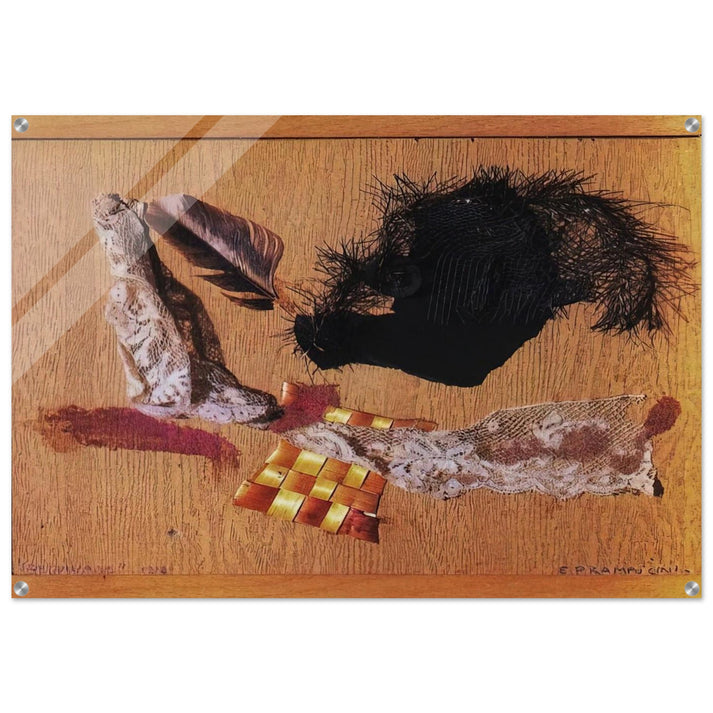
B GUINAGE 1918 - Enrico Prampolini Acrylic Print - 70x100 cm / 28x40″ inches
B GUINAGE 1918 - Enrico Prampolini Acrylic Print - 70x100 cm / 28x40″ inches
Couldn't load pickup availability
Embrace Futurist Dynamism with Enrico Prampolini’s B GUINAGE 1918
Step into the high-octane world of the Italian avant-garde with B GUINAGE 1918, a seminal work by the visionary Enrico Prampolini. This exquisite fine art print captures the essence of the second wave of Futurism, where mechanical precision meets abstract spatial exploration. Prampolini, a titan of the movement, sought to bridge the gap between human perception and the industrial age, creating a visual language that remains remarkably contemporary over a century later.
A Masterpiece of Mechanical Aesthetic
Created during a pivotal transition in European art, B GUINAGE reflects the artist's fascination with 'mechanical art.' The composition utilizes geometric fragmentation and rhythmic lines to evoke a sense of perpetual motion. Our museum-quality reproduction honors Prampolini’s legacy, ensuring that every subtle gradient and sharp edge is rendered with surgical precision. At RedKalion, we curate only the most historically significant pieces, allowing you to bring a fragment of the 1918 Italian art revolution into your modern space.
Premium Acrylic Craftsmanship
To truly do justice to Prampolini's futurist vision, this acrylic print utilizes a 4mm (0.15") high-grade acrylic substrate. This medium offers a sleek, vibrant depth that traditional canvas cannot match, perfectly complementing the industrial themes of the artwork. The straight-cut corners and glossy finish provide a sophisticated, modern aesthetic that turns light into a dynamic participant in the viewing experience.
- Material: 4mm (0.15") architectural-grade acrylic for depth and durability.
- Design: Modern straight-cut corners with transparent areas defaulting to white for maximum color pop.
- Hanging Kit: Professional hardware included, featuring pre-drilled holes at each corner (14mm from edge) and 15mm screw heads for a secure, floating effect.
- Archival Quality: Designed to endure, ensuring your investment maintains its brilliance for decades.
Elevate your interior with an archival masterpiece that endures. This RedKalion exclusive provides the perfect focal point for those who value art history and cutting-edge presentation.


Discover Unlimited Art Possibilities
At RedKalion, you can find virtually any artwork from any artist, available in a wide range of sizes to perfectly match your space.
If you didn’t find what you’re looking for, contact us at support@redkalion.com . We will source any artwork and produce it in any size and format you need, including art prints, posters, canvas, framed pieces, framed canvas, and more.
For dedicated art enthusiasts, we also offer handcrafted replicas of any artwork, carefully painted by highly skilled artists using traditional techniques.
For custom requests, contact us at support@redkalion.com .
What makes this Enrico Prampolini print museum-quality?
RedKalion utilizes 4mm high-grade acrylic and archival-grade pigments to ensure vibrant color accuracy and depth, meeting the rigorous standards of professional galleries and discerning collectors.
What mounting hardware is included with the acrylic print?
Each print includes a comprehensive hanging kit: four screws with 15mm heads and pre-drilled 8mm holes at each corner for a secure and stylish installation.
How does the acrylic finish compare to traditional glass?
Our 4mm acrylic is more durable and lighter than glass while providing superior clarity and UV protection, making the colors of B GUINAGE 1918 appear more vivid.
What is the shipping and handling process for this large print?
We employ specialized protective packaging to ensure your 70x100 cm print arrives in pristine condition, backed by RedKalion's commitment to secure, global logistics.
What is the expected archival longevity of this print?
With proper indoor placement, our acrylic prints are engineered to resist fading and yellowing for decades, preserving the Futurist aesthetic for generations to come.
Who was Enrico Prampolini and why is he significant?
Prampolini was a leader of Italian Futurism and a pioneer of abstract art, known for his 'mechanical' style and his influence on set design and architecture.
What is the significance of the '1918' date in this artwork?
1918 marks a transition toward 'Syntheticism' in Futurism, where Prampolini moved from analytical fragmentation to a more integrated, mechanical aesthetic post-WWI.