

RedKalion
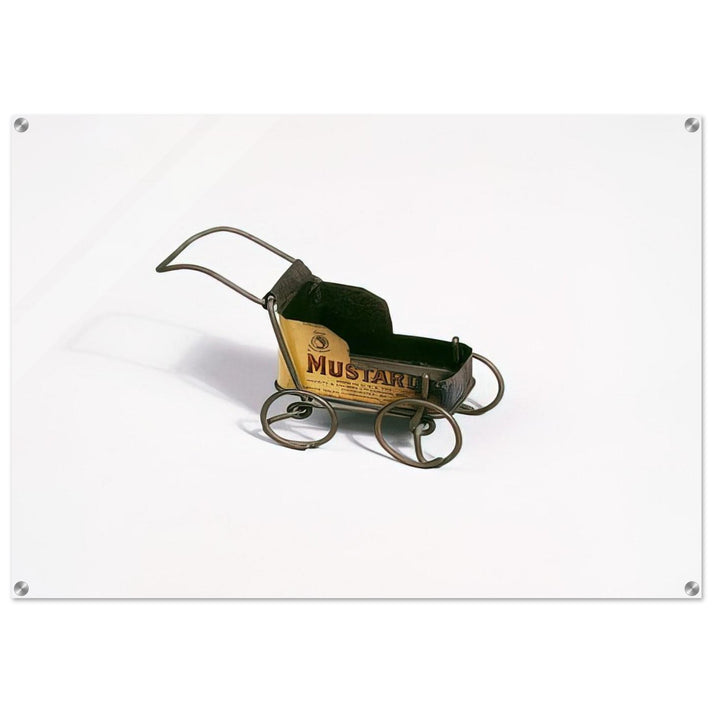
BABY CARRIAGE 1940 - Alexander Calder Acrylic Print - 70x100 cm / 28x40″ inches
BABY CARRIAGE 1940 - Alexander Calder Acrylic Print - 70x100 cm / 28x40″ inches
Couldn't load pickup availability
Elevate Your Space with Alexander Calder’s 'Baby Carriage' (1940)
Experience the playful genius of Alexander Calder with this museum-quality reproduction of his 1940 masterpiece, Baby Carriage. This piece captures a pivotal moment in Calder’s career, where his fascination with kinetic movement and organic abstraction began to redefine modern art. By choosing this fine art print, you are bringing home a slice of 20th-century history, characterized by bold lines and the whimsical balance for which Calder is world-renowned.
The RedKalion Archival Standard
At RedKalion, we specialize in curating archival-grade reproductions that honor the artist's original vision. This Alexander Calder acrylic print is produced on premium 4mm (0.15") acrylic, providing a sleek, vibrant finish that enhances depth and color saturation. Unlike traditional framing, the acrylic medium offers a contemporary, frameless look that allows the primary colors and geometric forms of Baby Carriage to resonate with lifelike clarity.
Authentic Artistry and Modern Durability
Alexander Calder was an engineer by training, a background that informed his revolutionary 'mobiles.' Even in a static work like Baby Carriage, there is a sense of suspended animation and structural harmony. Our reproduction ensures every nuance of his brushwork is preserved. The print features straight-cut corners for a modern silhouette and is designed for longevity, resisting the yellowing and fading common in mass-market prints.
- Material: High-grade 4mm (0.15") thick acrylic for a deep, luminous effect.
- Design: Minimalist straight-cut corners and professional transparent-to-white backing.
- Installation: Includes a premium hanging kit with four silver-finish standoffs.
- Durability: Shatter-resistant and UV-protected for an archival lifespan.
Transform your interior with a piece that balances avant-garde history with cutting-edge material science. This is more than a wall hanging; it is a sophisticated investment in aesthetic heritage.


Discover Unlimited Art Possibilities
At RedKalion, you can find virtually any artwork from any artist, available in a wide range of sizes to perfectly match your space.
If you didn’t find what you’re looking for, contact us at support@redkalion.com . We will source any artwork and produce it in any size and format you need, including art prints, posters, canvas, framed pieces, framed canvas, and more.
For dedicated art enthusiasts, we also offer handcrafted replicas of any artwork, carefully painted by highly skilled artists using traditional techniques.
For custom requests, contact us at support@redkalion.com .
What are the physical dimensions and material of the Alexander Calder 'Baby Carriage' print?
This print measures 70x100 cm (28x40 inches) and is crafted from 4mm (0.15") high-quality acrylic. This material provides a sleek, modern finish and exceptional color depth compared to traditional canvas or paper prints.
How do I install the acrylic print on my wall?
Each print includes a professional hanging kit: four screws and standoffs. The acrylic has pre-drilled holes at each corner (14mm from the edge), ensuring a secure, floating presentation that sits 15mm from the wall surface.
What makes this archival-quality reproduction different from standard prints?
RedKalion uses gallery-grade pigment inks and UV-resistant acrylic to prevent fading. Our process ensures museum-quality color accuracy, preserving the vibrant primary tones of Calder’s 1940 work for decades without degradation.
How is the artwork shipped to ensure it arrives undamaged?
We utilize specialized art-secure packaging, including protective layers and reinforced boxing, to ensure your acrylic print arrives in pristine condition. All shipments are fully insured for your peace of mind.
Will the colors in the 'Baby Carriage' print fade over time?
No. Our acrylic prints are designed with UV-protective properties and archival inks. This ensures that the bold reds, yellows, and blacks of Calder’s palette remain as vivid as the day they were printed.
What inspired Alexander Calder to create 'Baby Carriage' in 1940?
In 1940, Calder was exploring the intersection of domestic motifs and surrealist abstraction. 'Baby Carriage' simplifies a familiar object into a series of balanced, rhythmic lines, echoing the movement of his famous kinetic mobiles.
Is 'Baby Carriage' part of Calder's kinetic art movement?
While the print itself is a two-dimensional work, it belongs to the same creative era as his early mobiles. It utilizes the same visual language of equilibrium and spatial tension that defined his kinetic sculptures.