

RedKalion
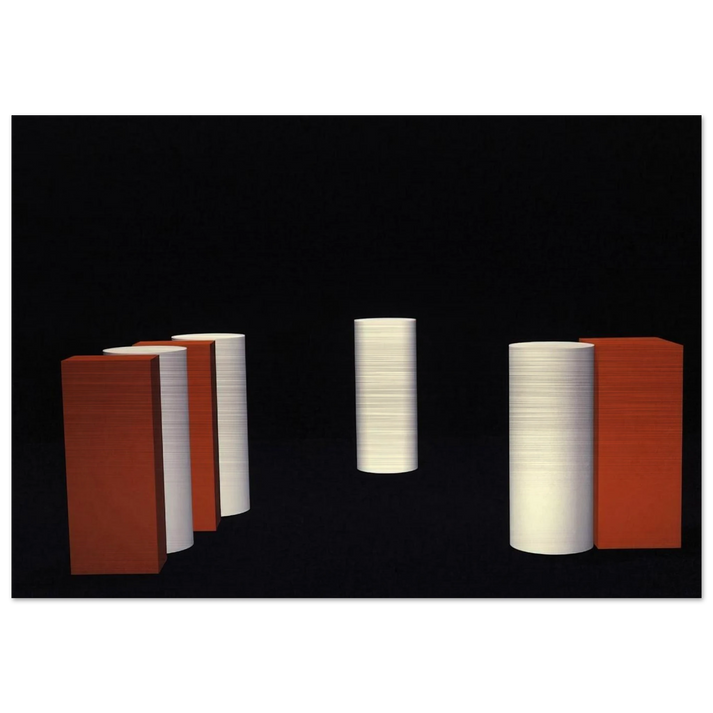
Ballet Neoconcreto # 1 - 1958 - Lygia Pape Brushed Aluminum Print - 70x100 cm / 28x40 inches | Lygia Pape Aluminum Print | Lygia Pape Prints
Ballet Neoconcreto # 1 - 1958 - Lygia Pape Brushed Aluminum Print - 70x100 cm / 28x40 inches | Lygia Pape Aluminum Print | Lygia Pape Prints
Couldn't load pickup availability
A Masterpiece of Brazilian Neo-Concretism: Lygia Pape’s Ballet Neoconcreto # 1
Step into the transformative era of 1950s Brazilian Modernism with Ballet Neoconcreto # 1 (1958), a seminal work by the visionary Lygia Pape. As a founding member of the Neo-Concrete movement, Pape sought to liberate art from the rigid constraints of pure rationalism, imbuing geometric forms with a sense of 'organic' life and human subjectivity. This museum-quality reproduction captures the architectural precision and rhythmic spirit of her original performance-based installation.
In this piece, the dance is no longer about the human figure, but about the movement of pure form in space. Our Brushed Aluminum DIBOND® print serves as the perfect medium for this industrial-aesthetic masterpiece. The 3mm (0.12") thick base provides a rigid, durable substrate that mirrors the structural integrity of Pape's iconic cylinders and cubes.
The RedKalion Technical Advantage:
- Material: Authentic Brushed silver Aluminum DIBOND® with a distinctive horizontal grain that adds a dynamic, metallic depth to the composition.
- Finish: A glare-free, matte finish that is particularly striking for Pape’s monochromatic and geometric designs.
- Direct Print: High-fidelity direct printing ensures vivid color accuracy while allowing white areas to shine through as raw, brushed metallic silver.
- Durability: Archival-grade materials designed for longevity, ensuring your fine art investment remains a centerpiece for decades.
Elevate your space with a Lygia Pape aluminum print that bridges the gap between mid-century avant-garde performance and contemporary interior design. At RedKalion, we curate only the finest reproductions, ensuring every archival-grade piece meets the standards of the most discerning collectors.


Discover Unlimited Art Possibilities
At RedKalion, you can find virtually any artwork from any artist, available in a wide range of sizes to perfectly match your space.
If you didn’t find what you’re looking for, contact us at support@redkalion.com . We will source any artwork and produce it in any size and format you need, including art prints, posters, canvas, framed pieces, framed canvas, and more.
For dedicated art enthusiasts, we also offer handcrafted replicas of any artwork, carefully painted by highly skilled artists using traditional techniques.
For custom requests, contact us at support@redkalion.com .
What defines the quality of this Lygia Pape fine art print?
RedKalion utilizes museum-quality Brushed Aluminum DIBOND® at 3mm thickness. This archival substrate provides a rigid, modern base that ensures the reproduction is as durable as it is visually striking.
What is the significance of Ballet Neoconcreto # 1 in art history?
Created in 1958, this work marked the birth of Neo-Concretism. It replaced traditional ballet with moving geometric shapes, emphasizing the phenomenological relationship between the object, space, and the viewer.
How does the brushed aluminum finish affect the artwork’s appearance?
The horizontal grain of the silver aluminum adds a dynamic metallic effect. In Lygia Pape's designs, any unprinted white areas reveal the raw metal, creating a shimmering, high-tech aesthetic.
Is the hanging hardware included with my purchase?
Yes, every Lygia Pape aluminum print from RedKalion includes a professional hanging kit. The specific kit varies slightly depending on the fulfillment country to ensure local compatibility.
How does RedKalion ensure the archival longevity of the print?
We use direct UV-stabilized printing on AluDibond, resulting in a glare-free, matte finish that resists fading and environmental degradation, maintaining museum-standard quality for years.
Who was Lygia Pape and why is she important?
Lygia Pape was a pioneer of Brazilian abstraction. Her work across film, sculpture, and performance challenged artistic boundaries, making her a cornerstone of 20th-century Latin American art history.
Can you describe the Neo-Concrete movement?
Emerging in 1959, the Neo-Concrete movement rejected the purely mathematical approach of Concrete art, favoring a more poetic, sensory-driven experience that integrated the viewer into the artwork.