
RedKalion
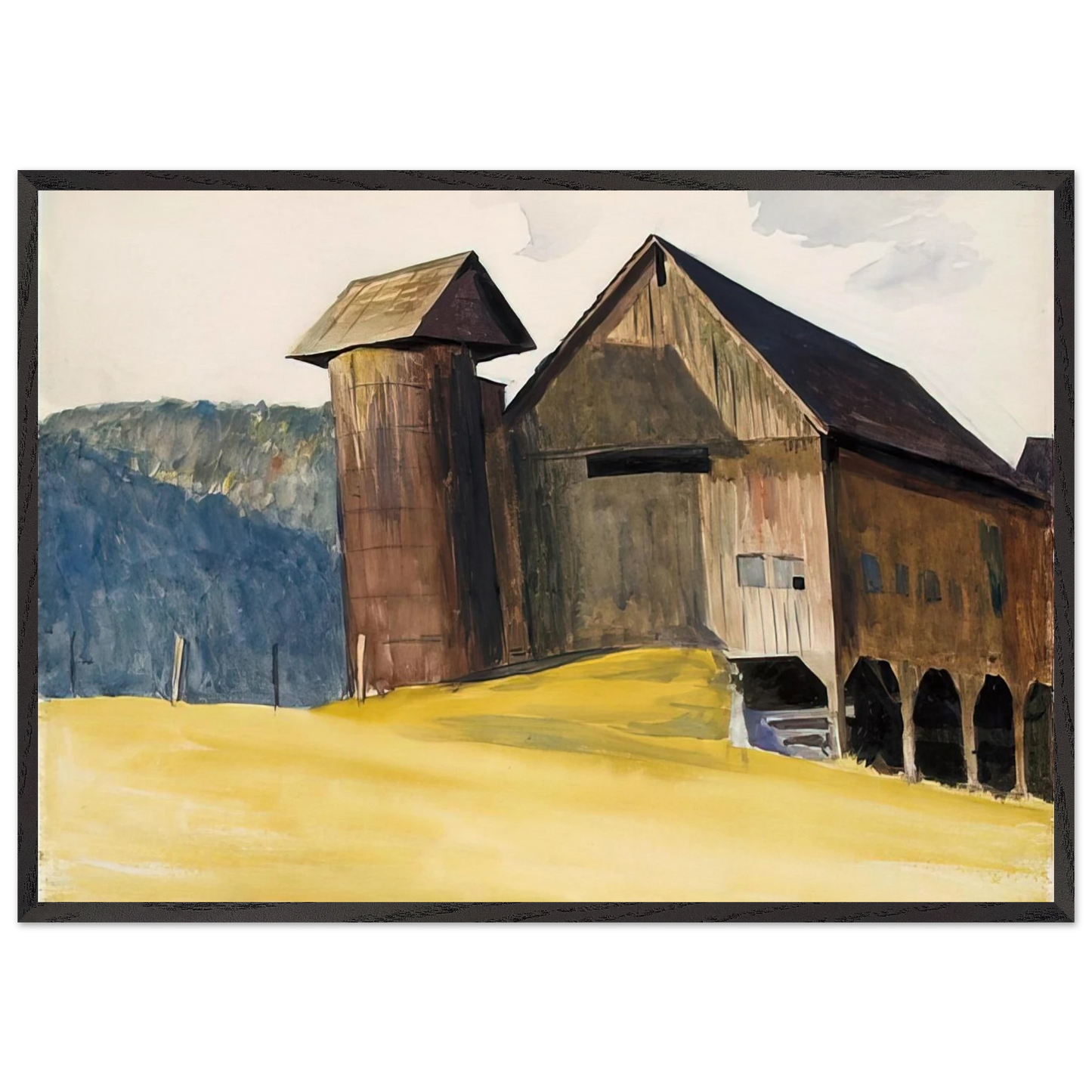
Barn and Silo Vermont - Edward Hopper 70x100 cm / 28x40 inches Framed Art Print – Black Wooden Frame
Barn and Silo Vermont - Edward Hopper 70x100 cm / 28x40 inches Framed Art Print – Black Wooden Frame
Couldn't load pickup availability
Experience the Quiet Power of Edward Hopper’s Vermont
Edward Hopper, the preeminent master of American Realism, possessed an unparalleled ability to capture the profound stillness and architectural integrity of the American landscape. Barn and Silo Vermont is a quintessential exploration of this theme. Originally captured during his travels through New England, this piece transforms a simple rural structure into a monumental study of light, shadow, and solitude. At RedKalion, we have meticulously curated this 70x100 cm (28x40 inches) framed art print to ensure that Hopper’s deliberate brushwork and evocative atmosphere are preserved for the discerning collector.
Museum-Quality Craftsmanship for the Modern Home
Every RedKalion reproduction is more than a mere print; it is a testament to archival excellence. This Edward Hopper fine art print is rendered on 250 gsm (110 lb) museum-quality paper. The natural white, uncoated matte finish provides a sophisticated, glare-free surface that allows the subtle tonal shifts of the Vermont landscape to resonate. To ensure your masterpiece endures for generations, we utilize acid-free, FSC-certified materials that resist yellowing and degradation.
Sophisticated Framing and Durability
This artwork arrives encased in a premium black wooden frame, crafted from responsibly sourced oak and ash. Measuring 20mm (0.79") in both thickness and width, the frame offers a substantial, contemporary profile that is significantly more robust than standard gallery frames. To protect the delicate surface of the museum-quality reproduction, we utilize shatterproof plexiglass, providing crystal-clear visibility while ensuring safety and longevity in any environment.
- Artist: Edward Hopper
- Title: Barn and Silo Vermont
- Print Material: 250 gsm archival-grade matte paper
- Frame: 20mm thick black oak/ash wood
- Protection: Shatterproof plexiglass and ready-to-hang kit included
- Sustainability: FSC-certified materials
Elevate your interior with an archival masterpiece that endures. This framed print arrives ready to hang, allowing you to transform your space instantly with the timeless elegance of RedKalion’s curated collection.
Discover Unlimited Art Possibilities
At RedKalion, you can find virtually any artwork from any artist, available in a wide range of sizes to perfectly match your space.
If you didn’t find what you’re looking for, contact us at support@redkalion.com . We will source any artwork and produce it in any size and format you need, including art prints, posters, canvas, framed pieces, framed canvas, and more.
For dedicated art enthusiasts, we also offer handcrafted replicas of any artwork, carefully painted by highly skilled artists using traditional techniques.
For custom requests, contact us at support@redkalion.com .
What makes RedKalion's Edward Hopper prints museum-quality?
We use 250 gsm (110 lb) archival museum-quality paper with a matte, uncoated finish. This ensures a heavy, premium feel and prevents fading over time, maintaining the integrity of Hopper’s original color palette for decades.
Is the black wooden frame sustainably sourced?
Yes, all our frames are made from FSC-certified oak and ash wood. The 20mm thickness provides a premium, sturdy profile that is more durable than standard commercial frames, reflecting our commitment to quality and sustainability.
How is the artwork protected during shipping and display?
Each print is protected by shatterproof, transparent plexiglass and arrives with a pre-installed hanging kit. This ensures the artwork remains safe from dust and damage while being ready to hang directly upon arrival.
What are the exact dimensions and thickness of the frame?
The frame is 20mm (0.79") thick and wide. This specific measurement is chosen to provide a bold, gallery-style presence that supports the 70x100 cm dimensions of the Edward Hopper print perfectly.
How long will this archival print last without fading?
Our use of 250 gsm archival-grade paper and acid-free materials ensures that your print will remain vibrant for generations. These museum-standard materials are designed specifically to resist environmental degradation and light-induced fading.
What is the historical significance of Barn and Silo Vermont in Hopper's career?
Created in 1927, this work highlights Hopper's transition toward 'Precisionism.' It demonstrates his obsession with how sunlight interacts with man-made structures, turning ordinary American vernacular architecture into a profound study of form and light.
Why did Edward Hopper frequently choose the Vermont landscape as a subject?
Hopper was drawn to Vermont for its stark, uncluttered landscapes and unique light quality. The region allowed him to explore the tension between nature and architecture, a core theme that defines his contribution to American Realism.