RedKalion
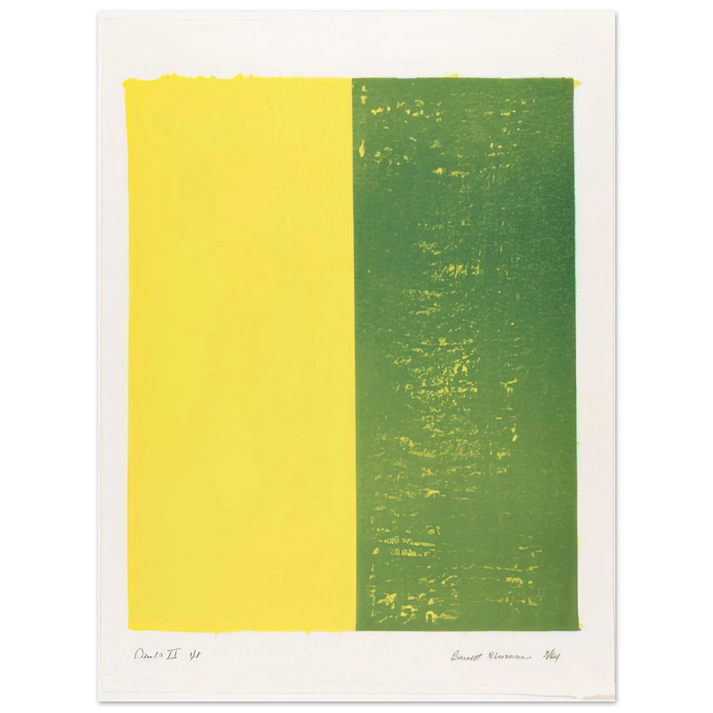
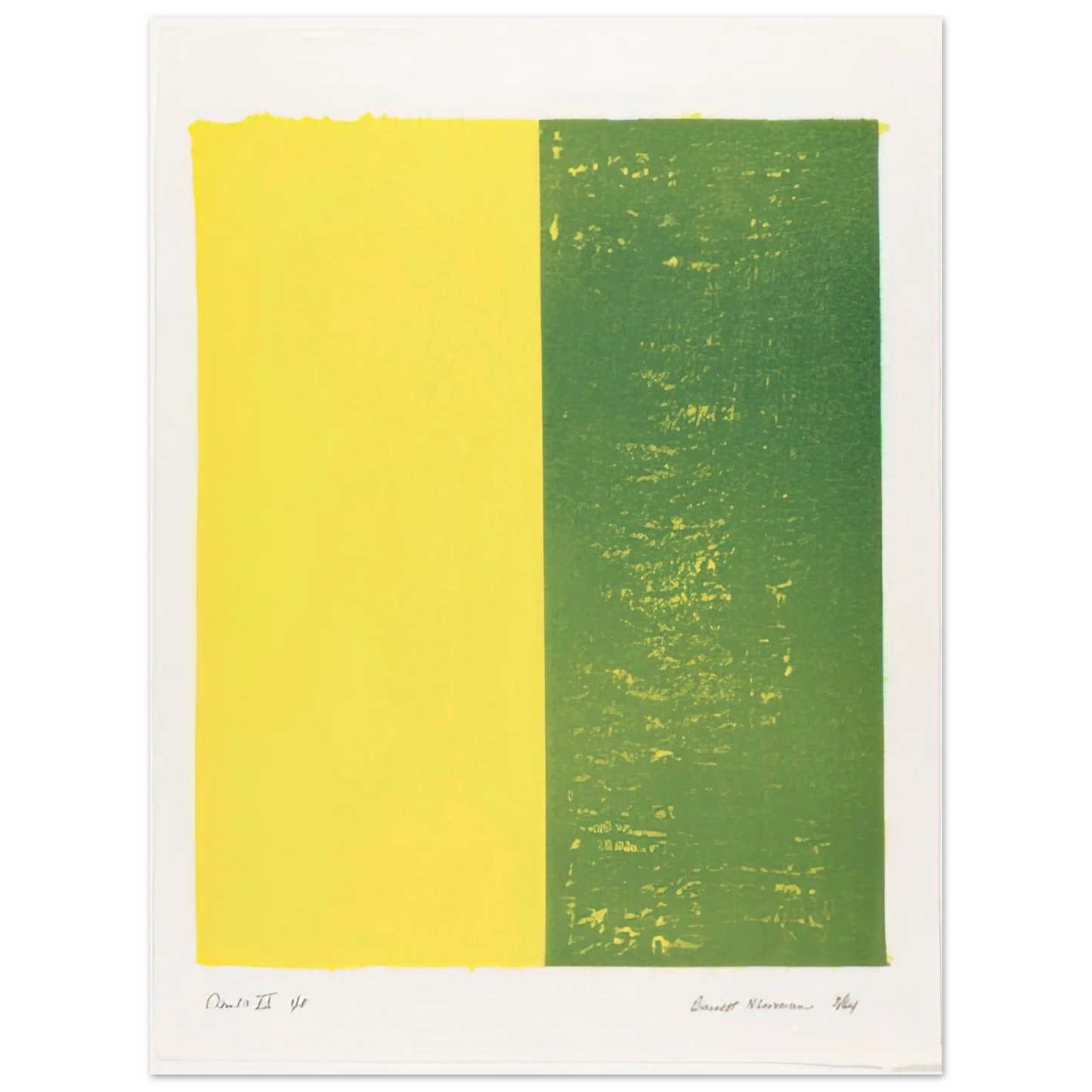
Barnett Newman - Canto XII 75x100 cm / 30x40inches Fine Art Poster
Barnett Newman - Canto XII 75x100 cm / 30x40inches Fine Art Poster
Couldn't load pickup availability
Redefining the Sublime: Barnett Newman’s Canto XII
Experience the profound spatial exploration of Barnett Newman through this museum-quality reproduction of Canto XII. Originally part of his groundbreaking lithographic series, 18 Cantos (1963–1964), this piece represents a pivotal moment in Abstract Expressionism. At 75x100 cm (30x40 inches), this fine art print captures the monumental presence of Newman’s 'zip'—the vertical band that defines the field and creates a sense of human scale within the infinite.
Master’s Edition Material Excellence
At RedKalion, we curate our prints to meet the exacting standards of galleries and private collectors. This reproduction is rendered on Master's Edition archival paper, a premium 250 gsm (110 lb) substrate that provides a substantial feel and exceptional durability. The matte, natural white (off-white) finish ensures a luxurious, non-reflective texture that allows the subtle nuances of Newman's tonal shifts to resonate without glare.
Archival Longevity and Sustainability
To ensure your investment endures for generations, we utilize acid-free paper with a pH level above 7, preventing the yellowing or degradation common in lesser prints. Our commitment to quality is matched by our dedication to the environment; every print uses FSC-certified paper and is printed on demand to minimize waste. This is more than a Barnett Newman poster; it is an archival masterpiece designed to elevate any sophisticated interior.
- Artist: Barnett Newman
- Title: Canto XII (from 18 Cantos)
- Paper Weight: 250 gsm / 110 lb
- Thickness: 0.29 mm (11.4 mils)
- Sustainability: FSC-certified, printed on demand
Discover Unlimited Art Possibilities
At RedKalion, you can find virtually any artwork from any artist, available in a wide range of sizes to perfectly match your space.
If you didn’t find what you’re looking for, contact us at support@redkalion.com . We will source any artwork and produce it in any size and format you need, including art prints, posters, canvas, framed pieces, framed canvas, and more.
For dedicated art enthusiasts, we also offer handcrafted replicas of any artwork, carefully painted by highly skilled artists using traditional techniques.
For custom requests, contact us at support@redkalion.com .
What is the quality of the paper used for Canto XII?
We use Master's Edition archival paper. It is a 250 gsm (110 lb) museum-quality substrate with a luxurious, natural white matte finish that ensures deep color saturation and no glare.
Is this a limited edition or on-demand print?
This is a premium museum-quality reproduction printed on demand. This model allows RedKalion to maintain the highest quality control and minimize environmental waste without compromising archival standards.
How long will the colors of this Barnett Newman print last?
Our prints are archival-grade and acid-free (pH above 7). This prevents yellowing and ensures the colors remain vibrant and true for decades when kept out of direct sunlight.
Does the print come with a frame?
This product is a fine art print only. Its standard 75x100 cm (30x40 inches) size makes it compatible with a wide variety of high-end frames to suit your personal decor.
What is the finish of the archival paper?
The paper features an uncoated, matte finish. This provides a sophisticated, non-reflective surface that emphasizes the depth and texture of the original lithographic work.
What is the historical context of Newman's 18 Cantos series?
Created between 1963 and 1964, the 18 Cantos was Newman's first major lithography project, exploring the 'zip' motif and the margins of the paper as active participants in the composition.
What does the 'zip' represent in Barnett Newman’s work?
The 'zip' is a vertical line that defines the spatial structure of the work. It is meant to represent a human presence or a spark of light within the void.