
RedKalion
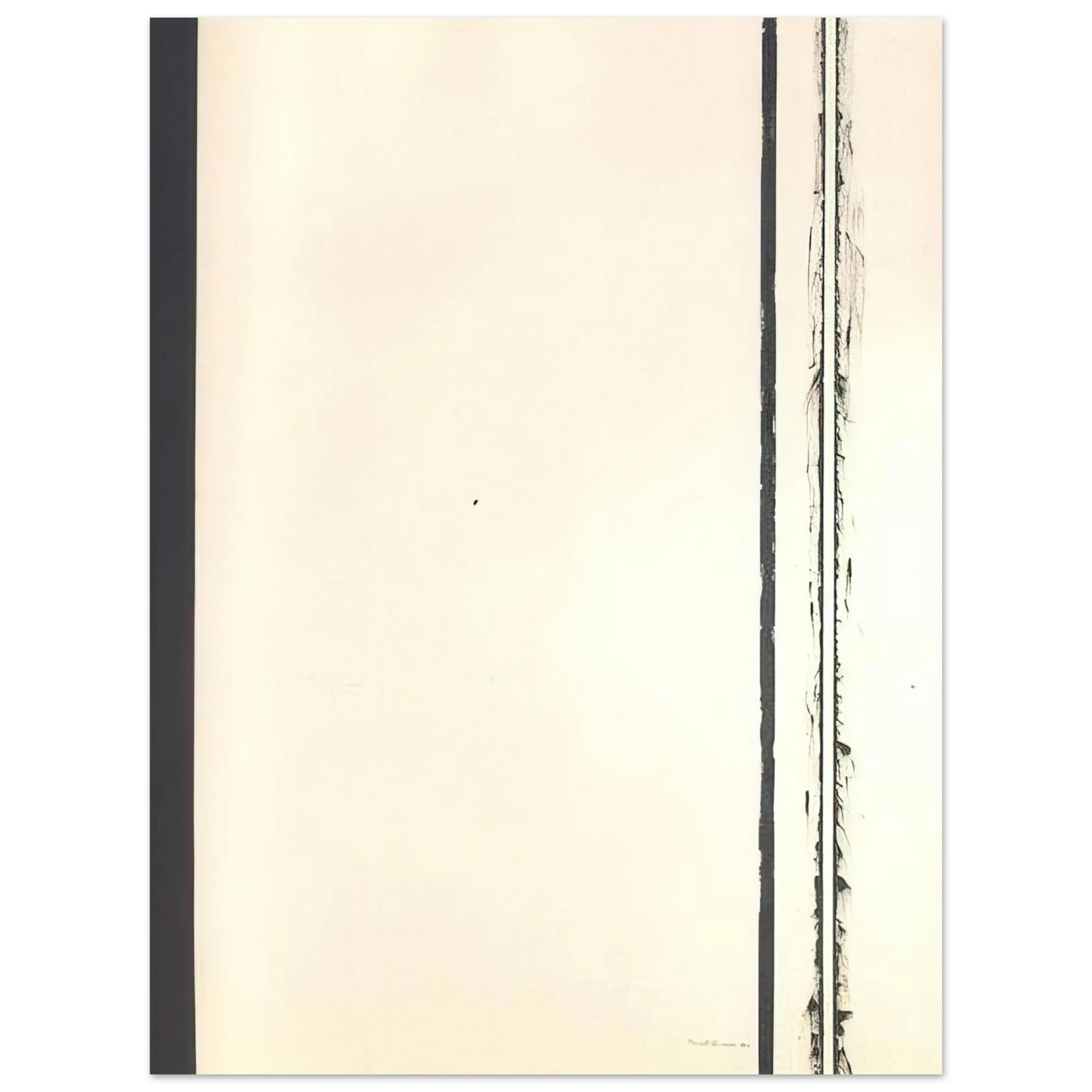
Barnett Newman - The Station of the Cross - Second Station 75x100 cm / 30x40inches Fine Art Poster
Barnett Newman - The Station of the Cross - Second Station 75x100 cm / 30x40inches Fine Art Poster
Couldn't load pickup availability
Elevate Your Space with Barnett Newman’s Minimalist Masterpiece
Experience the profound spatial tension and spiritual resonance of Barnett Newman’s Second Station from his landmark series, The Stations of the Cross: Lema Sabachthani. This museum-quality reproduction captures the raw intensity of Newman's Abstract Expressionist vision, where the 'zip'—his signature vertical band—acts as a conduit for human emotion and existential inquiry. Originally conceived between 1958 and 1966, this series represents a pinnacle of 20th-century American art, moving beyond religious iconography to explore the universal condition of human suffering and perseverance.
The RedKalion Archival Standard
At RedKalion, we treat fine art with the reverence it deserves. This fine art print is rendered on our Master’s Edition archival paper, a premium 250 gsm (110 lb) substrate that provides a substantial, luxurious feel. The matte, uncoated finish in a natural white (off-white) tone ensures that the stark contrasts and subtle textures of Newman’s work are preserved without the interference of glare, allowing the viewer to fully engage with the artwork’s depth.
Museum-Quality Specifications
- Archival Longevity: Our acid-free paper features a pH above 7, ensuring your print remains vibrant and resists yellowing for generations.
- Premium Texture: With a thickness of 0.29 mm (11.4 mils), this print offers a tactile quality characteristic of original gallery works.
- Sustainably Sourced: We utilize FSC-certified paper, aligning artistic beauty with environmental responsibility.
- Precision Fulfillment: Each piece is printed and shipped on demand with no minimum order requirements, ensuring a bespoke experience for every collector.
Transform your interior into a private gallery with an archival masterpiece that endures. Newman's Second Station is not merely a poster; it is a sophisticated statement of intellectual curiosity and artistic appreciation.
Discover Unlimited Art Possibilities
At RedKalion, you can find virtually any artwork from any artist, available in a wide range of sizes to perfectly match your space.
If you didn’t find what you’re looking for, contact us at support@redkalion.com . We will source any artwork and produce it in any size and format you need, including art prints, posters, canvas, framed pieces, framed canvas, and more.
For dedicated art enthusiasts, we also offer handcrafted replicas of any artwork, carefully painted by highly skilled artists using traditional techniques.
For custom requests, contact us at support@redkalion.com .
What defines the quality of this Barnett Newman print?
Our reproductions use Master’s Edition archival paper (250 gsm). This premium, heavy-weight paper provides a luxurious, museum-quality feel, ensuring the stark minimalist lines of Barnett Newman are captured with absolute precision and depth.
Will the paper yellow or degrade over time?
No. We use acid-free paper with a pH level above 7. This archival standard prevents yellowing and brittleness, ensuring your fine art print maintains its original off-white integrity and visual impact for decades.
Is the paper used for this print sustainably sourced?
Yes, all prints are produced on FSC-certified paper. This certification guarantees that the materials meet the highest environmental and social standards, allowing you to curate your home with a clear conscience.
How is my order fulfilled and shipped?
RedKalion operates on a print-on-demand model with no minimum orders. Each 75x100 cm print is meticulously produced upon purchase and shipped in protective packaging to ensure it arrives in pristine gallery condition.
What are the exact physical dimensions and thickness?
This print measures 75x100 cm (30x40 inches). It features a thickness of 0.29 mm (11.4 mils) and a weight of 250 gsm, providing the rigidity and presence expected of high-end art gallery editions.
What is the significance of the 'zip' in the Second Station?
Newman’s 'zip' defines the spatial structure of the work. In the Second Station, these vertical bands create a rhythmic tension that symbolizes human presence and the physical act of standing firm amidst existential voids.
Why did Barnett Newman use a limited color palette for this series?
Newman chose a stark palette of black, white, and raw canvas to strip away decorative elements. This focuses the viewer entirely on the scale and the 'cry' of the composition, reflecting the series' subtitle, 'Lema Sabachthani' (Why have you forsaken me?).