

RedKalion
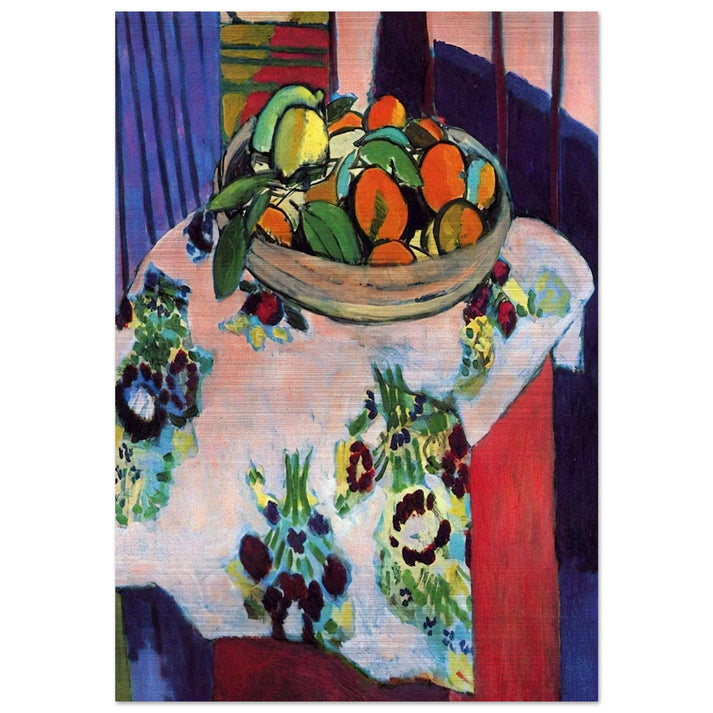
BASKET WITH ORANGES 1913 - Henri Matisse Brushed Aluminum Print - 70x100 cm / 28x40 inches | Henri Matisse Aluminum Print | Henri Matisse Prints
BASKET WITH ORANGES 1913 - Henri Matisse Brushed Aluminum Print - 70x100 cm / 28x40 inches | Henri Matisse Aluminum Print | Henri Matisse Prints
Couldn't load pickup availability
BASKET WITH ORANGES (1913) – A Modernist Masterpiece by Henri Matisse
Experience the vibrant energy and rhythmic composition of Henri Matisse’s Basket with Oranges (1913). Created during a pivotal era in Matisse’s career, this work showcases his evolution beyond pure Fauvism toward a more structured, monumental approach to color and form. RedKalion is proud to present this iconic still life as a museum-quality reproduction, meticulously crafted to preserve the artist's visionary aesthetic.
The RedKalion Archival Standard on Brushed Aluminum
Our Henri Matisse aluminum print is not a standard reproduction; it is an industrial-chic reimagining of a classic. Utilizing a 3mm (0.12") brushed silver Aluminum DIBOND® base, this piece features a distinct horizontal grain that adds a dynamic, shimmering depth to Matisse’s brushwork. The matte, glare-free finish ensures that the bold oranges and structured shadows are visible from any angle, while the unprinted white areas reveal the raw, metallic silver effect of the substrate.
- Material: Premium brushed silver Aluminum DIBOND® with a metallic finish.
- Durability: 3mm thickness provides a rigid, durable base that resists warping.
- Visual Effect: Direct printing onto the aluminum allows for vivid, archival colors and a sophisticated horizontal texture.
- Installation: Includes a high-quality hanging kit tailored to your fulfillment location for a seamless, floating appearance.
Historical Context: Matisse in 1913
In 1913, Matisse was refining his mastery of light and space following his transformative travels to Morocco. Basket with Oranges is an exquisite example of how he used color to create volume without traditional shading. By choosing our brushed aluminum fine art print, you invite a dialogue between early 20th-century modernism and contemporary material science, elevating your space with an archival masterpiece that endures.


Discover Unlimited Art Possibilities
At RedKalion, you can find virtually any artwork from any artist, available in a wide range of sizes to perfectly match your space.
If you didn’t find what you’re looking for, contact us at support@redkalion.com . We will source any artwork and produce it in any size and format you need, including art prints, posters, canvas, framed pieces, framed canvas, and more.
For dedicated art enthusiasts, we also offer handcrafted replicas of any artwork, carefully painted by highly skilled artists using traditional techniques.
For custom requests, contact us at support@redkalion.com .
What is the quality of the Henri Matisse "Basket with Oranges" print?
Our Matisse prints use 3mm brushed silver Aluminum DIBOND®, offering a rigid, museum-grade base. This archival-quality reproduction ensures vivid colors and a premium metallic finish that outperforms standard paper prints.
How does the brushed aluminum finish affect the appearance of the artwork?
The horizontal grain of the brushed silver aluminum adds a dynamic texture. White areas are not printed, allowing the natural metallic silver to shine through, creating a striking contrast and matte, glare-free viewing experience.
Is the hanging hardware included with my Matisse print?
Yes, every RedKalion aluminum print includes a professional hanging kit. The specific hardware varies by fulfillment country to ensure the most secure and aesthetic installation for your 70x100 cm masterpiece.
How long will this archival print last?
RedKalion prints are designed for longevity. The direct-to-aluminum printing method and UV-resistant inks ensure your Henri Matisse reproduction remains vibrant and durable for decades, even in high-traffic or brightly lit environments.
What is the shipping process for large format art?
We use specialized, high-durability packaging to protect your 28x40 inch print during transit. Each piece is tracked and insured, fulfilled through a global network of partners to minimize transit time and carbon footprint.
What was the significance of Matisse’s 1913 period?
1913 was a year of transition where Matisse simplified his palette and emphasized geometric structure. This period reflects a move toward the "essential" form, influenced by his exposure to North African light and architecture.
Why did Matisse choose oranges as a frequent subject?
Matisse used oranges to explore intense color relationships. In 1913, he utilized the fruit's circular form and vibrant hue to anchor his compositions, creating a sense of balance and Mediterranean warmth.