RedKalion
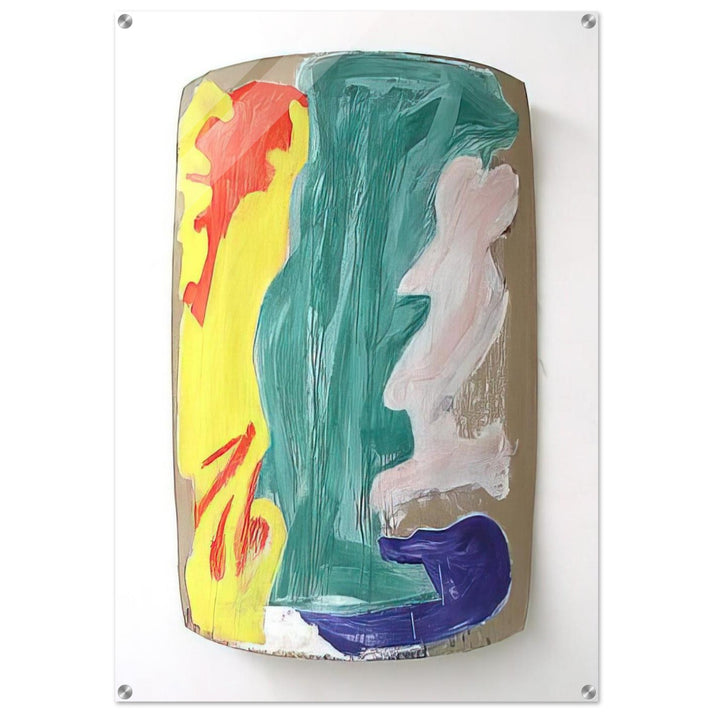
Baton - 1986 - Ron Gorchov Acrylic Print - 70x100 cm / 28x40″ inches | Ron Gorchov Wall Art | Ron Gorchov Prints
Baton - 1986 - Ron Gorchov Acrylic Print - 70x100 cm / 28x40″ inches | Ron Gorchov Wall Art | Ron Gorchov Prints
Couldn't load pickup availability
Redefining Space with Ron Gorchov’s Baton (1986)
Experience the profound spatial dialogue of Ron Gorchov’s Baton (1986), a seminal work that exemplifies the artist's lifelong exploration of symmetry and biological abstraction. This museum-quality reproduction captures the essence of Gorchov’s unique visual vocabulary, where two distinct, gestural marks—the 'batons'—occupy a field of depth and color. Originally known for his 'saddle' shaped canvases, Gorchov’s work in the mid-1980s reached a pinnacle of lyrical abstraction, blending the boundary between painting and sculpture.
The Artistry of Lyrical Abstraction
Gorchov was a master of the primal mark. In Baton, he utilizes a minimalist palette to create a sense of architectural balance. The dual forms act as pillars of composition, inviting the viewer to contemplate the tension between the two marks. This Ron Gorchov wall art serves as more than a decoration; it is a historical testament to a period when abstract art reclaimed its organic roots. By choosing this Ron Gorchov print, you are bringing home a piece of the 1980s New York art scene’s sophisticated evolution.
Museum-Grade Acrylic Craftsmanship by RedKalion
RedKalion elevates this masterpiece through our premium acrylic mounting process. Each print is rendered on 4mm (0.15") thick acrylic, providing a depth and luminosity that traditional paper prints cannot match. The material's natural clarity enhances the vibrant tones of Gorchov’s palette, while the straight-cut corners offer a sleek, contemporary silhouette that complements modern interior design.
- Material: High-grade 4mm acrylic for a vibrant, durable finish.
- Visual Depth: The transparent medium creates a glass-like depth, making the colors pop.
- Installation Ready: Includes a specialized hanging kit with screws and pre-drilled holes at each corner.
- Precision: Holes are positioned 14mm (0.55") from edges with an 8mm (0.31") diameter for a secure, floating aesthetic.
Invest in an archival-grade reproduction that transforms your environment. At RedKalion, we ensure that every piece meets the highest standards of the fine art market, offering you an enduring legacy of style and culture.

Discover Unlimited Art Possibilities
At RedKalion, you can find virtually any artwork from any artist, available in a wide range of sizes to perfectly match your space.
If you didn’t find what you’re looking for, contact us at support@redkalion.com . We will source any artwork and produce it in any size and format you need, including art prints, posters, canvas, framed pieces, framed canvas, and more.
For dedicated art enthusiasts, we also offer handcrafted replicas of any artwork, carefully painted by highly skilled artists using traditional techniques.
For custom requests, contact us at support@redkalion.com .
What makes the Ron Gorchov 'Baton' acrylic print a premium choice?
Our Ron Gorchov prints utilize 4mm museum-grade acrylic, providing superior color depth and a sleek, modern finish that outlasts traditional paper reproductions.
What are the physical specifications of the acrylic material?
We use high-quality 4mm (0.15") acrylic with straight-cut corners. Transparent areas default to white to ensure the artwork’s colors remain vibrant and true to the original.
How is the artwork mounted and displayed?
Each print includes a professional hanging kit with screws. Holes are pre-drilled at 14mm (0.55") from each corner for a secure and elegant installation.
How does RedKalion ensure the safety of my print during shipping?
Every order is meticulously packaged in protective layers and rigid containers to prevent any scratches or structural damage during transit.
Will the colors of this Ron Gorchov wall art fade over time?
No, our archival-grade acrylic prints are designed for longevity, using UV-resistant techniques that protect the vibrancy of the pigments for decades.
What was the significance of the two marks in Gorchov's 'Baton'?
Gorchov used these 'baton' or 'shield' forms to explore bilateral symmetry, mimicking the biological nature of the human face and body to create an intimate viewer connection.
Why is Ron Gorchov considered a 'sculptural painter'?
Gorchov famously rejected the flat canvas, creating curved stretchers that forced the painting into the viewer's space, a philosophy reflected in the depth of our acrylic prints.