

RedKalion
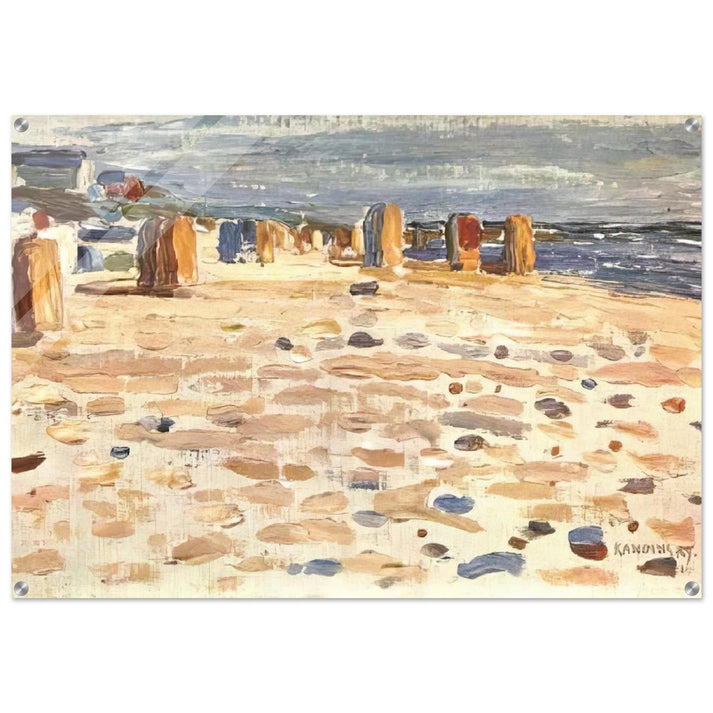
BEACH BASKETS IN HOLLAND 1904 - Wassily Kandinsky Acrylic Print - 70x100 cm / 28x40″ inches
BEACH BASKETS IN HOLLAND 1904 - Wassily Kandinsky Acrylic Print - 70x100 cm / 28x40″ inches
Couldn't load pickup availability
A Vibrant Glimpse into Kandinsky's Early Mastery
Capture a pivotal moment in art history with the Beach Baskets in Holland 1904 by Wassily Kandinsky. This early masterpiece showcases Kandinsky’s transition from late Impressionism toward the bold, rhythmic Expressionism that would eventually lead to pure abstraction. Painted during his travels through the Netherlands, this work captures the unique light of the Dutch coast with a vibrant, structured palette that transforms a simple seaside scene into a rhythmic study of form and color.
At RedKalion, we elevate this historical work into a contemporary centerpiece. Our museum-quality reproduction is rendered on premium 4mm (0.15") acrylic, providing a sleek, high-gloss finish that enhances the depth and brilliance of Kandinsky's original brushwork. Unlike traditional framed prints, the acrylic medium allows light to interact with the pigments, creating a luminous effect that brings the Dutch shoreline to life in your living space.
Exquisite Material & Modern Presentation
This 70x100 cm (28x40″) fine art print is designed for the discerning collector who values both historical significance and modern durability. The 4mm acrylic surface is not only shatter-resistant but also incredibly vibrant, ensuring that the subtle nuances of Kandinsky’s 1904 palette remain vivid for generations.
- Premium Material: 4mm (0.15") thick acrylic for a sophisticated, glass-like depth.
- Modern Design: Precision straight-cut corners for a clean, minimalist aesthetic.
- Optical Clarity: Transparent backgrounds default to a crisp white, ensuring the artwork’s colors pop with maximum contrast.
- Ready to Hang: Each piece includes a professional hanging kit with screws and pre-drilled holes at each corner for an effortless, secure installation.
Choosing a RedKalion reproduction means investing in an archival-grade masterpiece. Our commitment to craftsmanship ensures that your Wassily Kandinsky acrylic print serves as an enduring testament to early 20th-century genius, meticulously curated to meet the highest standards of the global art market.


Discover Unlimited Art Possibilities
At RedKalion, you can find virtually any artwork from any artist, available in a wide range of sizes to perfectly match your space.
If you didn’t find what you’re looking for, contact us at support@redkalion.com . We will source any artwork and produce it in any size and format you need, including art prints, posters, canvas, framed pieces, framed canvas, and more.
For dedicated art enthusiasts, we also offer handcrafted replicas of any artwork, carefully painted by highly skilled artists using traditional techniques.
For custom requests, contact us at support@redkalion.com .
What are the technical specifications of this acrylic print?
This print is crafted from 4mm (0.15") high-quality acrylic with straight-cut corners. It features a sleek, vibrant finish and includes a specialized hanging kit with screws for a secure, modern display.
How is the artwork mounted and displayed?
The print arrives with a full hanging kit. Each corner has a pre-drilled hole (8mm diameter, located 14mm from the edge) and 15mm screw heads to ensure a professional, floating-effect installation.
What ensures the archival longevity of the Kandinsky reproduction?
RedKalion uses archival-grade materials and UV-resistant acrylic. This prevents fading and yellowing, ensuring the 1904 Dutch coastline colors remain as vibrant as the original oil painting for decades.
How is the product protected during shipping?
We use heavy-duty, moisture-resistant packaging specifically designed for fine art. Each acrylic panel is securely cushioned to prevent scratches or impact damage during international transit from our gallery to your home.
Does the acrylic finish affect the color accuracy?
The 4mm acrylic actually enhances color depth and saturation. It acts as a lens, drawing the eye into the pigments and accurately reflecting Kandinsky’s intended Post-Impressionist color palette.
What is the historical significance of Kandinsky’s 1904 Dutch period?
This period marks Kandinsky’s shift toward using color as a primary emotional tool. "Beach Baskets in Holland" demonstrates his early experimentation with structured composition before he transitioned into total abstraction.
Why did Kandinsky choose beach baskets as a subject?
Kandinsky was fascinated by the geometric repetition of the baskets against the organic landscape. It allowed him to explore the relationship between man-made forms and the natural horizon of the Dutch coast.