RedKalion
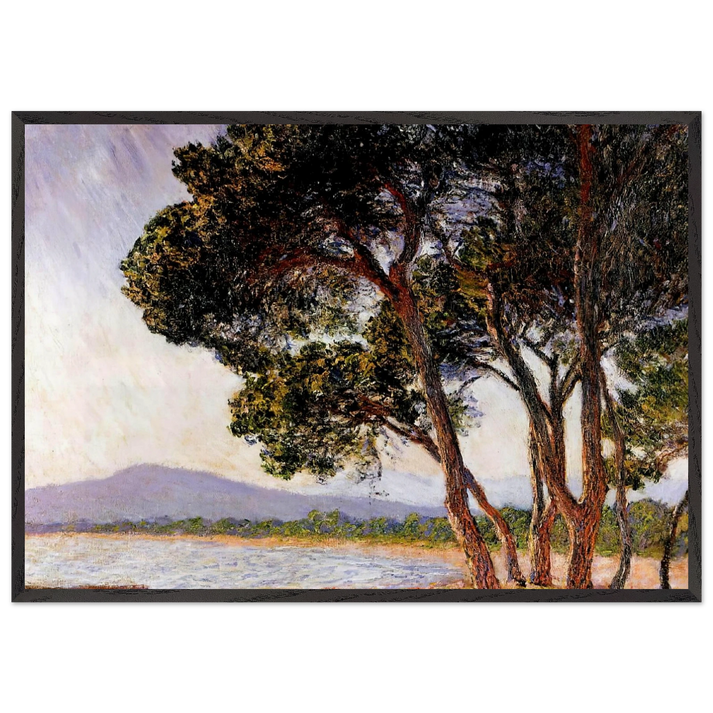
Beach in Juan-les-Pins - claude monet 70x100 cm / 28x40 inches Framed Art Print – Black Wooden Frame
Beach in Juan-les-Pins - claude monet 70x100 cm / 28x40 inches Framed Art Print – Black Wooden Frame
Couldn't load pickup availability
Bring the Luminous Glow of the Mediterranean into Your Home
Claude Monet’s Beach in Juan-les-Pins is a masterclass in capturing the ephemeral quality of light. In 1888, the Impressionist pioneer traveled to the French Riviera, where he was captivated by the intense, crystalline light of the Mediterranean—a stark contrast to the softer, misty atmosphere of his native Normandy. This framed art print captures that historic moment, where Monet’s palette shifted toward vibrant teals, deep azures, and sun-drenched ambers.
Museum-Quality Execution for the Discerning Collector
At RedKalion, we believe a masterpiece deserves an equally masterful presentation. This reproduction is meticulously printed on 250 gsm (110 lb) natural white museum-quality paper. Unlike standard prints, our archival, matte, and uncoated paper ensures that the subtle textures of Monet’s brushwork are preserved without distracting glare. With a thickness of 0.29 mm, the paper provides a substantial, premium feel that reflects the weight of art history itself.
Sustainable Craftsmanship and Elegant Framing
Your 70x100 cm (28x40 inch) print is encased in a responsibly sourced black wooden frame made from oak and ash. We have selected a profile that is 20mm (0.79") thick and wide—providing a bold, structural presence that surpasses the industry-standard 14mm frame. To ensure your investment remains pristine for generations, each piece is protected by shatterproof plexiglass and arrives with a pre-installed hanging kit, ready to transform your space the moment it arrives.
- Artist: Claude Monet (1840–1926)
- Paper: FSC-certified, 250 gsm archival grade
- Frame: 20mm premium black oak and ash
- Finish: Matte, non-reflective finish
- Ready-to-hang: Includes hanging kit
By choosing RedKalion, you are not just purchasing a print; you are acquiring an enduring archival masterpiece designed to elevate your interior with sophistication and historical depth.

Discover Unlimited Art Possibilities
At RedKalion, you can find virtually any artwork from any artist, available in a wide range of sizes to perfectly match your space.
If you didn’t find what you’re looking for, contact us at support@redkalion.com . We will source any artwork and produce it in any size and format you need, including art prints, posters, canvas, framed pieces, framed canvas, and more.
For dedicated art enthusiasts, we also offer handcrafted replicas of any artwork, carefully painted by highly skilled artists using traditional techniques.
For custom requests, contact us at support@redkalion.com .
What defines the quality of this Monet reproduction?
We use 250 gsm museum-quality, archival paper that is acid-free and uncoated. This ensures the vibrant Mediterranean colors remain true and the paper does not yellow over time, providing a gallery-standard aesthetic for your home.
Tell me more about the framing of this piece.
This print features a premium 20mm (0.79") thick black frame crafted from responsibly sourced oak and ash. This wider profile offers a more substantial and luxurious look compared to the classic 14mm frames found elsewhere.
Is this print ready to hang upon arrival?
Yes, your framed art print arrives fully assembled with a specialized hanging kit. The artwork is protected by durable, shatterproof plexiglass, ensuring it is safe during shipping and ready for immediate display on your wall.
How does RedKalion ensure the sustainability of the materials?
RedKalion is committed to environmental responsibility. We use FSC-certified wood for our frames and paper, or equivalent certifications, ensuring that your art print is produced in a way that supports sustainable forest management.
How long will this archival print last?
Designed for longevity, our archival museum-quality paper and UV-resistant materials are engineered to last for decades. When kept out of direct sunlight, the print will maintain its color integrity and structural beauty for generations.
Why did Monet paint Juan-les-Pins?
Monet visited Antibes and Juan-les-Pins in 1888 to experiment with the unique Mediterranean light. He sought to capture the "blue air" and the way the southern sun transformed the colors of the sea and flora.
What characterizes the color palette in this specific scene?
The palette is defined by high-key Impressionist hues, featuring brilliant turquoises, emerald greens, and warm sandy tones. Monet used these colors to convey the heat and clarity of the French Riviera’s atmosphere.