RedKalion
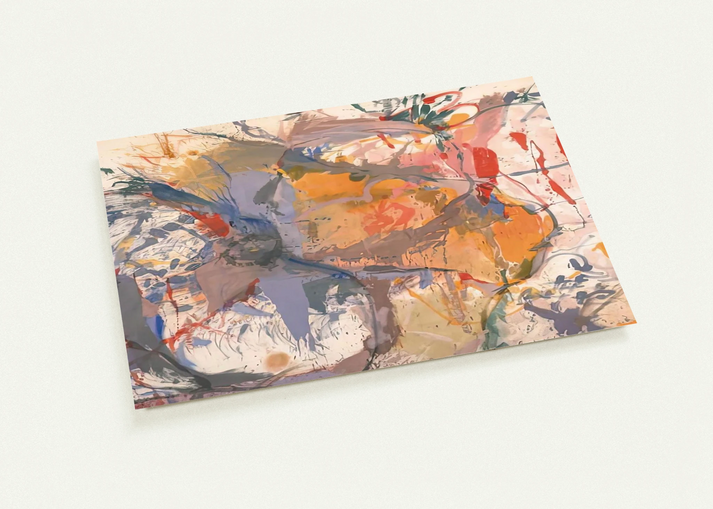
Before the Caves, 1958- By Helen Frankenthaler Pack of 10 Post Cards | Helen Frankenthaler Post Cards | A6 (10.5 x 14.8 cm) - 4.1 x 5.8 inches
Before the Caves, 1958- By Helen Frankenthaler Pack of 10 Post Cards | Helen Frankenthaler Post Cards | A6 (10.5 x 14.8 cm) - 4.1 x 5.8 inches
Couldn't load pickup availability
Elevate Your Correspondence with Helen Frankenthaler’s Abstract Vision
Step into the ethereal world of Helen Frankenthaler with this exclusive pack of 10 fine art postcards featuring Before the Caves (1958). As a pivotal figure in the transition from Abstract Expressionism to Color Field painting, Frankenthaler redefined the possibilities of the medium. These postcards capture the luminescent, fluid energy of her signature 'soak-stain' technique—a method where thinned oil paint was poured onto unprimed canvas, allowing the pigment to fuse directly with the fibers.
Museum-Quality Reproductions for the Discerning Collector
At RedKalion, we bridge the gap between historic masterpieces and modern aesthetic needs. Each A6 (10.5 x 14.8 cm) postcard is a testament to quality, utilizing advanced 12-color fine art printing technology. Unlike standard 4-color offset printing, our process ensures that the subtle shifts in Frankenthaler’s palette—her earthy ochres, soft pinks, and deep charcoals—are rendered with stunning depth and accuracy.
Physical Specifications & Artistry
- 12-Color Precision: Vivid, accurate colors that mirror the original 1958 masterpiece.
- Premium Paper: 200 gsm (80 lb) weight with a thickness of 0.26 mm (10.3 mils) for a substantial, tactile feel.
- Smooth Matte Finish: A clean, glare-free surface that honors the flat, immersive quality of Color Field art.
- Eco-Conscious Standards: Printed on FSC-certified paper, reflecting our commitment to environmental stewardship.
Whether you are sharing a sophisticated sentiment or curating a small gallery wall, these postcards offer an archival-grade experience that endures. Experience the legacy of an American icon through a museum-quality reproduction designed to be cherished.

Discover Unlimited Art Possibilities
At RedKalion, you can find virtually any artwork from any artist, available in a wide range of sizes to perfectly match your space.
If you didn’t find what you’re looking for, contact us at support@redkalion.com . We will source any artwork and produce it in any size and format you need, including art prints, posters, canvas, framed pieces, framed canvas, and more.
For dedicated art enthusiasts, we also offer handcrafted replicas of any artwork, carefully painted by highly skilled artists using traditional techniques.
For custom requests, contact us at support@redkalion.com .
What makes these Helen Frankenthaler postcards museum-quality?
We use 12-color fine art printing technology, providing far more depth and color accuracy than standard prints. This captures the nuance of Frankenthaler's 1958 soak-stain palette perfectly.
What type of paper is used for this collection?
These cards are printed on 200 gsm (80 lb) paper with a smooth matte finish. This ensures a glare-free display and a professional, substantial feel in hand.
Is the paper environmentally friendly?
Yes. All RedKalion prints, including this Helen Frankenthaler set, are produced on FSC-certified, environmentally conscious paper to ensure sustainable sourcing.
How long will the colors last on these fine art prints?
Our archival-grade printing process is designed for longevity. The 12-color technology ensures vibrancy and resistance to fading, allowing the artwork to endure for years.
What is the significance of the soak-stain technique in 'Before the Caves'?
Frankenthaler’s 1958 work utilized thinned oil paint on raw canvas. This technique allowed the paint to become part of the fabric rather than sitting on top, creating an innovative, luminous effect.
Are these cards printed on demand?
Yes. Every order is printed on demand with no minimums, ensuring that your specific set of postcards is produced with individual care and quality control.
Where does 'Before the Caves' sit in art history?
Produced in 1958, this piece is a cornerstone of mid-century modernism, representing the evolution from the aggression of action painting toward the meditative calm of Color Field painting.