RedKalion
Bend in Forest Road - Paul Cézanne Acrylic Print - 70x100 cm / 28x40″ inches
Bend in Forest Road - Paul Cézanne Acrylic Print - 70x100 cm / 28x40″ inches
Couldn't load pickup availability
Elevate Your Space with Cézanne’s Masterpiece
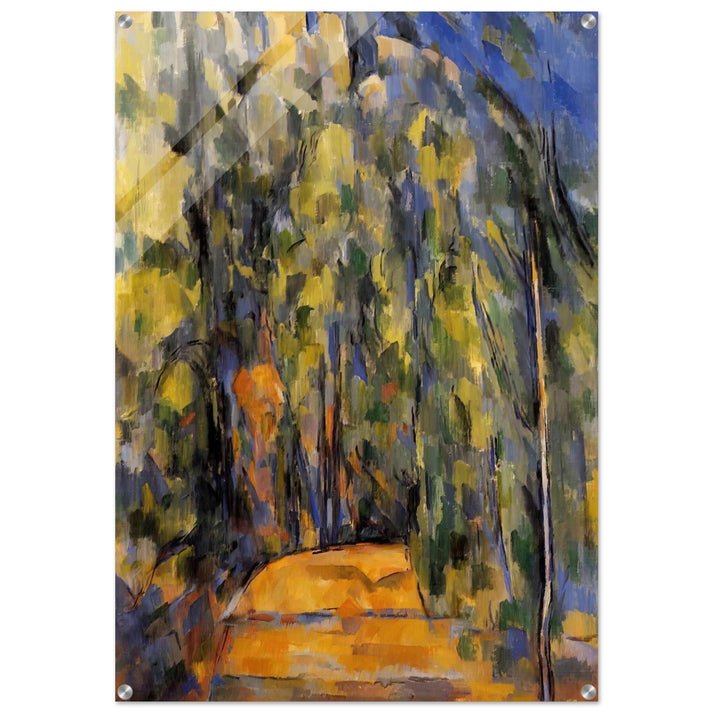
Experience the profound stillness and structural genius of Paul Cézanne's 'Bend in Forest Road' with this museum-quality acrylic reproduction from RedKalion. This 70x100 cm (28x40″) masterpiece captures the essence of the Post-Impressionist pioneer’s exploration of nature, offering a window into a forest path where light and geometry converge. Cézanne’s unique 'constructive stroke' is rendered with stunning clarity, inviting the viewer into a contemplative journey through the trees.
The RedKalion Archival Standard
At RedKalion, we believe fine art deserves a medium that matches its timelessness. This fine art print is face-mounted to a 4mm (0.15") premium acrylic panel, providing a sleek, glass-like finish that enhances color depth and brilliance. Unlike traditional paper prints, our acrylic presentation offers a vibrant, three-dimensional effect that brings Cézanne’s verdant greens and earthy ochres to life with unparalleled intensity.
Contemporary Design and Durability
Designed for the modern interior, this print features straight-cut corners and a clean, frameless aesthetic. The 4mm thickness ensures durability while maintaining a refined profile. To ensure the highest visual fidelity, any transparent areas in the original image default to a white backing, ensuring the colors remain saturated and the highlights remain crisp under any lighting condition.
Installation and Longevity
- Precision Engineering: Includes pre-drilled holes at each corner (14mm from the edge) for a secure, professional mount.
- Complete Hanging Kit: Every order is shipped with a premium hardware kit, including 15mm screw heads and 8mm diameter holes for effortless installation.
- Archival Quality: Our UV-resistant acrylic and high-grade inks ensure your investment is protected from fading, allowing this archival masterpiece to endure for generations.

Discover Unlimited Art Possibilities
At RedKalion, you can find virtually any artwork from any artist, available in a wide range of sizes to perfectly match your space.
If you didn’t find what you’re looking for, contact us at support@redkalion.com . We will source any artwork and produce it in any size and format you need, including art prints, posters, canvas, framed pieces, framed canvas, and more.
For dedicated art enthusiasts, we also offer handcrafted replicas of any artwork, carefully painted by highly skilled artists using traditional techniques.
For custom requests, contact us at support@redkalion.com .
What materials are used for the Bend in Forest Road print?
We use premium 4mm (0.15") acrylic with straight-cut corners. This museum-quality material provides a vibrant, durable finish that enhances the depth of Paul Cézanne's colors while offering UV protection for archival longevity.
Is the hanging hardware included with the acrylic print?
Yes, each RedKalion acrylic print includes a complete hanging kit with screws and hardware. The piece features pre-drilled 8mm holes at each corner, positioned 14mm from the edge for a secure, professional display.
How is the artwork shipped and protected?
Your 70x100 cm print is meticulously packaged in protective layers to ensure it arrives in pristine condition. We use high-durability shipping materials designed specifically for large-format fine art reproductions.
How long will this museum-quality print last?
Our acrylic prints are engineered for archival permanence. By using UV-resistant inks and high-grade 4mm acrylic, the vibrancy of 'Bend in Forest Road' is preserved against fading for decades in standard indoor environments.
How are transparent colors handled in the printing process?
To maintain the visual integrity of Cézanne's palette, any transparent or translucent backgrounds in the artwork default to white, ensuring the structural details of the forest road remain vibrant and opaque.
What is the significance of the 'Bend in Forest Road' painting?
Painted during his mature period, this work showcases Cézanne’s transition toward Cubism. He simplified natural forms into geometric shapes, using a path's curve to lead the eye through a complex, structured landscape.
Why is Paul Cézanne considered the father of modern art?
Cézanne bridged the gap between 19th-century Impressionism and 20th-century Cubism. His focus on the underlying structure of objects and his revolutionary use of color blocks profoundly influenced masters like Picasso and Matisse.