RedKalion
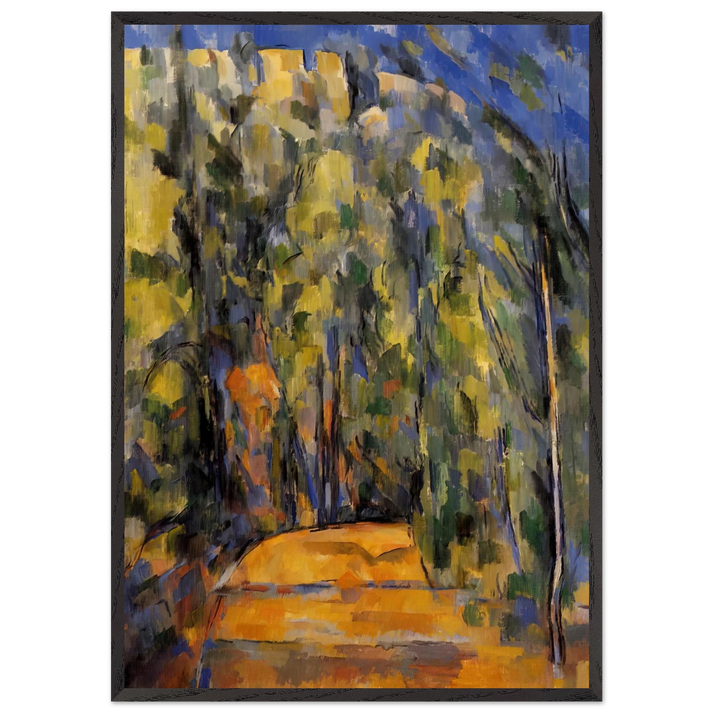
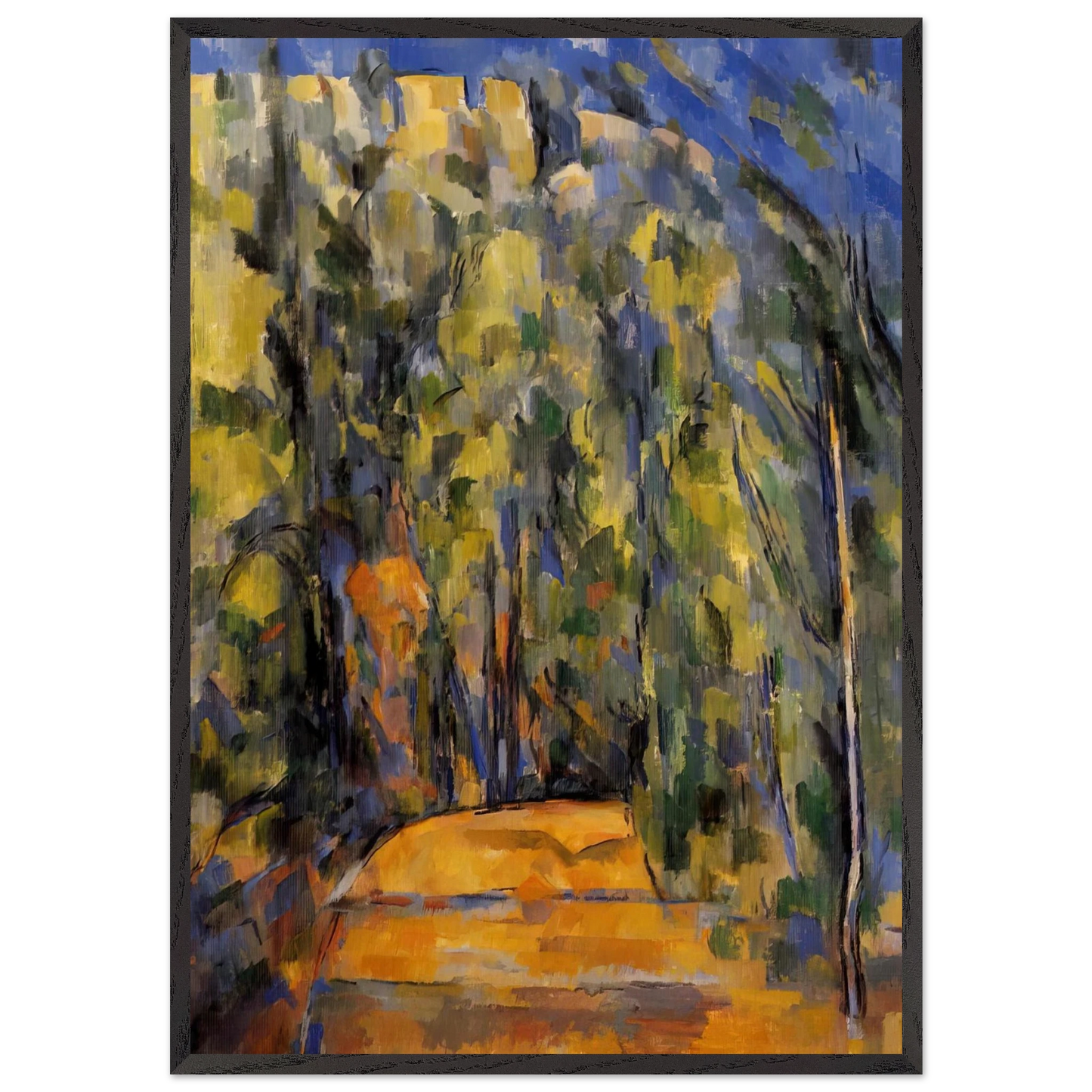
Bend in Forest Road - Paul Cezanne 70x100 cm / 28x40 inches Framed Art Print – Black Wooden Frame
Bend in Forest Road - Paul Cezanne 70x100 cm / 28x40 inches Framed Art Print – Black Wooden Frame
Couldn't load pickup availability
The Structural Harmony of Paul Cézanne’s Bend in Forest Road
Elevate your interior with Paul Cézanne’s Bend in Forest Road, a seminal work that bridges the gap between late 19th-century Impressionism and the dawn of 20th-century Cubism. This museum-quality reproduction captures Cézanne's unique ability to find structural order within the organic chaos of the natural world. Every brushstroke is rendered with meticulous precision on our archival-grade paper, ensuring the subtle shifts in green, ochre, and earthy tones are preserved exactly as the master intended.
As a cornerstone of RedKalion’s collection, this fine art print exemplifies the 'Father of Modern Art's' philosophy: treating nature by the cylinder, the sphere, and the cone. The composition invites the viewer into a rhythmic dance of light and shadow, making it a sophisticated focal point for a curated gallery wall or a minimalist workspace.
Archival Craftsmanship & Material Excellence
At RedKalion, we believe that an archival masterpiece deserves nothing less than premium housing. Your framed art print is protected by shatterproof plexiglass and mounted in a responsibly sourced black wooden frame. Unlike standard mass-market frames, ours feature a robust 20mm (0.79") profile, providing a commanding presence on your wall. The artwork is printed on 250 gsm (110 lb) natural white paper, chosen for its matte, uncoated finish that eliminates glare and enhances the depth of Cézanne's palette.
- Museum-Quality Paper: 250 gsm archival paper with a thickness of 0.29 mm for a heavy, luxury feel.
- Sustainable Framing: Crafted from FSC-certified oak and ash wood for environmental responsibility.
- Ready-to-Hang: Delivered with a high-quality hanging kit for immediate installation.
- Protective Glazing: High-clarity, shatterproof plexiglass ensures the print remains pristine for generations.
Discover Unlimited Art Possibilities
At RedKalion, you can find virtually any artwork from any artist, available in a wide range of sizes to perfectly match your space.
If you didn’t find what you’re looking for, contact us at support@redkalion.com . We will source any artwork and produce it in any size and format you need, including art prints, posters, canvas, framed pieces, framed canvas, and more.
For dedicated art enthusiasts, we also offer handcrafted replicas of any artwork, carefully painted by highly skilled artists using traditional techniques.
For custom requests, contact us at support@redkalion.com .
What makes the paper quality of this Cézanne print unique?
We use 250 gsm (110 lb) archival-grade paper. It is a thick, 0.29 mm natural white paper with a matte, uncoated finish. This museum-quality surface ensures vivid color reproduction without distracting reflections, perfect for high-end interior design.
Is the black wooden frame ready for immediate display?
Yes. Your RedKalion framed art print arrives ready-to-hang. We include a dedicated hanging kit, and the print is securely housed in a 20mm wide frame made from responsibly sourced oak and ash wood.
How is the artwork protected during shipping and display?
We use shatterproof plexiglass to protect your print from dust and damage. This material provides the clarity of glass with added durability. Each order is packaged in robust, protective materials to ensure it arrives in gallery condition.
Are the materials used for this print sustainable?
RedKalion is committed to sustainability. We use FSC-certified wood for our frames and paper, or local equivalent certifications, ensuring that your art collection supports responsible forestry practices.
How long will this archival print last without fading?
By utilizing 250 gsm archival museum-quality paper and UV-resistant materials, this print is designed for longevity. When kept out of direct prolonged sunlight, our prints maintain their color integrity and structural beauty for decades.
What is the significance of 'Bend in Forest Road' in art history?
This piece showcases Paul Cézanne’s transition toward 'Constructive' brushwork. It emphasizes the geometric foundations of nature, a technique that directly inspired Picasso and the development of Cubism in the early 1900s.
Why did Cézanne focus on forest roads and paths?
Cézanne used paths and roads to create a sense of depth and perspective through color modulation rather than traditional linear perspective. These subjects allowed him to experiment with spatial tension and the structure of the landscape.