RedKalion
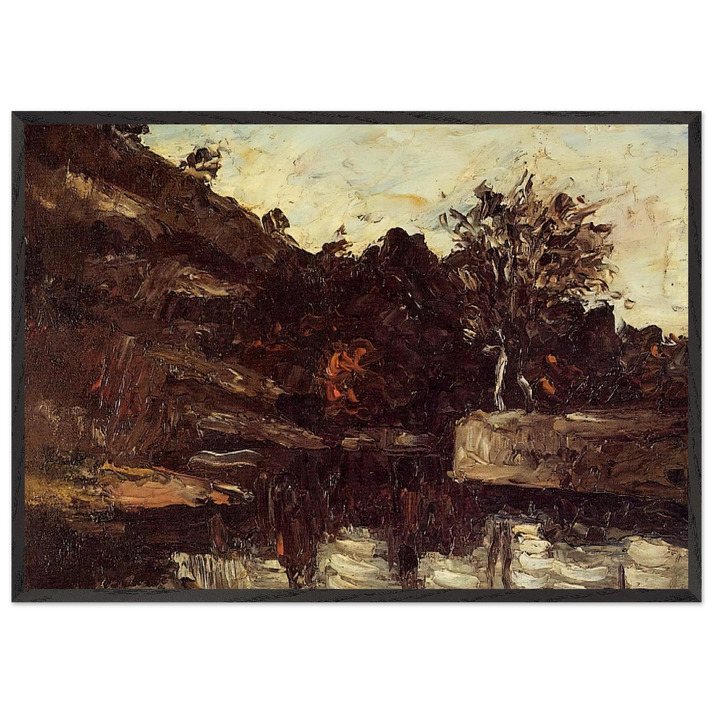
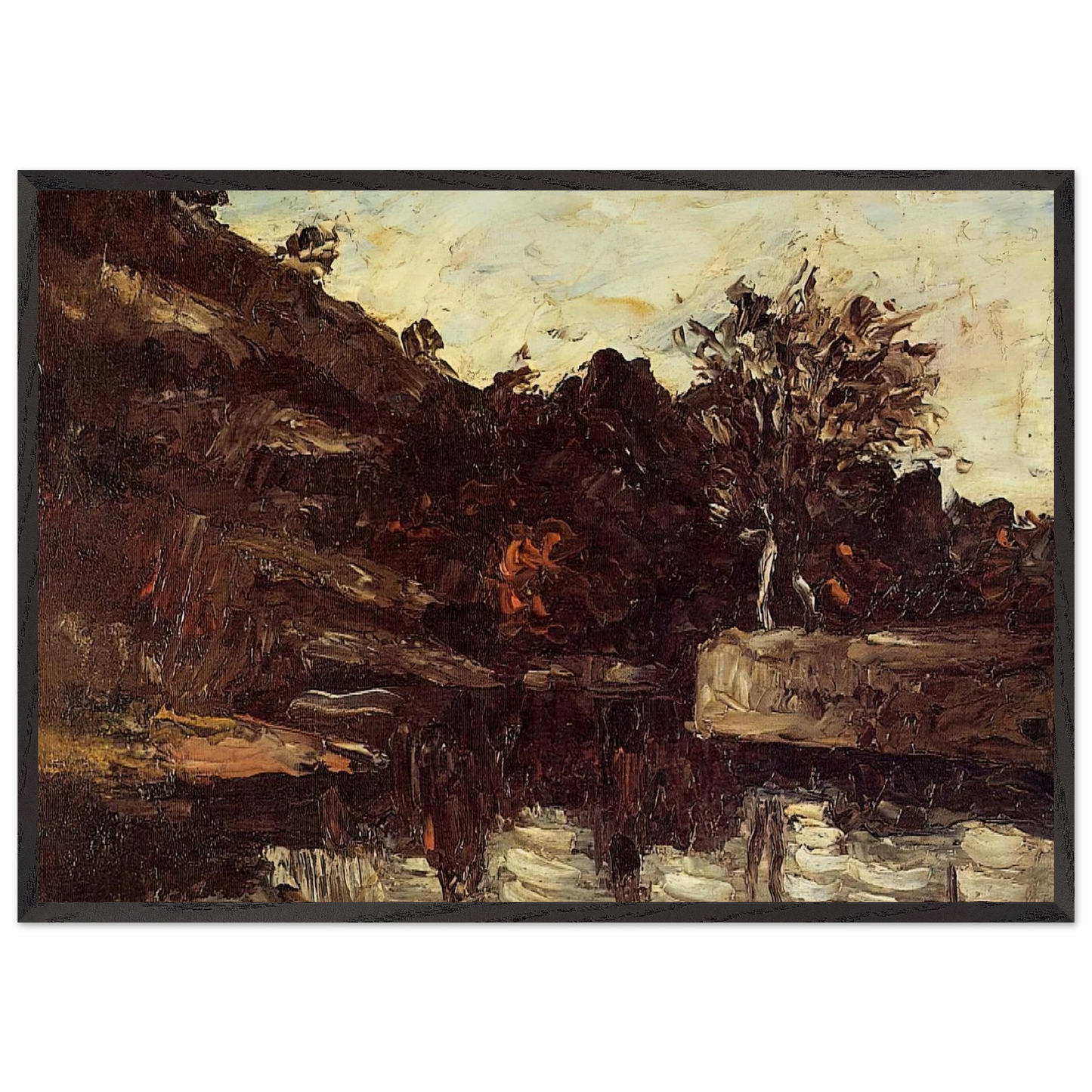
Bend in the River - Paul Cezanne 70x100 cm / 28x40 inches Framed Art Print – Black Wooden Frame
Bend in the River - Paul Cezanne 70x100 cm / 28x40 inches Framed Art Print – Black Wooden Frame
Couldn't load pickup availability
A Post-Impressionist Masterpiece: Paul Cézanne’s Bend in the River
Paul Cézanne, widely considered the bridge between 19th-century Impressionism and 20th-century Cubism, transformed the landscape of modern art through works like "Bend in the River". This 70x100 cm (28x40 inches) museum-quality reproduction captures the artist's radical approach to form and structure. In this composition, Cézanne moves beyond the fleeting light of his contemporaries to seek the underlying geometry of the natural world.
At RedKalion, we honor this legacy by providing a fine art print that meets the highest archival standards. Each piece is printed on 250 gsm (110 lb) matte, uncoated natural white paper, ensuring that the subtle shifts in ochre, emerald green, and deep cerulean retain their historical accuracy and depth for generations. The use of the "passage" technique—where brushstrokes bleed across boundaries to unify the canvas—is rendered here with breathtaking clarity.
Premium Framing and Sustainable Craftsmanship
- Archival Museum-Quality: Printed on 0.29 mm (11.4 mils) thick paper, designed specifically for longevity and color fidelity.
- Substantial Frame: Encased in a responsibly sourced black wooden frame (oak and ash), featuring a sophisticated 20mm (0.79") profile that provides more depth than standard 14mm frames.
- Superior Protection: Each print is shielded by transparent, shatterproof plexiglass, ensuring your investment remains protected while maintaining perfect clarity.
- Ready to Display: Your framed masterpiece arrives with a hanging kit included, ready to elevate your interior space immediately with an archival masterpiece that endures.
By choosing this Bend in the River reproduction, you are acquiring more than a print; you are bringing a piece of art history into your home. RedKalion ensures that every material, from the FSC-certified wood to the natural white paper, reflects our commitment to curation and world-class quality.
Discover Unlimited Art Possibilities
At RedKalion, you can find virtually any artwork from any artist, available in a wide range of sizes to perfectly match your space.
If you didn’t find what you’re looking for, contact us at support@redkalion.com . We will source any artwork and produce it in any size and format you need, including art prints, posters, canvas, framed pieces, framed canvas, and more.
For dedicated art enthusiasts, we also offer handcrafted replicas of any artwork, carefully painted by highly skilled artists using traditional techniques.
For custom requests, contact us at support@redkalion.com .
What paper quality is used for the "Bend in the River" print?
We use 250 gsm (110 lb) museum-quality, natural white, matte paper. This archival-grade paper is 0.29 mm thick, ensuring your Paul Cézanne reproduction remains vibrant and ripple-free for decades.
Is the frame included with this Cézanne artwork?
Yes, this 70x100 cm print arrives professionally mounted in a 20mm thick black wooden frame crafted from responsibly sourced oak or ash. It offers a more substantial profile than standard gallery frames.
How is the print protected from damage?
Each framed print is protected by high-clarity, shatterproof plexiglass. This ensures your artwork is safe during transit and remains shielded from dust and UV exposure once hung in your home.
Is the hanging hardware included with my purchase?
Every RedKalion framed art print comes with a specialized hanging kit. Your artwork arrives ready-to-hang, allowing you to easily mount this Post-Impressionist masterpiece the moment it reaches your door.
What are the shipping and sustainability practices?
We use FSC-certified or equivalent sustainable materials for our frames and paper. Your order is carefully packaged in protective materials to ensure it arrives in pristine condition while minimizing environmental impact.
Why is "Bend in the River" significant in art history?
This work exemplifies Cézanne’s transition from Impressionism to Cubism. By reducing nature to geometric forms and using planes of color, he laid the groundwork for the 20th-century avant-garde movement.
What technique did Cézanne use for the water and trees?
Cézanne utilized "constructive brushstrokes"—parallel marks that build form through color rather than outlines. This creates an architectural sense of stability in the flowing river and organic foliage.