

RedKalion
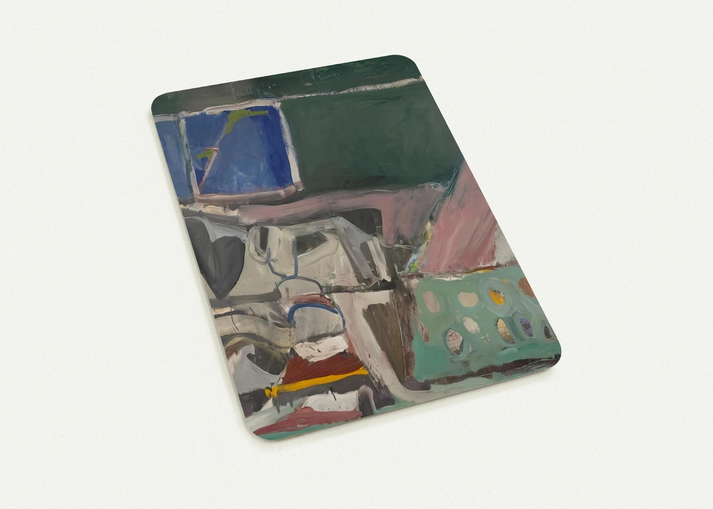
Berkeley #58 By Richard Diebenkorn Pack of 10 Post Cards | Richard Diebenkorn Post Cards | A6 (10.5 x 14.8 cm) - 4.1 x 5.8 inches
Berkeley #58 By Richard Diebenkorn Pack of 10 Post Cards | Richard Diebenkorn Post Cards | A6 (10.5 x 14.8 cm) - 4.1 x 5.8 inches
Couldn't load pickup availability
Elevate Your Correspondence with Richard Diebenkorn’s Berkeley #58
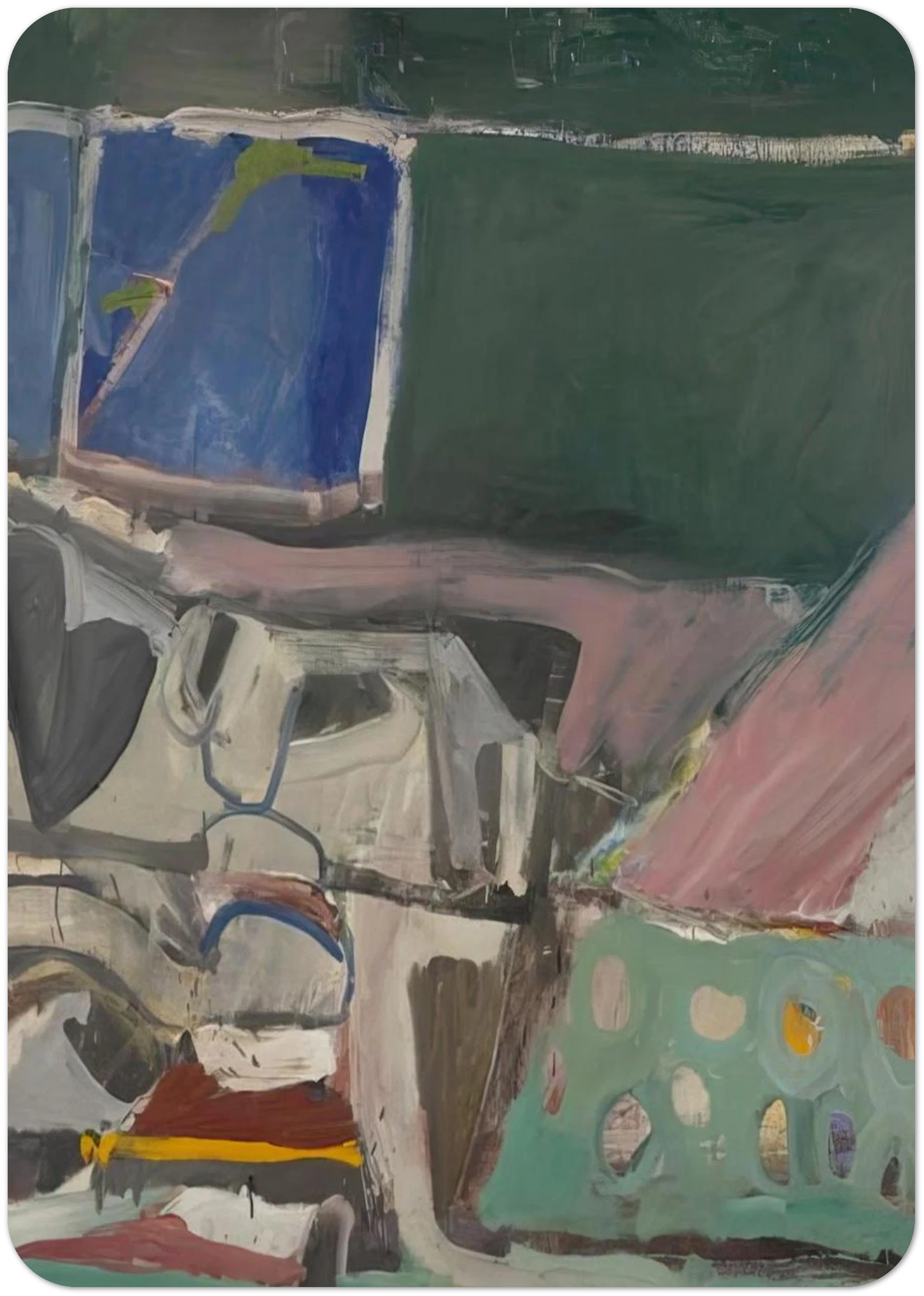
Experience the luminous energy of California Modernism with this exclusive pack of 10 fine art postcards featuring Berkeley #58. Painted during Richard Diebenkorn’s seminal Berkeley period (1953–1955), this work represents a pinnacle of Abstract Expressionism, where the artist masterfully translated the shifting light and topographical rhythms of the Northern California landscape into a complex language of color and form.
Museum-Quality Reproductions for the Discerning Collector
At RedKalion, we believe that even the smallest formats deserve the highest standards of production. These A6 postcards are not merely stationery; they are miniature archival masterpieces. Utilizing 12-color fine art printing technology, we capture the subtle chromatic shifts and gestural textures of Diebenkorn’s original canvas with a precision that far exceeds standard commercial printing.
- Artist: Richard Diebenkorn
- Title: Berkeley #58
- Print Technology: Advanced 12-color archival inkjet for unparalleled vibrancy.
- Paper Stock: 200 gsm (80 lb) museum-grade paper with a thickness of 0.26 mm (10.3 mils).
- Finish: A sophisticated smooth matte finish that eliminates glare and enhances the depth of color.
- Sustainability: Printed on FSC-certified paper, ensuring an eco-conscious addition to your collection.
Whether used for sophisticated personal correspondence or displayed as a curated set of miniature prints, these postcards bring a touch of mid-century brilliance to any setting. Trust RedKalion to deliver a tactile experience that honors the legacy of one of America’s greatest abstract masters.


Discover Unlimited Art Possibilities
At RedKalion, you can find virtually any artwork from any artist, available in a wide range of sizes to perfectly match your space.
If you didn’t find what you’re looking for, contact us at support@redkalion.com . We will source any artwork and produce it in any size and format you need, including art prints, posters, canvas, framed pieces, framed canvas, and more.
For dedicated art enthusiasts, we also offer handcrafted replicas of any artwork, carefully painted by highly skilled artists using traditional techniques.
For custom requests, contact us at support@redkalion.com .
What is the printing quality of these postcards?
We use professional 12-color fine art printing technology. This ensures museum-quality color accuracy and depth, capturing the rich textures of Diebenkorn’s work far more effectively than standard 4-color printing.
What kind of paper is used for this Richard Diebenkorn set?
Each card is printed on premium 200 gsm (80 lb) FSC-certified paper. The 10.3 mil thickness provides a sturdy, high-quality feel, while the smooth matte finish ensures a glare-free display.
What are the exact dimensions of these cards?
These postcards are A6 size, measuring exactly 10.5 x 14.8 cm (4.1 x 5.8 inches). This is a standard size, making them easy to frame or mail internationally.
How are these postcards produced and shipped?
To ensure quality and reduce waste, all cards are printed on demand. They are carefully packaged and shipped without a minimum order requirement, arriving ready for use or display.
Will the colors fade over time?
No. By using archival-grade inks and 200 gsm acid-free paper, our postcards are designed for longevity, resisting fading and maintaining their vibrancy for years to come.
What is the significance of Diebenkorn’s Berkeley series?
Created in the mid-1950s, the Berkeley series marked Diebenkorn's transition into pure abstraction, inspired by the aerial views and light of the East Bay landscape.
How does Berkeley #58 reflect the artist's style?
Berkeley #58 showcases Diebenkorn's signature use of 'scaffolding'—structured lines that define blocks of color—creating a tension between flat surface abstraction and deep spatial perception.