

RedKalion
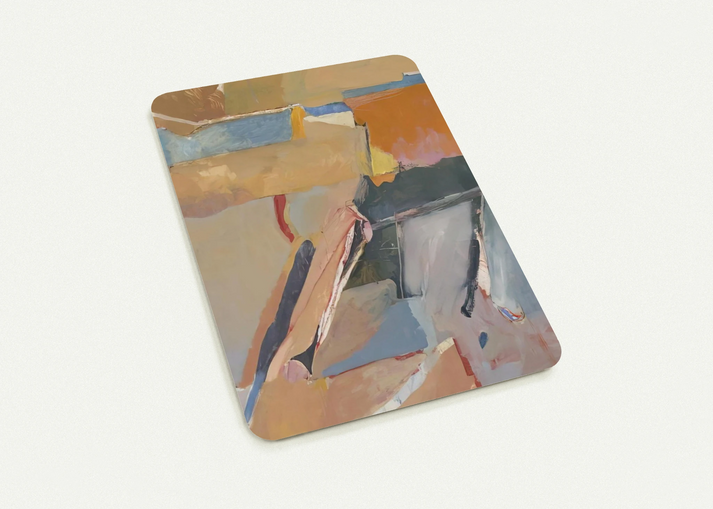
Berkeley #8 By Richard Diebenkorn Pack of 10 Post Cards | Richard Diebenkorn Post Cards | A6 (10.5 x 14.8 cm) - 4.1 x 5.8 inches
Berkeley #8 By Richard Diebenkorn Pack of 10 Post Cards | Richard Diebenkorn Post Cards | A6 (10.5 x 14.8 cm) - 4.1 x 5.8 inches
Couldn't load pickup availability
Elevate Your Correspondence with Richard Diebenkorn’s Berkeley #8
Experience the visceral energy of the American West through the lens of one of its most celebrated modern masters. Richard Diebenkorn’s Berkeley #8 is a cornerstone of his renowned Berkeley series (1953–1956), a period during which he masterfully balanced the raw spontaneity of Abstract Expressionism with a nascent sense of landscape and structured composition. This pack of 10 museum-quality post cards allows you to share a piece of art history with friends, family, or fellow collectors.
The Artistry of Berkeley #8
Diebenkorn’s Berkeley #8 is more than an abstract arrangement; it is an atmospheric mapping of the California light and terrain. Utilizing gestural brushwork and a sophisticated palette of ochre, azure, and deep verdant tones, the work captures the essence of the Bay Area. At RedKalion, we preserve the integrity of these brushstrokes using 12-color fine art printing technology. This advanced process ensures that the subtle shifts in hue and the perceived texture of the original oil painting are reproduced with breathtaking accuracy, far surpassing the limitations of standard commercial printing.
Exquisite Material Quality
Each A6 post card is crafted to serve as a miniature masterpiece. We use 200 gsm (80 lb) FSC-certified paper, providing a substantial, premium feel that resists bending. The smooth matte finish eliminates glare, allowing the vibrancy of Diebenkorn’s color field to shine through without distraction. These archival-grade reproductions are designed to endure, whether they are sent through the mail or displayed in a frame as a curated set.
- Artist: Richard Diebenkorn
- Title: Berkeley #8
- Format: Pack of 10 Post Cards
- Paper Weight: 200 gsm (80 lb) / 0.26 mm thickness
- Sustainability: FSC-certified, eco-friendly materials
- Print Technology: 12-color archival giclée
By choosing RedKalion, you are investing in a tradition of excellence. Our commitment to print-on-demand precision ensures that every pack of Richard Diebenkorn post cards meets the highest standards of the fine art world, offering an archival legacy that respects the artist's original vision.


Discover Unlimited Art Possibilities
At RedKalion, you can find virtually any artwork from any artist, available in a wide range of sizes to perfectly match your space.
If you didn’t find what you’re looking for, contact us at support@redkalion.com . We will source any artwork and produce it in any size and format you need, including art prints, posters, canvas, framed pieces, framed canvas, and more.
For dedicated art enthusiasts, we also offer handcrafted replicas of any artwork, carefully painted by highly skilled artists using traditional techniques.
For custom requests, contact us at support@redkalion.com .
What makes the printing quality of these Diebenkorn post cards superior?
We utilize 12-color fine art printing technology, which offers a broader color gamut and smoother gradients than standard 4-color printers, capturing the exact nuances of Diebenkorn’s original palette.
What is the texture and finish of the paper?
The post cards feature a smooth matte finish on 200 gsm (80 lb) paper, providing a glare-free, sophisticated surface that is perfect for both writing and display.
How long does it take for my order to be processed and shipped?
Each pack is printed on demand to ensure museum-quality standards. Orders are typically processed within 2-4 business days before being shipped via carbon-neutral logistics.
Are the materials used for these cards environmentally friendly?
Yes, all cards are printed on FSC-certified paper, ensuring the materials are sourced from responsibly managed forests that provide environmental, social, and economic benefits.
Will the colors fade over time if I display the cards?
Our archival-grade inks and acid-free paper are designed for longevity, maintaining color vibrancy and preventing yellowing for decades when kept out of direct sunlight.
What is the historical significance of the Berkeley series?
The Berkeley series represents Richard Diebenkorn’s peak in Abstract Expressionism, where he translated the topography and light of Northern California into powerful, non-representational compositions.
What was Diebenkorn’s technique in Berkeley #8?
Diebenkorn employed a layering technique with gestural, physical brushstrokes, creating a 'pentimento' effect where earlier layers of paint remain visible, adding depth and history to the image.