

RedKalion
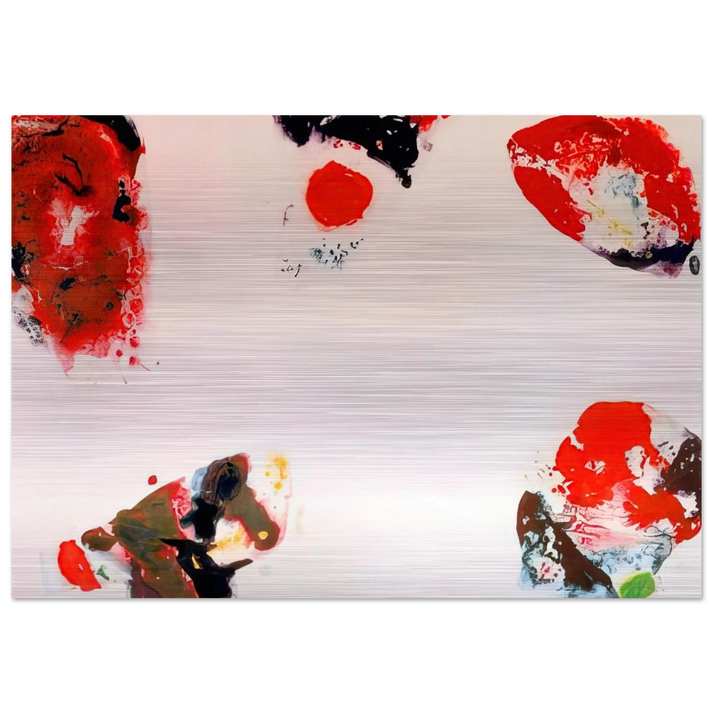
Berlin Red - Sam Francis Brushed Aluminum Print - 70x100 cm / 28x40 inches | Sam Francis Aluminum Print | Sam Francis Prints
Berlin Red - Sam Francis Brushed Aluminum Print - 70x100 cm / 28x40 inches | Sam Francis Aluminum Print | Sam Francis Prints
Couldn't load pickup availability
Elevate Your Space with Sam Francis’s Berlin Red on Brushed Aluminum
Immerse yourself in the vibrant energy of Berlin Red, a masterpiece by the legendary Abstract Expressionist Sam Francis. Originally conceived as a monumental mural for Mies van der Rohe’s Neue Nationalgalerie, this composition is a profound exploration of space, color, and light. Our museum-quality reproduction captures the fluid 'Tachisme' style of Francis, where splashes of primary pigment dance across the void, creating a rhythmic visual experience that is both chaotic and meticulously balanced.
Sophisticated Materiality: The Brushed Aluminum DIBOND® Advantage
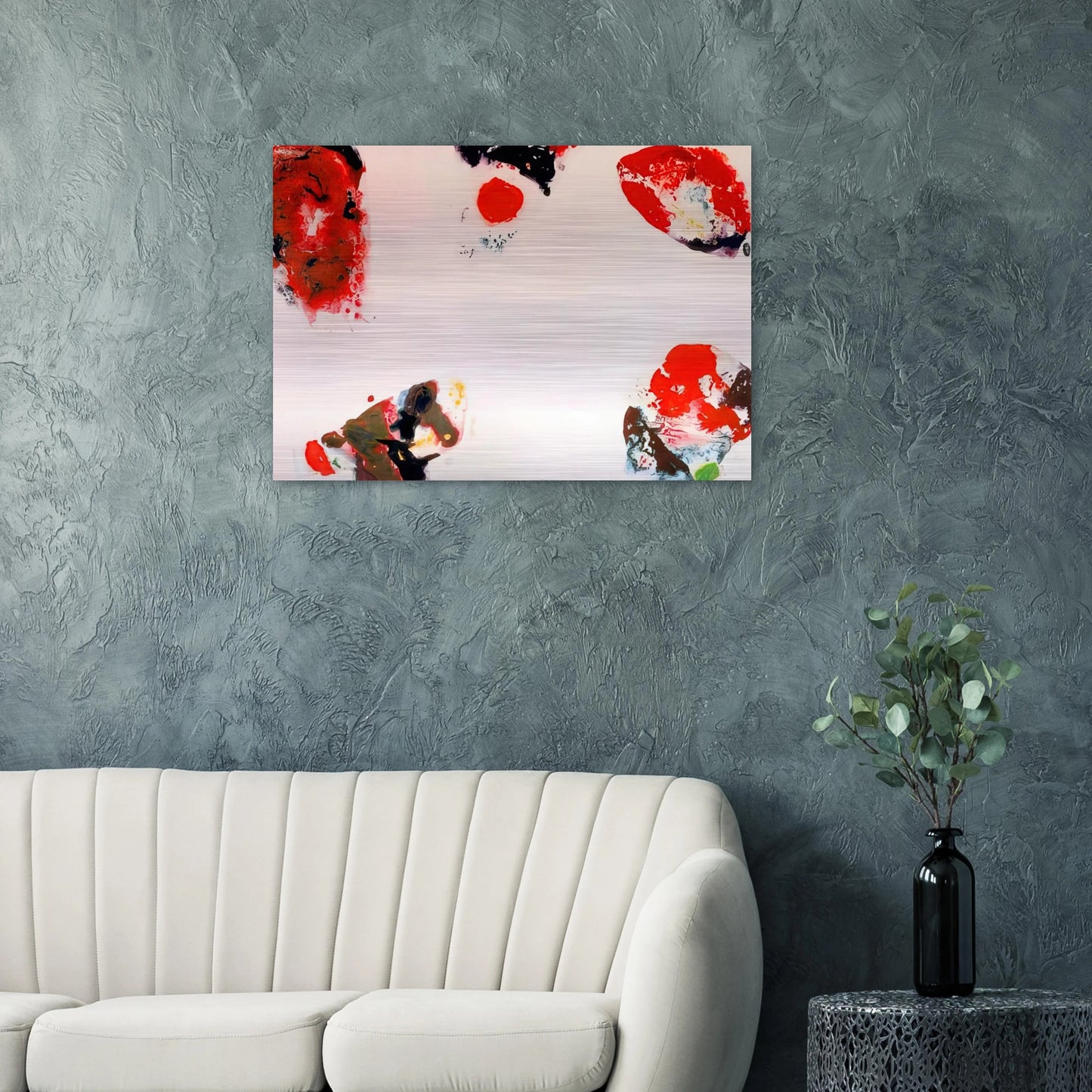
To honor the luminous quality of Francis’s work, RedKalion presents this piece on Brushed Silver Aluminum DIBOND®. This 3mm (0.12") thick, rigid base offers a contemporary aesthetic that traditional canvas cannot match. The horizontal grain of the brushed metal interacts with your room's lighting, providing a dynamic shimmer that brings the archival inks to life.
- Metallic Depth: Unprinted white areas of the design reveal the raw silver metallic effect, adding an industrial elegance to the 70x100 cm format.
- Glare-Free Viewing: The matte finish ensures that the deep reds and subtle undertones remain visible from any angle, free from distracting reflections.
- Archival Durability: This direct-to-substrate print is engineered for longevity, resisting fading and environmental wear.
An Expert Perspective on Sam Francis
As a leading figure in the second generation of Abstract Expressionists, Sam Francis was obsessed with the concept of 'the void.' In Berlin Red, the negative space is just as active as the saturated pigments. By choosing a fine art aluminum print, you are opting for a medium that mirrors Francis's own fascination with transparency and the brilliance of light. This is not merely a wall decoration; it is a sophisticated dialogue between post-war art history and modern material science, curated specifically for the discerning collector.


Discover Unlimited Art Possibilities
At RedKalion, you can find virtually any artwork from any artist, available in a wide range of sizes to perfectly match your space.
If you didn’t find what you’re looking for, contact us at support@redkalion.com . We will source any artwork and produce it in any size and format you need, including art prints, posters, canvas, framed pieces, framed canvas, and more.
For dedicated art enthusiasts, we also offer handcrafted replicas of any artwork, carefully painted by highly skilled artists using traditional techniques.
For custom requests, contact us at support@redkalion.com .
What makes this Sam Francis print museum-quality?
RedKalion utilizes state-of-the-art direct printing on 3mm Aluminum DIBOND®, ensuring precision color matching and structural integrity that meets the standards of high-end galleries and collectors.
How does the brushed aluminum finish affect the appearance of Berlin Red?
The brushed silver surface features a horizontal grain. White areas of the original painting are left unprinted, allowing the metallic texture to shine through, creating a unique, three-dimensional light effect.
Is the hanging hardware included with the print?
Yes, every 70x100 cm aluminum print comes with a specialized hanging kit. The specific hardware varies by fulfillment country to ensure the most secure installation for your local wall types.
How long will this archival-grade aluminum print last?
Aluminum DIBOND® is highly durable and warp-resistant. Combined with our UV-resistant matte inks, this print is designed to remain vibrant and stable for decades in indoor environments.
What is the shipping and fulfillment process for RedKalion?
We use premium, protective art-secure packaging. Your order is fulfilled from the closest regional facility to minimize transit time and carbon footprint while ensuring maximum safety.
What is the historical significance of Berlin Red?
Created in 1969, Berlin Red was a site-specific commission for the Neue Nationalgalerie in Berlin. it represents Francis's transition toward larger, more architectural color field compositions.
Why did Sam Francis leave so much white space in this composition?
Francis was influenced by Japanese 'Ma' (negative space). He viewed the white background not as an empty area, but as a field of light that gives the colors their energy.