

RedKalion
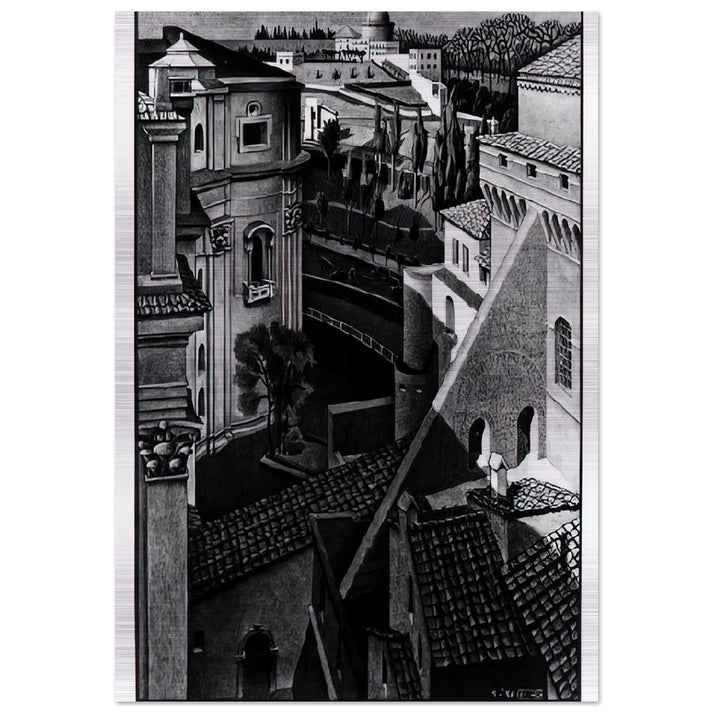
BERWEEN ST PETER AND SISTINE CHAPEL MARCH 1936 1936 - MC Escher Brushed Aluminum Print - 70x100 cm / 28x40 inches | MC Escher Aluminum Print | MC Escher Prints
BERWEEN ST PETER AND SISTINE CHAPEL MARCH 1936 1936 - MC Escher Brushed Aluminum Print - 70x100 cm / 28x40 inches | MC Escher Aluminum Print | MC Escher Prints
Couldn't load pickup availability
BETWEEN ST PETER AND SISTINE CHAPEL MARCH 1936: A Masterpiece of Architectural Geometry
Experience the structural brilliance of MC Escher through this extraordinary museum-quality reproduction. Captured in March 1936 during Escher's prolific Italian period, Between St Peter and Sistine Chapel explores the soaring heights and intricate stonework of the Vatican's most iconic monuments. This piece marks a pivotal moment in Escher's career, showcasing his transition from traditional landscape to the sophisticated, mathematical manipulation of space and perspective.
At RedKalion, we have curated this fine art print to honor Escher’s technical precision. By utilizing Brushed Aluminum DIBOND®, the architectural highlights of the Roman columns and arches are imbued with a luminous, silver metallic sheen. The 3mm thick, rigid base ensures a contemporary aesthetic that remains durable and warp-resistant, making it an archival masterpiece for the modern collector.
The RedKalion Technical Advantage
This MC Escher Aluminum Print is produced using state-of-the-art direct printing techniques. Unlike standard paper reproductions, the brushed silver finish features a horizontal grain that adds a dynamic texture to the work. When light interacts with the surface, the white areas of the original composition reveal the raw, metallic elegance of the aluminum, creating a sophisticated play of light and shadow that echoes Escher’s own fascination with optics.
- Material: 3mm (0.12") Brushed Silver Aluminum DIBOND® for a premium, rigid feel.
- Finish: Matte and glare-free, ideal for high-light environments and galleries.
- Visual Depth: Unprinted areas show the horizontal metallic grain, perfect for Escher’s monochromatic palette.
- Ready to Hang: Includes a versatile hanging kit adapted to your location.
- Durability: Highly stable and long-lasting, preserving the artwork's integrity for decades.
Elevate your interior with a museum-quality reproduction that marries 20th-century genius with 21st-century material science. This is more than a print; it is an enduring tribute to the architectural soul of Rome.


Discover Unlimited Art Possibilities
At RedKalion, you can find virtually any artwork from any artist, available in a wide range of sizes to perfectly match your space.
If you didn’t find what you’re looking for, contact us at support@redkalion.com . We will source any artwork and produce it in any size and format you need, including art prints, posters, canvas, framed pieces, framed canvas, and more.
For dedicated art enthusiasts, we also offer handcrafted replicas of any artwork, carefully painted by highly skilled artists using traditional techniques.
For custom requests, contact us at support@redkalion.com .
What makes the Brushed Aluminum DIBOND® finish unique for an MC Escher print?
The brushed silver aluminum finish features a horizontal grain that adds texture. In Escher’s work, white areas aren't printed, allowing the raw metallic surface to shine through, creating a sophisticated, high-contrast effect perfect for his mathematical designs.
Is this MC Escher Aluminum Print durable enough for long-term display?
Yes. Our 3mm AluDibond prints are incredibly rigid and stable. The direct-print technology is UV-resistant and matte, ensuring the artwork remains vibrant and glare-free without the need for protective glass, making it a true archival-grade reproduction.
How do I hang my 70x100 cm MC Escher print?
Every order from RedKalion includes a professional hanging kit. The specific mounting system varies based on your fulfillment country to ensure the most secure and aesthetically pleasing installation for this 28x40 inch statement piece.
What are the shipping logistics for museum-quality prints?
We utilize a global fulfillment network to print and ship your order from the facility closest to you. This reduces transit time and carbon footprint while ensuring your aluminum print arrives in specialized, protective packaging.
Will the colors in the print match the original 1936 artwork?
Our printing process utilizes direct-to-substrate technology to achieve exceptional tonal range. For Escher's 1936 works, this ensures deep blacks and crisp highlights, maintaining the integrity of the original lithographic or woodcut aesthetic.
What is the significance of March 1936 in Escher’s career?
March 1936 was a transformative period for Escher in Italy. It was during these months that he moved away from realistic landscapes toward 'mental images' and complex architectural perspectives, as seen in the geometry of the Vatican structures.
Why is a matte finish preferred for this specific architectural piece?
A matte finish eliminates distracting reflections, allowing the viewer to focus on the intricate linework and depth of the Vatican's architecture. It provides a contemporary, gallery-style appearance that complements the industrial feel of the aluminum.