RedKalion
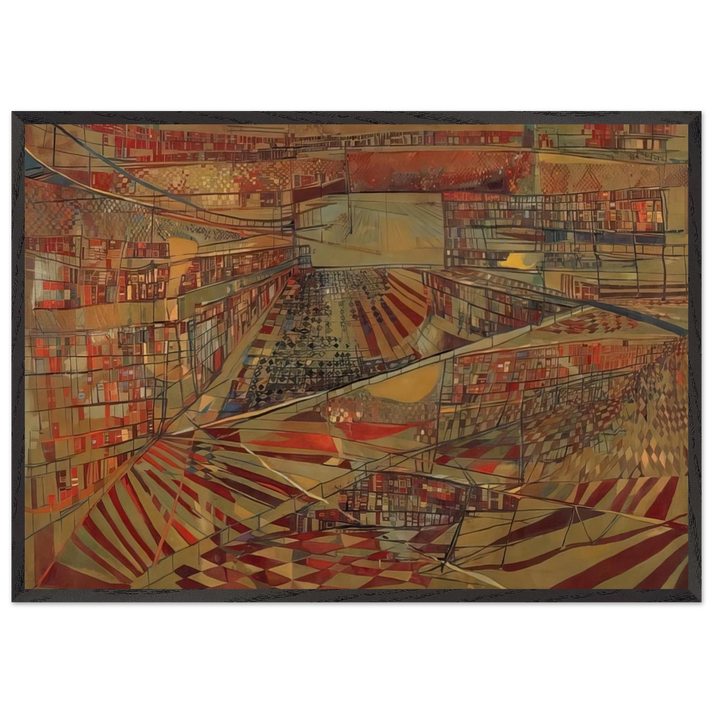
Bibliotheque - 1949 - Maria Helena Vieira da Silva 70x100 cm / 28x40 inches Framed Art Print – Black Wooden Frame
Bibliotheque - 1949 - Maria Helena Vieira da Silva 70x100 cm / 28x40 inches Framed Art Print – Black Wooden Frame
Couldn't load pickup availability
Elevate Your Interior with Maria Helena Vieira da Silva’s 'Bibliothèque' (1949)
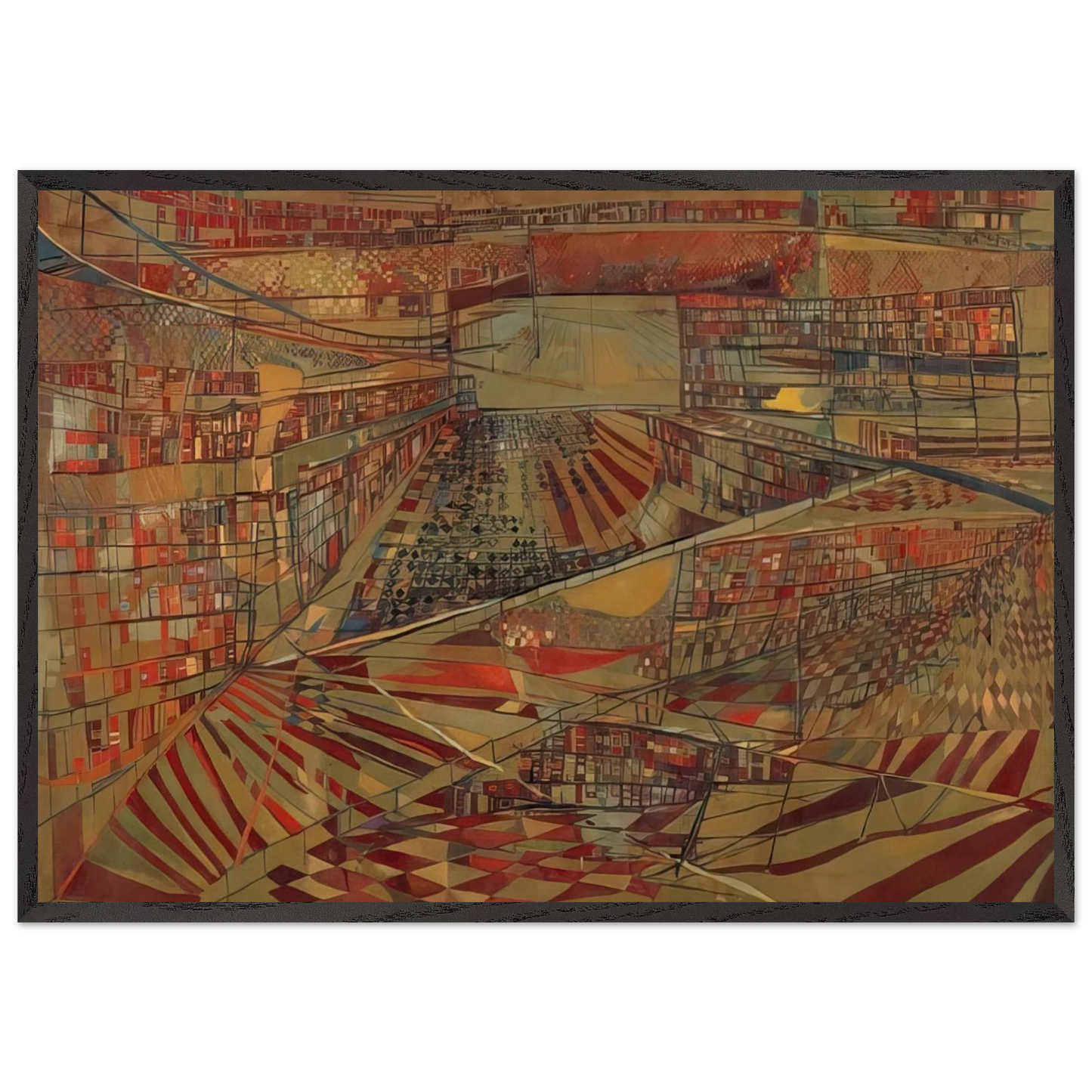
Experience the profound spatial complexity of Maria Helena Vieira da Silva, a leading figure in European lyrical abstraction. Her 1949 masterpiece, Bibliothèque, is a mesmerizing exploration of perspective and architecture, where rhythmic grids and intersecting lines create a sense of infinite intellectual depth. This fine art print captures the delicate tension between order and chaos, making it a sophisticated addition to any modern collection.
At RedKalion, we honor the intricate details of Vieira da Silva’s technique. This museum-quality reproduction is rendered on premium 250 gsm (110 lb) archival paper. The natural white, uncoated matte finish ensures that every subtle tonal shift and geometric nuance is preserved without glare, offering the tactile feel of an original gallery acquisition.
Uncompromising Quality and Sustainability
Our commitment to excellence extends to the materials that protect and present your artwork. This 70x100 cm / 28x40 inches framed art print is housed in a robust black wooden frame, crafted from responsibly sourced oak and ash. With a professional 20mm (0.79") profile, the frame provides a substantial, modern presence that surpasses standard gallery offerings. The artwork is protected by shatterproof plexiglass, ensuring longevity and clarity for generations.
- Archival Grade: FSC-certified, 250 gsm museum-quality paper for lasting brilliance.
- Premium Framing: Responsibly sourced wood with a sophisticated matte black finish.
- Ready to Hang: Includes a professional hanging kit for immediate installation.
- Historical Significance: A definitive example of 20th-century Portuguese-French abstract expressionism.
By choosing RedKalion, you are investing in an archival masterpiece that endures, blending historical significance with contemporary craftsmanship to elevate your living or workspace.
Discover Unlimited Art Possibilities
At RedKalion, you can find virtually any artwork from any artist, available in a wide range of sizes to perfectly match your space.
If you didn’t find what you’re looking for, contact us at support@redkalion.com . We will source any artwork and produce it in any size and format you need, including art prints, posters, canvas, framed pieces, framed canvas, and more.
For dedicated art enthusiasts, we also offer handcrafted replicas of any artwork, carefully painted by highly skilled artists using traditional techniques.
For custom requests, contact us at support@redkalion.com .
What defines the quality of this Maria Helena Vieira da Silva print?
We use 250 gsm (110 lb) natural white, archival museum-quality paper. The matte finish and thickness of 0.29 mm ensure a glare-free, premium tactile experience that preserves the artwork’s integrity over time.
Is the black wooden frame sustainably sourced?
Yes, our frames are made from responsibly sourced oak and ash wood, carrying FSC certification. The frame is 20mm thick, providing a durable and high-end aesthetic for your fine art print.
How is the artwork protected during shipping and display?
Each print is protected by shatterproof plexiglass, which is more durable than traditional glass. We ship our framed prints in specialized protective packaging to ensure they arrive in pristine condition.
Does the print come ready to hang?
Absolutely. Your Maria Helena Vieira da Silva framed print includes a complete hanging kit, allowing you to easily mount the piece on your wall immediately upon arrival.
How long will this archival print last?
Designed for longevity, our prints utilize archival-grade, acid-free paper and sustainable inks. This museum-quality approach ensures the colors and paper quality remain vibrant for decades without yellowing.
What is the significance of the grid in 'Bibliothèque' (1949)?
Vieira da Silva used grids to explore the concept of space and the organization of human knowledge. The labyrinthine structure represents the interior of a library, reflecting the complexity of the mind.
How does the artist create depth in this masterpiece?
Through a technique known as 'lyrical abstraction,' she uses converging lines and shifting perspectives to create a sense of three-dimensional depth on a two-dimensional surface, inviting the viewer into a spatial void.