RedKalion
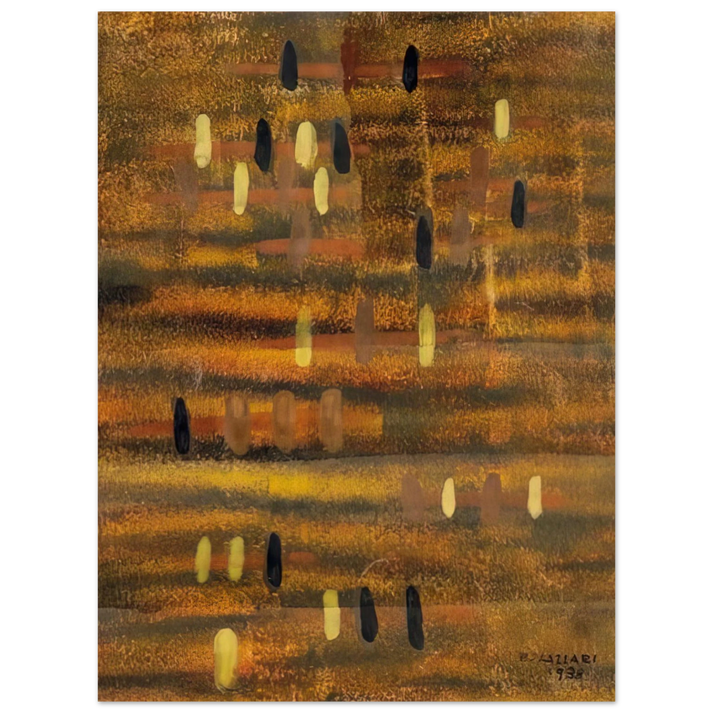
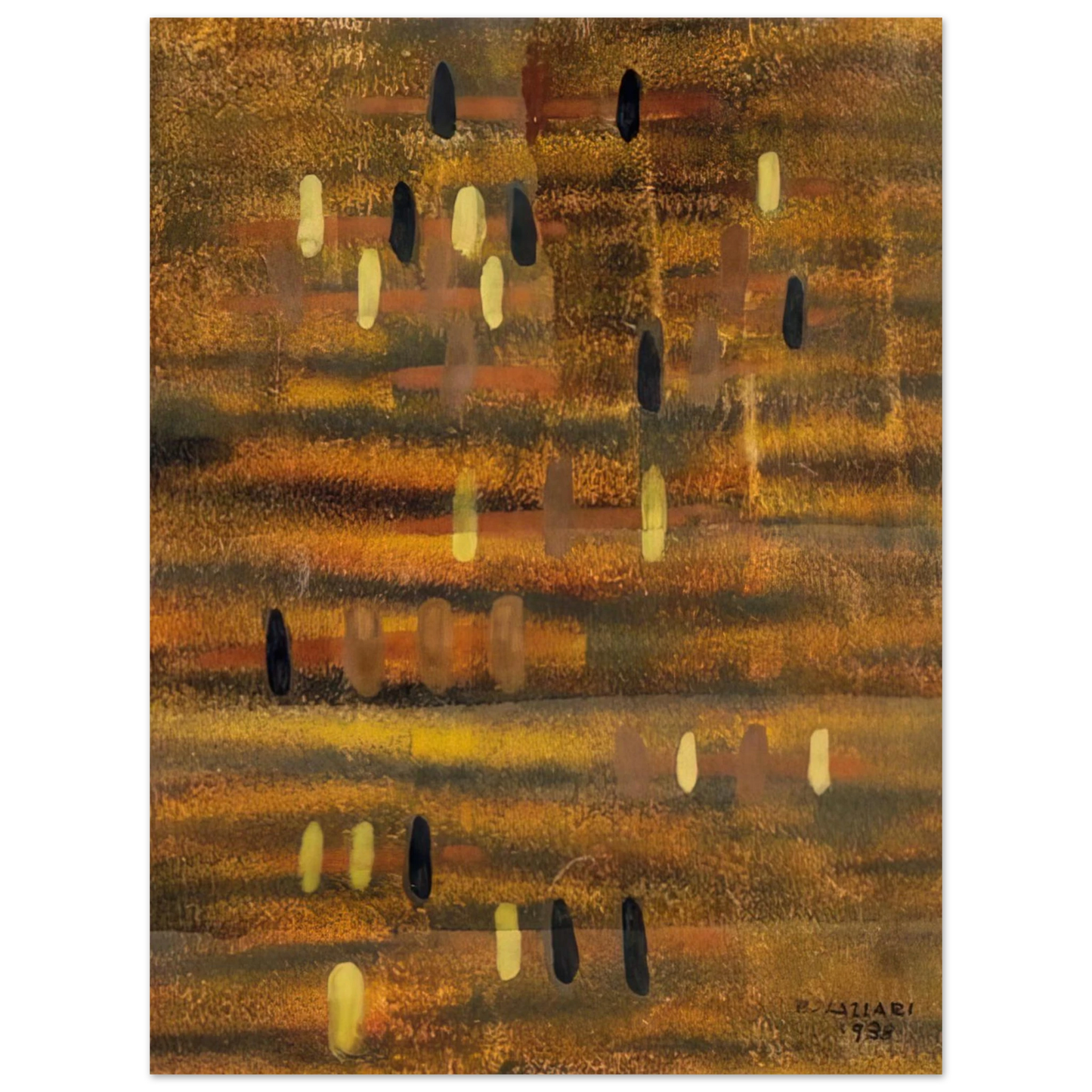
Bice Lazzari - Untitled - 1938 75x100 cm / 30x40inches Fine Art Poster
Bice Lazzari - Untitled - 1938 75x100 cm / 30x40inches Fine Art Poster
Couldn't load pickup availability
Elevate Your Space with Bice Lazzari’s Abstract Vision
Experience the understated brilliance of Bice Lazzari’s Untitled (1938), a pivotal work from a pioneer of Italian abstraction. This fine art print captures a moment in Lazzari’s career where she began to strip away the decorative, focusing instead on the rhythmic potential of line and sign. As an artist who navigated the male-dominated Italian art scene with quiet persistence, Lazzari’s 1938 compositions represent a sophisticated exploration of space and balance that remains remarkably contemporary.
Museum-Quality Craftsmanship by RedKalion
At RedKalion, we believe a masterpiece deserves an equally masterful presentation. This museum-quality reproduction is rendered on our Master's Edition archival paper. With a weight of 250 gsm (110 lb) and a thickness of 0.29 mm (11.4 mils), the print possesses a substantial, luxurious feel that commands attention. The matte, uncoated finish in natural white (off-white) ensures that Lazzari’s delicate tonal shifts are displayed without the interference of glare, preserving the intellectual integrity of the original work.
An Archival Legacy for the Modern Collector
Our commitment to excellence extends to the longevity of your acquisition. This archival-grade print is acid-free, featuring a pH level above 7 to prevent yellowing or degradation over the decades. Furthermore, your investment supports ethical forestry, as we utilize FSC-certified paper. Each piece is printed and shipped on demand with the utmost care, ensuring that this significant 20th-century work arrives in pristine condition, ready to transform your interior into a gallery-inspired sanctuary.
- Artist: Bice Lazzari
- Title: Untitled (1938)
- Paper: Premium Master's Edition, 250 gsm
- Longevity: Acid-free, archival quality
- Sustainability: FSC-certified materials
Discover Unlimited Art Possibilities
At RedKalion, you can find virtually any artwork from any artist, available in a wide range of sizes to perfectly match your space.
If you didn’t find what you’re looking for, contact us at support@redkalion.com . We will source any artwork and produce it in any size and format you need, including art prints, posters, canvas, framed pieces, framed canvas, and more.
For dedicated art enthusiasts, we also offer handcrafted replicas of any artwork, carefully painted by highly skilled artists using traditional techniques.
For custom requests, contact us at support@redkalion.com .
What defines the quality of this Bice Lazzari print?
This print is produced on our Master's Edition archival paper, a 250 gsm museum-quality medium. It features a matte, uncoated finish that highlights the intricate details of Lazzari’s 1938 work without distracting reflections.
Is this a durable fine art reproduction?
Yes. We use acid-free paper with a pH level above 7, which prevents the natural white surface from yellowing over time. This ensures your fine art poster remains a vibrant centerpiece for generations.
How is the color represented on the matte finish?
The natural white (off-white) paper provides a sophisticated, warm base. The 0.29 mm thickness and uncoated texture allow for deep pigment absorption, resulting in rich, authentic colors that mirror the original aesthetic.
What is the shipping process for RedKalion prints?
Every RedKalion print is fulfilled on demand with no minimum order requirements. We use specialized protective packaging to ensure your Bice Lazzari masterpiece arrives in gallery-perfect condition, ready for framing.
Is the paper used for this poster sustainable?
Sustainability is core to our curation. This fine art reproduction uses FSC-certified paper, ensuring that your appreciation for art also supports responsible forest management and environmental protection.
What was Bice Lazzari's artistic approach in 1938?
In 1938, Lazzari was transitioning from decorative arts to pure abstraction. She utilized minimalist 'signs' and rhythmic lines to create a visual language that anticipated the later Informel movement in Europe.
Why is this specific work considered a milestone in Italian abstraction?
Untitled (1938) showcases Lazzari's ability to create tension and harmony using limited geometric elements. It represents a brave departure from the figurative traditions prevalent in Italy during the late 1930s.