
RedKalion
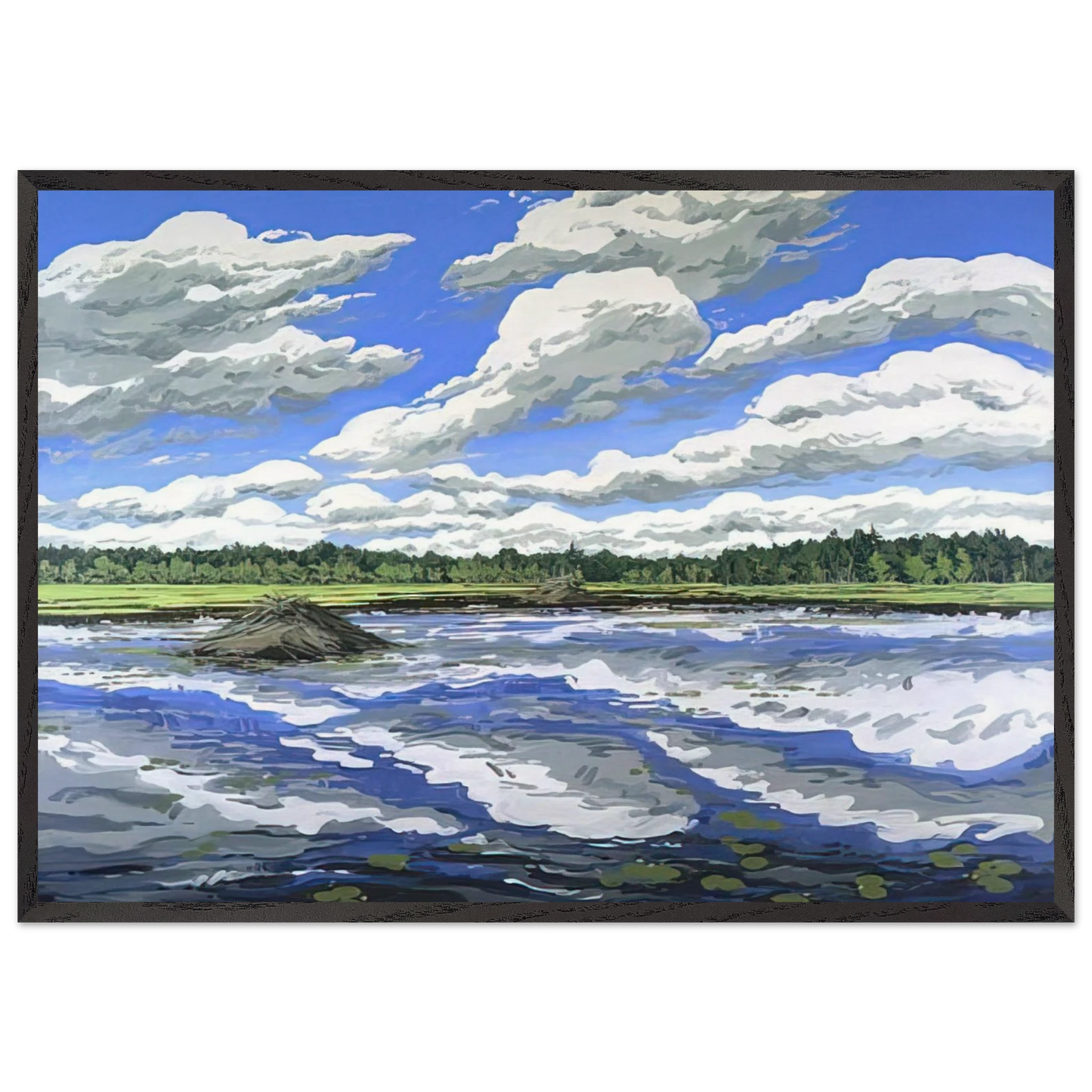
Big Flowage - 1979 - Neil Welliver 70x100 cm / 28x40 inches Framed Art Print – Black Wooden Frame
Big Flowage - 1979 - Neil Welliver 70x100 cm / 28x40 inches Framed Art Print – Black Wooden Frame
Couldn't load pickup availability
The Immersive Majesty of Neil Welliver’s Big Flowage
Step into the rugged, crystalline wilderness of Maine with Neil Welliver’s 1979 masterpiece, Big Flowage. As one of the most significant landscape painters of the 20th century, Welliver was renowned for his ability to translate the complex textures of the forest into a vibrant, modernist language. This 70x100 cm framed art print captures the intricate play of light upon water and the dense layering of the bogland with breathtaking clarity.
The Welliver Technique: A Masterclass in Observation
Welliver’s process was as rigorous as the landscapes he depicted. He often hiked miles into the woods with a heavy pack to paint en plein air, regardless of the weather. In Big Flowage, his signature 'all-over' compositional style is evident; every inch of the canvas is treated with equal intensity, from the tangled undergrowth to the shimmering reflections. His technique of using a limited palette of just eight colors allowed him to create a sense of deep, atmospheric space while maintaining a crisp, graphic quality that feels remarkably contemporary.
Museum-Quality Craftsmanship for the Discerning Collector
At RedKalion, we honor Welliver’s legacy by utilizing archival-grade materials that ensure this reproduction remains a centerpiece in your collection for decades. This print is rendered on 250 gsm (110 lb) museum-quality paper, featuring a natural white, matte, and uncoated finish that eliminates glare and highlights the artist’s sophisticated brushwork. The 0.29 mm thickness provides a premium tactile feel, characteristic of fine art prints found in elite galleries.
Sustainably Sourced and Ready to Elevate Your Space
Encased in a sophisticated black wooden frame crafted from responsibly sourced oak and ash, this piece offers a robust presence. The frame measures 20mm (0.79") in thickness and width, providing a more substantial and premium aesthetic than standard commercial frames. Protected by shatterproof plexiglass, your artwork arrives ready-to-hang with an included hanging kit, allowing you to transform your environment with the tranquil, enduring beauty of the Maine woods.
Discover Unlimited Art Possibilities
At RedKalion, you can find virtually any artwork from any artist, available in a wide range of sizes to perfectly match your space.
If you didn’t find what you’re looking for, contact us at support@redkalion.com . We will source any artwork and produce it in any size and format you need, including art prints, posters, canvas, framed pieces, framed canvas, and more.
For dedicated art enthusiasts, we also offer handcrafted replicas of any artwork, carefully painted by highly skilled artists using traditional techniques.
For custom requests, contact us at support@redkalion.com .
What makes the paper quality suitable for fine art?
We use 250 gsm (110 lb) natural white, archival-quality paper. Its matte, uncoated finish ensures no glare, while the 0.29 mm thickness provides the durability and texture required for high-end museum-quality reproductions.
How is the artwork protected and framed?
Each print is mounted in a 20mm thick frame made from FSC-certified oak or ash wood. We use shatterproof plexiglass to protect the image from UV light and physical damage while maintaining perfect clarity.
Is the framing material sustainably sourced?
Yes, RedKalion uses responsibly sourced wood (FSC-certified or equivalent) for all our frames, ensuring that your appreciation for nature's beauty, like that in Neil Welliver’s work, supports environmental conservation.
Does the framed print come ready to hang?
Absolutely. Every framed print includes a professional hanging kit. The artwork is pre-assembled in the black wooden frame, allowing you to display it on your wall immediately upon arrival.
What is the archival longevity of this print?
By using acid-free, museum-grade paper and archival inks, our prints are designed to resist yellowing and fading for decades, ensuring your investment retains its aesthetic value and historical integrity.
What was Neil Welliver’s inspiration for Big Flowage?
Welliver was deeply inspired by the untamed landscapes of Maine. Big Flowage represents his obsession with the 'transparency' of the woods, capturing the complicated relationship between standing water, light, and dense vegetation.
Why is the 1979 period significant for Welliver’s work?
By 1979, Welliver had perfected his large-scale landscape technique. This era represents the height of his ability to balance abstract mark-making with realistic depictions of the American wilderness.