
RedKalion
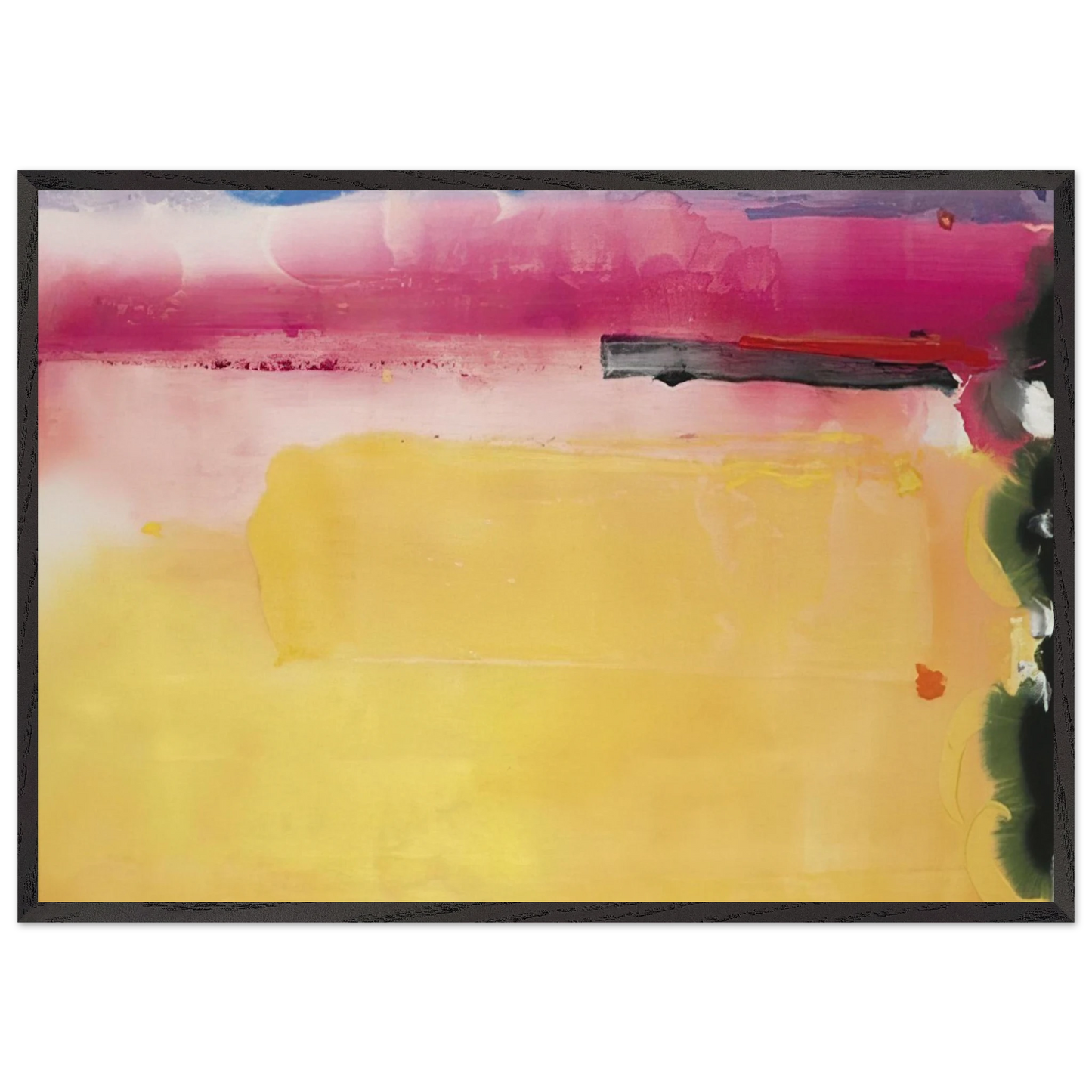
Black-Eyed Susan - 1988 - Helen Frankenthaler 70x100 cm / 28x40 inches Framed Art Print – Black Wooden Frame
Black-Eyed Susan - 1988 - Helen Frankenthaler 70x100 cm / 28x40 inches Framed Art Print – Black Wooden Frame
Couldn't load pickup availability
Immerse Yourself in the Luminous Abstraction of Helen Frankenthaler's Black-Eyed Susan (1988)
Elevate your interior with this museum-quality reproduction of Black-Eyed Susan, a late-period masterpiece by the legendary Abstract Expressionist Helen Frankenthaler. Created in 1988, this piece exemplifies Frankenthaler’s transition into more complex, layered compositions while maintaining the ethereal fluidity that defined her pioneering 'soak-stain' technique. This fine art print captures the organic shapes and delicate color shifts that characterize her mature style, offering an atmosphere of intellectual depth and sophisticated tranquility.
The Artistic Legacy of a Visionary
Helen Frankenthaler was a central figure in the development of Color Field painting. In Black-Eyed Susan, she moves beyond her earlier canvases to explore the interplay between structured form and spontaneous gesture. As an elite curator of archival reproductions, RedKalion ensures that every nuance of Frankenthaler’s palette—from the deep, earthy tones to the translucent washes—is preserved with breathtaking clarity. This piece serves as a bridge between mid-century modernism and contemporary abstraction, making it a definitive statement for the discerning collector.
Uncompromising Quality and Craftsmanship
At RedKalion, we believe a masterpiece deserves a presentation that matches its historical weight. This 70x100 cm (28x40 inches) framed art print is meticulously produced to satisfy the highest standards of fine art preservation:
- Archival Museum-Quality Paper: Printed on 250 gsm (110 lb) natural white, acid-free paper with a matte finishing to ensure longevity and prevent yellowing over time.
- Premium Framing: Encased in a 20mm (0.79") thick black frame crafted from responsibly sourced, FSC-certified oak and ash wood.
- Shatterproof Protection: Features high-clarity, shatterproof plexiglass that protects the print from environmental damage and UV exposure.
- Gallery Ready: Your print arrives with a pre-installed hanging kit, designed for immediate and secure installation on your wall.
By choosing this RedKalion reproduction, you are investing in a sustainable, archival-grade artifact that honors the legacy of one of the 20th century's most influential artists.
Discover Unlimited Art Possibilities
At RedKalion, you can find virtually any artwork from any artist, available in a wide range of sizes to perfectly match your space.
If you didn’t find what you’re looking for, contact us at support@redkalion.com . We will source any artwork and produce it in any size and format you need, including art prints, posters, canvas, framed pieces, framed canvas, and more.
For dedicated art enthusiasts, we also offer handcrafted replicas of any artwork, carefully painted by highly skilled artists using traditional techniques.
For custom requests, contact us at support@redkalion.com .
What makes the Black-Eyed Susan print museum-quality?
Our reproductions use 250 gsm archival-grade, acid-free paper and high-pigment inks. This ensures the 1988 Helen Frankenthaler print maintains its color integrity and resists degradation for decades, meeting the standards of professional art galleries.
Is the framing material sustainably sourced?
Yes. The black wooden frame is crafted from FSC-certified (Forest Stewardship Council) oak and ash wood. This guarantees that your fine art print is framed with materials that meet rigorous environmental and social standards.
How is the artwork protected against damage?
Each print is shielded by premium shatterproof plexiglass. This material offers superior clarity to view the intricacies of Frankenthaler’s work while providing a durable barrier against dust, moisture, and impact.
Is the print ready to hang upon arrival?
Absolutely. Every RedKalion framed art print includes a professional hanging kit. The 20mm thick frame is designed for a flush, secure fit against the wall, allowing you to elevate your space instantly.
What is the archival life of this reproduction?
Due to the 11.4 mil thickness and pH-neutral properties of our 250 gsm paper, this print is designed to last a lifetime. The archival-quality materials prevent the paper from becoming brittle or yellowing under normal indoor conditions.
What was Helen Frankenthaler's 'soak-stain' technique?
Frankenthaler revolutionized modern art by thinning oil paint with turpentine and pouring it onto unprimed canvas. This 'soak-stain' method allowed colors to merge with the fabric, creating the luminous, watercolor-like effects seen in works like Black-Eyed Susan.
Does the 1988 Black-Eyed Susan represent a specific era in her career?
Yes, the 1988 piece represents Frankenthaler’s late career, where she experimented heavily with printmaking and woodcuts. It demonstrates a more structured approach to color compared to her earlier, more spontaneous 'Color Field' canvases.