RedKalion
BLACK FLAG 1937 By Rene Magritte Pack of 10 Post Cards | Rene Magritte Post Cards | A6 (10.5 x 14.8 cm) - 4.1 x 5.8 inches
BLACK FLAG 1937 By Rene Magritte Pack of 10 Post Cards | Rene Magritte Post Cards | A6 (10.5 x 14.8 cm) - 4.1 x 5.8 inches
Couldn't load pickup availability
Black Flag (1937) by René Magritte: A Surrealist Vision in Fine Art Postcards
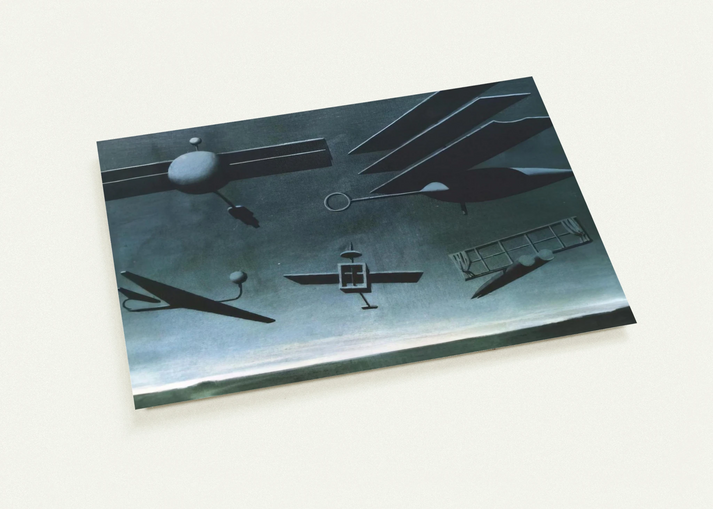
Elevate your correspondence or curate a miniature gallery with this exquisite pack of 10 fine art postcards featuring René Magritte's 'Black Flag' (1937). Painted during a period of mounting global tension, this masterpiece serves as a haunting premonition of modern aerial warfare. The Belgian Surrealist master presents a desolate horizon where strange, black mechanical entities drift like omens through a twilight sky, perfectly capturing the uncanny dread that defined Magritte’s contribution to the movement.
At RedKalion, we bridge the gap between historical significance and modern craftsmanship. Each postcard is produced using 12-color fine art printing technology. Unlike standard 4-color commercial prints, our process ensures unparalleled color vibrancy and depth, capturing the subtle tonal shifts of Magritte’s brooding palette with museum-quality precision. The smooth matte finish eliminates glare, allowing the stark geometry of the 'black flags' to command attention.
Premium Material Specifications
- Exceptional Paper: Printed on 200 gsm (80 lb) FSC-certified paper, providing a substantial, premium feel.
- Durability: A thickness of 0.26 mm (10.3 mils) ensures each card remains crisp and enduring.
- Eco-Conscious Curation: We utilize environmentally responsible materials, ensuring your appreciation for art aligns with a commitment to the planet.
- Archival Integrity: Designed to resist fading, these postcards serve as lasting tributes to Surrealist history.
Whether used for sophisticated messaging or displayed as a collective set, these René Magritte postcards transform a simple medium into a vessel for world-class art. Experience the RedKalion difference—where every print is a testament to the enduring power of the avant-garde.

Discover Unlimited Art Possibilities
At RedKalion, you can find virtually any artwork from any artist, available in a wide range of sizes to perfectly match your space.
If you didn’t find what you’re looking for, contact us at support@redkalion.com . We will source any artwork and produce it in any size and format you need, including art prints, posters, canvas, framed pieces, framed canvas, and more.
For dedicated art enthusiasts, we also offer handcrafted replicas of any artwork, carefully painted by highly skilled artists using traditional techniques.
For custom requests, contact us at support@redkalion.com .
What are the dimensions and quantity of this set?
Each pack contains 10 flat postcards, sized A6 (10.5 x 14.8 cm or 4.1 x 5.8 inches). This standard size is ideal for mailing, framing, or gifting.
What makes RedKalion's printing superior to standard inkjet?
We use 12-color fine art printing technology, which provides significantly better color accuracy, smoother gradients, and deeper blacks than standard 4-color inkjet processes.
What type of paper is used for these Magritte postcards?
The cards are printed on 200 gsm (80 lb) FSC-certified paper with a smooth matte finish, offering a 0.26 mm thickness for a premium, glare-free feel.
What is the historical significance of 'Black Flag' (1937)?
Painted in 1937, this work is widely interpreted as Magritte's premonition of World War II, using insect-like aircraft to symbolize technological menace and impending conflict.
Are these prints archival-grade and fade-resistant?
Yes. Our high-fidelity 12-color process and 200 gsm archival-quality paper ensure that the imagery remains vivid and resistant to fading over time.
Is the paper used for these cards eco-friendly?
Absolutely. We use FSC-certified paper, meaning it is sourced from responsibly managed forests that provide environmental, social, and economic benefits.
How does Magritte’s style influence the viewer in this piece?
Magritte uses the 'uncanny' by placing unrecognizable, dark mechanical objects in a familiar landscape, forcing the viewer to confront the mystery of the unknown.