RedKalion
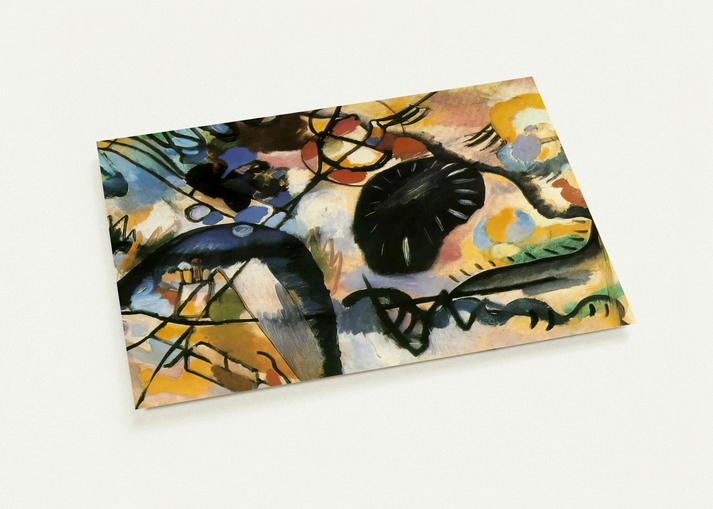
BLACK SPOT 1912 By Wassily Kandinsky Pack of 10 Post Cards | Wassily Kandinsky Post Cards | A6 (10.5 x 14.8 cm) - 4.1 x 5.8 inches
BLACK SPOT 1912 By Wassily Kandinsky Pack of 10 Post Cards | Wassily Kandinsky Post Cards | A6 (10.5 x 14.8 cm) - 4.1 x 5.8 inches
Couldn't load pickup availability
Elevate Your Correspondence with Wassily Kandinsky’s 'Black Spot' (1912)
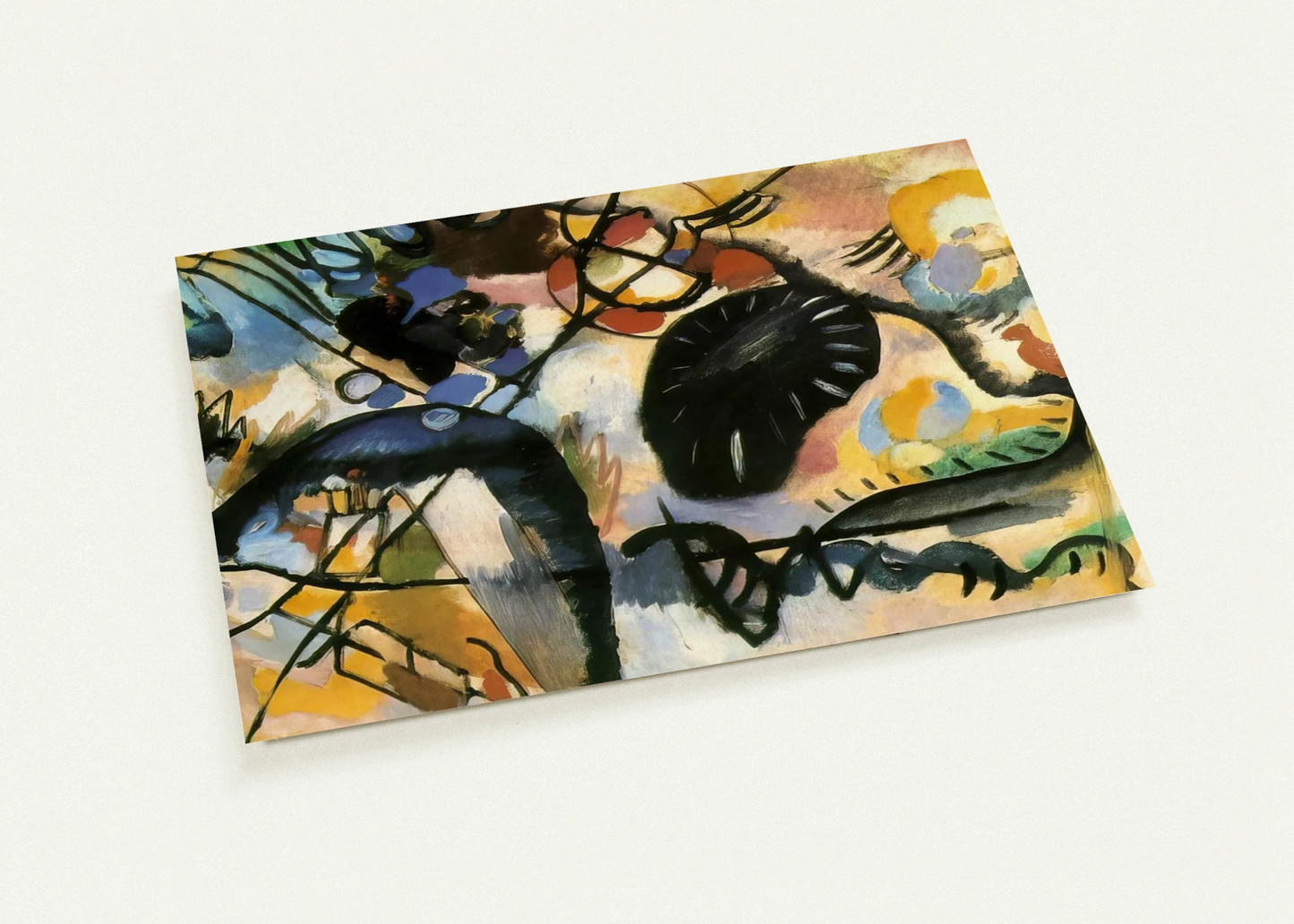
Experience the dawn of abstraction with this premium collection of ten postcards featuring Wassily Kandinsky’s 'Black Spot' (1912). A seminal work from the artist's Der Blaue Reiter period, this piece captures the precise moment where representational form dissolves into a rhythmic symphony of color and emotion. At RedKalion, we preserve the spiritual resonance of Kandinsky’s vision, ensuring every brushstroke is rendered with museum-grade fidelity.
The Artistry of the Blue Rider
In 1912, Kandinsky was deeply invested in the concept of synesthesia—the intersection of sound and sight. 'Black Spot' serves as a visual crescendo, where the central dark mass creates a profound gravitational pull against vibrant, lyrical hues. Our reproductions utilize 12-color fine art printing technology, capturing the subtle tonal shifts and saturated depth that standard 4-color processes simply cannot replicate.
Exquisite Material Quality
Each card in this 10-pack is crafted for the discerning collector and the dedicated correspondent alike. Printed on 200 gsm (80 lb) FSC-certified paper with a thickness of 0.26 mm, these cards offer a substantial, luxurious feel. The smooth matte finish eliminates glare, allowing the complex geometry of Kandinsky's abstraction to remain the focal point under any lighting condition.
- Archival Longevity: 12-color pigment-based inks ensure your prints remain vivid for generations.
- Eco-Conscious Curation: Responsibly sourced, FSC-certified materials reflect RedKalion’s commitment to sustainability.
- Versatile Display: Perfect for sophisticated stationary or as a curated mini-gallery for your home or office.
Discover Unlimited Art Possibilities
At RedKalion, you can find virtually any artwork from any artist, available in a wide range of sizes to perfectly match your space.
If you didn’t find what you’re looking for, contact us at support@redkalion.com . We will source any artwork and produce it in any size and format you need, including art prints, posters, canvas, framed pieces, framed canvas, and more.
For dedicated art enthusiasts, we also offer handcrafted replicas of any artwork, carefully painted by highly skilled artists using traditional techniques.
For custom requests, contact us at support@redkalion.com .
What makes these Kandinsky postcards museum-quality?
Unlike standard cards, we use 12-color fine art printing technology. This provides superior color vibrancy and depth, capturing the nuances of the 1912 original with archival-grade accuracy.
What are the paper specifications for this 10-pack?
Each card is printed on 200 gsm (80 lb) FSC-certified paper with a 0.26 mm thickness. The smooth matte finish ensures a premium, glare-free tactile experience.
Are the materials used for these prints sustainable?
Yes. We use environmentally conscious, FSC-certified paper and print on demand to minimize waste, ensuring a low carbon footprint for your art collection.
What is the exact size of these postcards?
These are standard A6 postcards, measuring 10.5 x 14.8 cm (4.1 x 5.8 inches), making them ideal for both mailing and standard framing.
Will the colors fade over time?
No. By using archival-grade pigments and a 12-color ink system, our prints are designed to resist fading and maintain their brilliance for decades.
What does the 'Black Spot' signify in Kandinsky’s 1912 work?
The black spot acts as a compositional anchor, representing a focal point of spiritual tension and a transition toward pure, non-objective abstraction.
Which movement was Kandinsky part of when he painted this?
Kandinsky painted this in 1912 during his leadership of the Der Blaue Reiter (The Blue Rider) movement, focusing on expressionism and color theory.